2026 Top Custom Hydraulic Cylinder Manufacturers?
Demand for dependable motion is rising across construction, agriculture, mining, and factory automation. Grand View Research estimated the global hydraulic cylinder market at USD 14.2 billion in 2023, with a projected 4.3% compound annual growth rate from 2024 to 2030. That market outlook gives buyers useful context, but it does not identify which supplier can build a cylinder for a specific machine.
Custom Hydraulic Cylinders must match real operating conditions: pressure, stroke, mounting geometry, side load, fluid, and duty cycle. A few millimeters can matter. So can a seal exposed to grit, heat, or repeated shock. Anthony Esposito, author of Fluid Power with Applications, defines fluid power as “the technology that deals with the generation, control, and transmission of power using pressurized fluids.” That basic principle makes engineering details central to supplier selection, not just catalog breadth.
This 2026 manufacturer guide compares companies by design support, material and seal options, machining capability, testing, lead times, and after-sales service. It also considers whether suppliers can explain tolerances and provide clear documentation. Look beyond polished brochures. Ask how a prototype is validated, and what changes when production scales. Market forecasts are estimates, not purchase guarantees. And no ranking replaces a careful review of drawings, test records, and the machine’s actual working environment.
What Custom Hydraulic Cylinder Manufacturers Do
2026 Top Custom Hydraulic Cylinder Manufacturers?
Custom hydraulic cylinder manufacturers translate operating needs into a cylinder built for a specific machine. They clarify the required stroke, bore, mounting points, pressure range, and available space. A small mismatch can matter: a rod end that sits a few millimeters too far out may interfere with a linkage.
Fit matters.
Manufacturers typically help select materials, seals, and surface finishes for the working environment. A cylinder exposed to dust or frequent washdowns may need different protection than one operating indoors. Engineers create drawings, then machining teams produce components such as the barrel, piston, and rod. Clear communication during this stage helps prevent expensive rework.
Before shipment, the cylinder may undergo pressure, leakage, and functional checks against agreed specifications. Buyers should ask what tests are performed and what records are supplied. Good documentation can include drawings, material details, and test results. Specifications can still miss real-world conditions, though. Temperature changes, side loading, or unexpected cycle frequency may reveal issues that a drawing alone cannot show. Manufacturers and equipment teams need to review those operating details together, especially when replacing an existing cylinder or adapting one to a new machine.
How Custom Hydraulic Cylinders Are Designed and Manufactured
Designing a custom hydraulic cylinder begins with the machine it must move. Engineers need the working pressure, required stroke, load, speed, mounting points, and available space. They also consider temperature, moisture, dust, and expected operating cycles. These details guide bore and rod dimensions, seal selection, port placement, and cushioning. Small choices matter. A rod that is too slender may deflect under side loading, while an unsuitable seal can wear quickly. Calculations help, but field measurements and operating records often reveal details missing from the original specification.
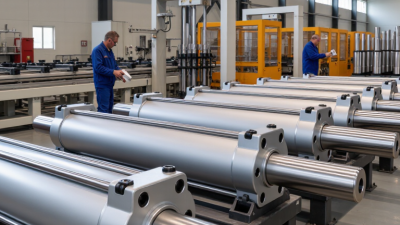
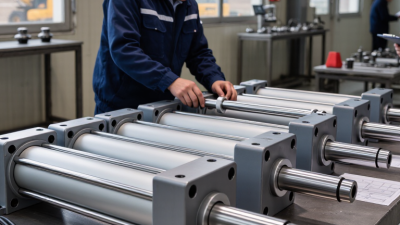
Manufacturing turns that design into a working assembly. The barrel is cut and honed to create a smooth internal surface, while the rod is machined and finished for seal contact. End caps and ports are produced to match the drawing, then components are assembled in a controlled, clean area. Each cylinder should undergo dimensional checks and pressure testing suited to its design. A test can catch leaks before installation. Still, drawings can look complete while real duty cycles differ. A prototype may expose a clearance or mounting issue that calculations missed. Custom features should solve a defined problem, not merely make the cylinder more complicated.
2026 Custom Hydraulic Cylinder Design & Manufacturing
ISO nominal pressure classes provide a useful starting point when specifying a custom cylinder.
ISO 6020-2 specifies a 160 bar nominal pressure class, while ISO 6022 specifies 250 bar. The appropriate cylinder design depends on the application’s load, speed, duty cycle, mounting, and operating environment; confirm requirements with the applicable standard and manufacturer.
Key Criteria for Evaluating Manufacturers in 2026
2026 Top Custom Hydraulic Cylinder Manufacturers?
Key Criteria for Evaluating Manufacturers in 2026
Choosing a custom hydraulic cylinder manufacturer means checking more than price and delivery promises. Grand View Research estimated the global hydraulic cylinder market at USD 14.07 billion in 2023, with projected annual growth of 4.2% through 2030. That market forecast signals demand, not product quality. Ask how each supplier validates a design against your pressure, stroke, speed, and duty cycle. Request material traceability, dimensional inspection records, and pressure-cycle test results. Small details matter.
Tips: Share a real operating profile, including peak pressure, side loads, temperature, and daily cycle count. Compare drawings, tolerances, seal materials, and test procedures—not just headline specifications. Ask whether prototypes are tested under conditions resembling your machine. A smooth showroom sample proves little. Confirm lead times for replacement seals and custom parts, too; a cylinder can be excellent on paper and still create downtime if service is slow.
For a practical evaluation, review the supplier’s engineering communication and change-control process. Check whether reports identify test methods, acceptance limits, and failures, rather than offering a simple pass. Standards such as ISO 6020 and ISO 6022 can help frame dimensional discussions, but they do not replace application-specific validation. No checklist catches every issue. Keep one open question for your own team: what operating condition have we not measured yet?
Leading Custom Hydraulic Cylinder Manufacturers in 2026
Leading Custom Hydraulic Cylinder Manufacturers in 2026
In 2026, leading custom hydraulic cylinder manufacturers stand out through sound engineering, not broad promises. They ask about operating pressure, stroke length, mounting points, and duty cycle before proposing a design. These details matter. A cylinder lifting a steady load in a clean factory faces different demands from one exposed to dust, vibration, and daily impact.
Look for manufacturers that can explain material choices, seal options, and tolerances in plain language. Ask how they inspect critical dimensions and test finished cylinders for leakage and performance. A useful supplier can also review drawings and flag service issues, such as a rod that is difficult to access during replacement. Clear records help, too: material certificates, inspection results, and test data make future maintenance easier. A polished brochure is not proof. Request specific examples of similar applications, while remembering that one successful project does not guarantee another. Even experienced teams can miss a detail; good communication makes it easier to catch problems before production begins.
2026 Top Custom Hydraulic Cylinder Manufacturers? - Leading Custom Hydraulic Cylinder Manufacturers in 2026
The table below summarizes representative design and capability ranges for custom hydraulic cylinder suppliers. These are general industry benchmarks, not rankings or specifications attributed to individual manufacturers; actual limits depend on the design, materials, seals, and operating conditions.
| Cylinder category |
Typical bore range |
Common working pressure |
Typical stroke range |
Common design options |
Typical use and standards |
| Industrial tie-rod |
25–200 mm |
Up to about 210 bar (3,000 psi) in many designs |
About 25–1,000 mm; configuration-dependent |
Single- or double-acting; multiple mount and port options; replaceable seals |
Factory machinery and presses; NFPA or ISO 6020/2 dimensional designs may be available |
| Mill-duty / heavy-duty |
50–500 mm |
Commonly around 160–250 bar; engineered designs may differ |
About 100–3,000 mm or more, subject to buckling and installation constraints |
Robust welded or bolted construction; heavy-duty bearings; optional cushioning and position sensing |
Steelmaking, mining, and large industrial equipment; ISO 6022 dimensional designs may be available |
| Welded mobile-equipment |
25–300 mm |
Often 210–350 bar, depending on system and design |
About 50–2,000 mm; application-specific |
Compact welded body; clevis, cross-tube, or trunnion mounts; optional integrated valves |
Agriculture, construction, and material handling; mounting geometry is commonly customized |
| Telescopic |
Outer-stage diameters vary widely by design |
Commonly about 150–250 bar; confirm stage-specific ratings |
Multi-stage extension can provide long travel from a short retracted length |
Single- or double-acting; two to multiple stages; custom collapsed length and mounting |
Dump bodies, trailers, and lifting equipment; stage sequencing and side-load limits need review |
| Precision / servo cylinder |
Typically 25–250 mm |
Often 100–210 bar; application-dependent |
About 50–2,000 mm, depending on accuracy and load requirements |
Low-friction seals; close-tolerance components; optional LVDT or magnetostrictive position feedback |
Test rigs, injection molding, and closed-loop motion systems; accuracy depends on the full control system |
Before selecting a supplier, verify rated pressure, fatigue life, rod buckling, side-load limits, seal compatibility, corrosion protection, cleanliness requirements, testing documentation, and compliance with the required dimensional standard.
How to Select a Manufacturer for Your Application
Choosing a custom hydraulic cylinder manufacturer starts with the machine, not a catalog.
Describe the load, stroke, working pressure, mounting points, speed, and available space. Include fluid type, operating temperature, duty cycle, and side loads; these details can affect seal and rod choices. Photos and a dimensioned sketch often prevent avoidable revisions.
A vague request usually produces a vague quote.
Ask how the manufacturer validates its design. Look for pressure and leakage testing, material traceability, machining controls, and inspection records. Discuss expected service life and maintenance access, not only purchase price. A cylinder mounted behind a guard may need ports positioned for wrench clearance. Request a drawing before production, then confirm tolerances, connection sizes, finish, and delivery milestones in writing.
Small omissions cause delays.
Tips: Share a real operating cycle, including peak load and idle time. Ask who reviews calculations and how design changes are approved. Compare lead time, warranty terms, and spare-seal availability alongside price. It is easy to overlook port location until installation exposes the problem. If an answer sounds certain before the application is understood, pause and ask for a second review.