Empowering Engineering Excellence: Innovate, Elevate, Deliver.

How to Choose a Small Hydraulic Cylinder in 2026?

Choosing a Small Hydraulic Cylinder in 2026 requires more than matching bore size and stroke length. The correct choice must fit the machine, duty cycle, environment, and maintenance plan. Recent market analyses from Grand View Research and MarketsandMarkets continue to identify construction equipment, agricultural machinery, material handling, and industrial automation as major hydraulic demand sectors. These reports also point toward compact designs, improved efficiency, and smarter condition monitoring.

A practical selection begins with force. Calculate the required load, then add a reasonable safety margin without oversizing the cylinder. A 40 mm bore may suit a light clamping task, but a larger bore could be necessary when pressure drops or side loading appears. Check stroke speed, mounting style, rod diameter, operating pressure, and available installation space. The ISO 6020/2 and ISO 6022 standards provide useful references for dimensions, mounting, and rated performance. However, compliance does not automatically guarantee suitability.

Field experience often exposes overlooked details. Dust can damage a rod seal. Cold oil can slow movement. Repeated side loads can bend a polished rod. Very small cylinders are not always economical. Their lower purchase price may hide higher replacement frequency. Suppliers should provide pressure ratings, seal materials, test data, and clear service limits. Independent test evidence is preferable to attractive catalog claims. A neat specification sheet can still mislead. Before final selection, compare real load cycles, ambient temperatures, fluid compatibility, and access for maintenance. This disciplined review helps buyers choose a Small Hydraulic Cylinder that performs reliably, rather than merely fitting the available space.
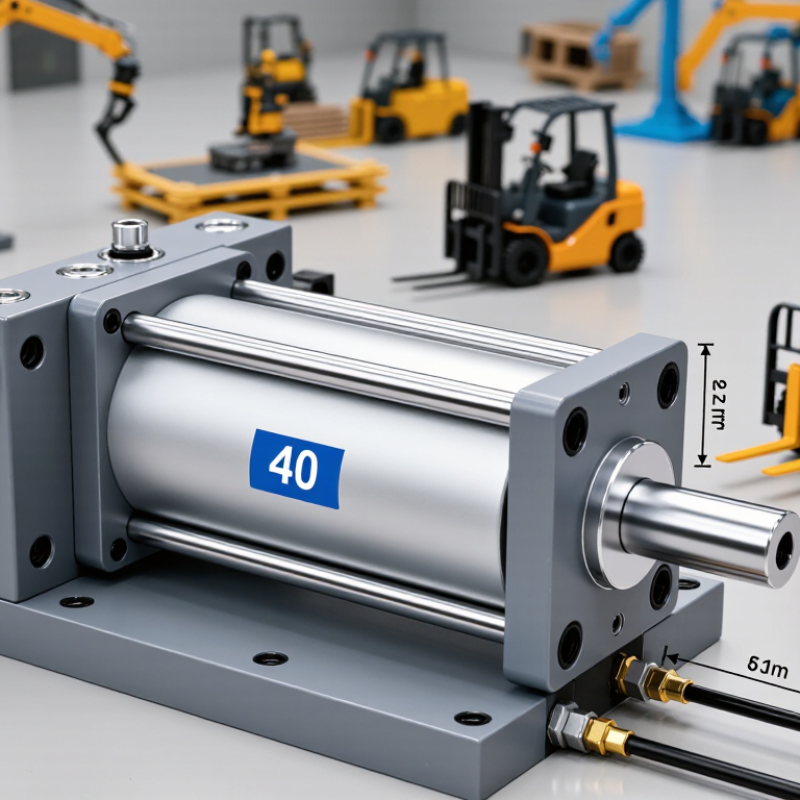
How to Choose a Small Hydraulic Cylinder in 2026?

Define the Application and Operating Conditions

Choosing a small hydraulic cylinder starts with the job, not the catalog. Define the load, stroke, mounting space, cycle rate, pressure, speed, temperature, and contamination level. Write actual values. A 35 mm bore at 100 bar produces about 9.6 kN theoretically, before friction and seal losses. That margin can disappear quickly during acceleration or side loading.

Grand View Research’s 2024 industry outlook projects steady growth in the hydraulic cylinder market through 2030, driven partly by compact automation and mobile equipment. This trend encourages smaller designs, but compact does not mean underspecified. ISO 4413 requires hydraulic systems to address pressure control, mechanical hazards, and safe energy isolation. Therefore, check the relief-valve setting, hose routing, and end-stop impact before selecting the cylinder.

A practical test uses the real duty cycle. Measure how long the rod remains extended, then record oil temperature after repeated operation. A cylinder rated for 160 bar may perform poorly if the machine repeatedly spikes above that pressure. Side loads deserve attention, too. Use guided mounting when the rod pushes a sliding component. I have seen neat calculations fail because the mount carried bending force. That assumption needs challenging. Dirt, cold starts, and uneven alignment can matter more than a small difference in bore size. Choose the smallest cylinder that meets the measured force with a defensible safety margin, not the smallest one that fits.
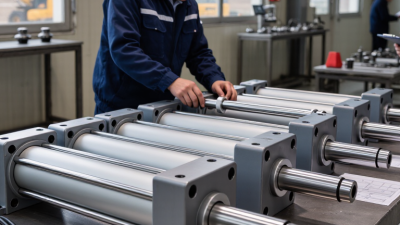
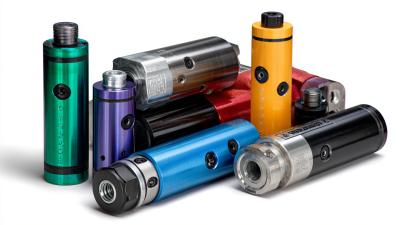
Compare the required load with the available hydraulic pressure before selecting a small cylinder. The values show theoretical extension force for common bore sizes at 10 MPa and 16 MPa. Actual output will be lower because of friction, seal resistance, pressure losses, and installation conditions.

Calculate Force, Stroke, and Required Cylinder Capacity

How to Choose a Small Hydraulic Cylinder in 2026?

Selecting a small hydraulic cylinder starts with the real load, not the cylinder size. Measure the force needed at the mounting point. Include friction, acceleration, and a practical safety margin.

For a direct load, use this formula:

Force = Pressure × Effective Area.

At 1 MPa, one square millimeter produces approximately 1 newton. A 25 mm bore has about 491 mm² of area, producing roughly 4,910 N at 10 MPa. Actual output will be lower because of seal friction and pressure loss.

Stroke requires equal attention. Measure the complete movement between the retracted and extended positions. Add space for cushions or end-of-stroke control. Never let the piston hit the mechanical limit during normal operation.

For a double-acting cylinder, extension force uses the full bore area. Retraction force uses the bore area minus the rod area. That difference matters when lifting or pulling. It is easy to overlook.

Check the cylinder under the worst working angle. Side loading can damage the rod, even when calculated force appears acceptable. A clevis, guided slide, or spherical connection may reduce unwanted stress.

I would also verify rod buckling for long strokes. Small cylinders can look strong on paper and still bend in service.

Select capacity above the calculated load, then confirm pressure, stroke, mounting space, and duty cycle with technical drawings. The calculation is only the beginning.

Choose the Best Cylinder Type, Size, and Mounting Style

Choosing a small hydraulic cylinder in 2026 starts with the application, not the catalogue photograph. Select single-acting cylinders for spring-return tasks and double-acting cylinders for controlled movement in both directions. Telescopic designs save space, but their longer bodies can complicate maintenance. Compact tandem cylinders can increase force without greatly increasing bore size.

Calculate force from pressure and piston area, then add a practical safety margin.

A 25 mm bore at 160 bar produces about 7.85 kN theoretically. Real output falls because of friction, seal wear, and pressure losses.

Check the numbers twice. IMARC Group’s 2024 hydraulic cylinder market report estimates continued market growth through 2032, reflecting wider adoption in compact mobile and industrial equipment. That growth does not make undersizing acceptable.

Mounting style affects alignment, side loading, and service life. Clevis mounts suit swinging equipment, while flange mounts provide rigid positioning. Trunnion mounts work well when the cylinder must pivot around a fixed axis.

Use rod-end spherical bearings when slight misalignment is unavoidable. ISO 6020/2 and ISO 6022 provide useful dimensional references for hydraulic cylinder selection and testing.

Keep the rod retracted during storage, and protect exposed threads from dust. I have seen small cylinders fail early because the frame carried bending loads. The cylinder was blamed first. The frame deserved inspection.

Check Materials, Seals, Pressure Ratings, and Compatibility

How to Choose a Small Hydraulic Cylinder in 2026?

Choosing a small hydraulic cylinder starts with its materials. Steel offers strength for demanding equipment, while stainless steel resists moisture and chemical exposure. Aluminum reduces weight but may require careful pressure limits.

Check the rod surface, barrel thickness, mounting points, and corrosion protection. A compact cylinder still needs enough structural strength for repeated side loads.

Seals deserve equal attention. Select seal materials according to the hydraulic fluid, operating temperature, pressure, and movement speed. A seal that works well in clean oil may swell in another fluid.

Inspect the manufacturer’s temperature range carefully.

I once saw a small cylinder leak because its seal tolerated pressure but not heat. That mistake was avoidable.

Pressure ratings must match real operating conditions, not only the pump’s maximum setting. Compare working pressure, test pressure, and peak pressure. Leave a practical safety margin for sudden loads.

Compatibility includes bore size, stroke length, retracted length, port thread, mounting style, and fluid type. Measure twice. A few millimeters can prevent installation.

Also check whether nearby parts create bending forces on the rod. Hydraulic cylinders push best in line; they are not designed to correct poor alignment.

Specification sheets can still miss field conditions, so testing one sample under actual temperature and load may reveal problems before full installation.

Compare Safety, Maintenance, Cost, and Supplier Support

How to Choose a Small Hydraulic Cylinder in 2026?

When selecting a small hydraulic cylinder, safety should guide every cost decision. In field inspections, I check rated pressure, maximum load, stroke length, and side-load exposure. A cylinder may fit the frame but fail under uneven loading. Never rely on appearance alone. Confirm compatible hoses, fittings, mounting points, and a suitable relief valve. Guards may also be necessary near moving rods and pinch points.

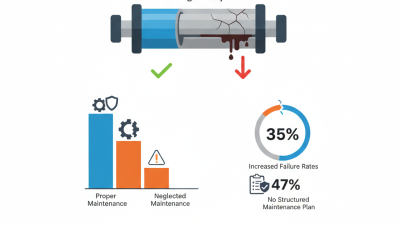
Maintenance affects reliability more than many buyers expect. Keep the rod clean, especially around dusty machines or outdoor equipment. Contamination can damage seals and increase internal leakage. Inspect the rod for scratches, corrosion, and bending during routine service. Seal kits should be available, clearly identified, and simple to install. I once underestimated dirt around a wiper seal. The repair became more expensive than planned.

Purchase price is only one part of the calculation. Compare expected service life, downtime, replacement seals, shipping, and installation labor. A cheaper cylinder can cost more after repeated failures. Supplier support matters. Request dimensional drawings, pressure data, material information, warranty terms, and realistic delivery dates. Reliable suppliers answer technical questions directly and explain limitations. Ask whether they can support replacement parts several years later. If an engineer avoids specific answers, pause the purchase. My own selection process is not perfect, so I document assumptions and review them after installation.

How to Choose a Small Hydraulic Cylinder in 2026? - Compare Safety, Maintenance, Cost, and Supplier Support

Selection Profile Typical Specification Estimated Force at 160 bar Safety Considerations Maintenance Profile Typical Unit Cost* Supplier Support to Require Best-Fit Applications
Ultra-compact single-acting 25 mm bore × 50 mm stroke
16 mm rod
Spring return
Push: approximately 7.9 kN Use a mechanical load-holding device where uncontrolled lowering could cause injury. Install pressure relief protection and guard the moving rod. Few components and simple plumbing. Inspect seals and rod surface regularly; spring-return force decreases as stroke increases. US$80–180 Dimensional drawing, rated pressure, seal-material options, replacement seal kit, and installation instructions. Clamps, latches, light-duty fixtures, and short-cycle automation.
Compact double-acting 32 mm bore × 100 mm stroke
20 mm rod
Double-acting
Extend: approximately 12.9 kN
Retract: approximately 7.8 kN
Use flow control to prevent impact at end of stroke. Add counterbalance or pilot-operated check valves for suspended or overrunning loads. Requires clean hydraulic fluid and two hose connections. Check fittings, rod alignment, leakage, and cushioning adjustment. US$120–280 Pressure and speed charts, port details, mounting dimensions, seal compatibility, and technical response within one business day. Material handling, indexing, compact presses, and machine guarding.
Higher-force compact cylinder 40 mm bore × 150 mm stroke
25 mm rod
Double-acting
Extend: approximately 20.1 kN
Retract: approximately 14.0 kN
Verify buckling risk, side-load limits, mounting strength, and emergency-stop behavior. Use guides when the load is not perfectly aligned. Higher load increases wear on seals and mounts. Schedule alignment checks, contamination control, and periodic leakage testing. US$180–420 Load and buckling calculations, fatigue information, mounting recommendations, repair procedure, and stocked wear parts. Compact presses, lifting mechanisms, workholding, and moderate-duty industrial equipment.
Corrosion-resistant compact cylinder 32 mm bore × 100 mm stroke
20 mm rod
Stainless or corrosion-protected construction
Extend: approximately 12.9 kN
Retract: approximately 7.8 kN
Confirm pressure rating after material changes. Prevent trapped water around mounts and use fittings rated for the operating environment. Lower external corrosion risk but not maintenance-free. Rinse contaminants, inspect rod coating, and replace damaged wipers promptly. US$220–550 Material certificates, ingress or corrosion test information, food-contact documentation where applicable, and replacement seal availability. Washdown areas, outdoor machinery, humid environments, and light food-processing equipment.
Guided or sensor-ready cylinder 25–32 mm bore × 50–100 mm stroke
Magnetic piston option
Integrated guide or position sensing
Approximately 7.9–12.9 kN extending force at 160 bar Guides reduce side loading but do not replace machine guarding. Confirm sensor voltage, switching range, cable protection, and fail-safe logic. More components require additional inspection. Check guide wear, sensor alignment, cable condition, and mounting rigidity. US$250–650 Wiring diagrams, sensor compatibility list, replacement guide components, troubleshooting support, and configuration records. Automated assembly, pick-and-place mechanisms, sorting, and repeatable positioning.
Technical notes: Force values are theoretical hydraulic forces calculated from piston area at 160 bar; actual output is lower because of seal friction, pressure losses, and system conditions. Cost ranges are indicative 2026 purchasing ranges for small industrial cylinders and exclude valves, fittings, sensors, shipping, installation, and taxes. Confirm the final selection against the cylinder datasheet, operating pressure, duty cycle, mounting arrangement, environment, and applicable local safety requirements.
Download
Brochure