Empowering Engineering Excellence: Innovate, Elevate, Deliver.
Excavator track repairs often begin with a stubborn pin, packed with grit and rust. Removing it with uncontrolled hammer blows can damage surrounding components and make reassembly harder. A Track Pin Press applies force directly through the pin, helping technicians remove and install pins with better control. Fit matters. The press must match the chain dimensions and the job’s force requirements; one tool does not suit every undercarriage.
The business case is about more than convenience. McKinsey’s 2017 manufacturing analysis reported that predictive maintenance can reduce machine downtime by 30–50%. That is a broad industrial benchmark, not a promise for excavator repairs. Still, it highlights why planned maintenance and suitable tooling matter when a machine is waiting on a repair. A correctly selected press can support a more orderly repair process, reduce reliance on improvised methods, and help protect valuable track components. The operator still needs training, inspection, and the manufacturer’s service procedures. No press fixes a worn link or incorrect alignment. That part is easy to overlook. Before choosing a Track Pin Press, compare its capacity, adapters, portability, and compatibility with the excavator’s track chain. The right choice can save effort; the wrong setup can waste time and damage parts.
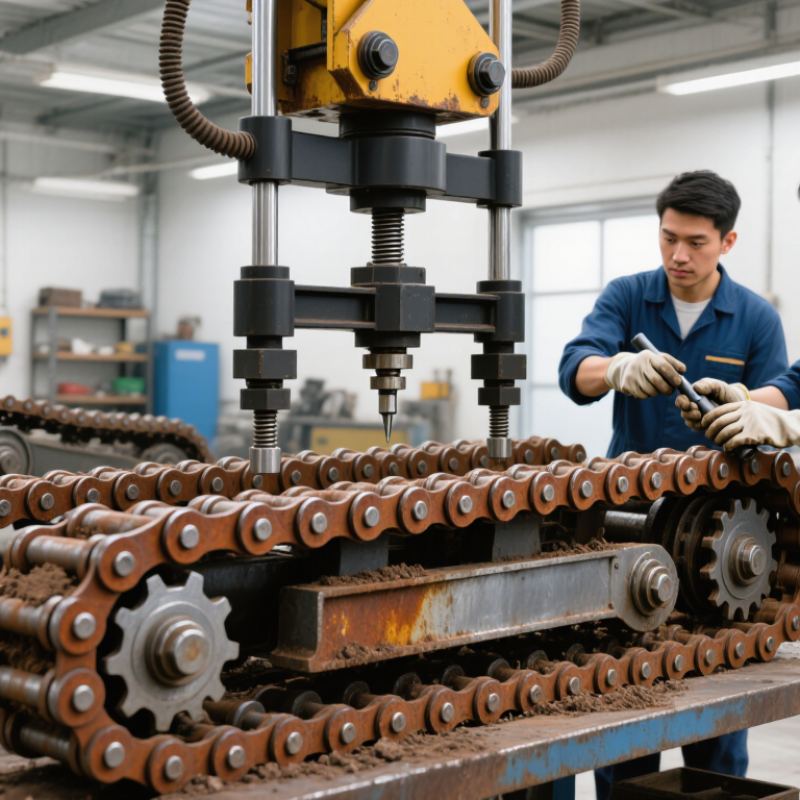
A track pin press is a service tool for removing and installing pins and bushings in an excavator’s track chain. Its hydraulic cylinder applies steady force through a rigid frame, instead of relying on repeated hammer blows. That control is valuable when links are heavy and working space is limited. The press directs force toward the pin and helps reduce impacts on nearby components.
For a typical repair, technicians clean the joint, support the chain, and check pin direction and adapter fit before applying pressure. As the cylinder advances, the frame holds the assembly while the pin moves through the link. During installation, careful alignment helps the pin enter squarely and limits the risk of scoring a bushing or damaging a link. Stop if resistance changes unexpectedly.
A press makes the job more controlled, but it cannot correct worn parts or poor setup. Measurements still matter. Even dirt on a seating surface can affect the fit. It is easy to focus on hydraulic pressure and overlook alignment; that is a reminder to check the setup again, rather than assume the tool will compensate. Follow the machine’s service procedure and inspect the joint after assembly.
| Repair task | What the track pin press does | Undercarriage parts involved | Practical benefit | Important technician check |
|---|---|---|---|---|
| Remove a track pin | Applies controlled hydraulic force through a correctly sized adapter to push the pin out of the track chain. | Track pin, track links, and associated bushings | Provides a controlled alternative to improvised impact methods and helps limit damage to reusable components. | Support and align the chain; confirm the press and adapter are suitable for the pin and chain design. |
| Install or press in a replacement pin | Pushes the replacement pin into the aligned track links to the specified position. | Replacement pin and track links | Helps achieve consistent pin seating when the correct tooling and service procedure are used. | Check pin orientation, alignment, seating depth, and the machine manufacturer’s service specifications. |
| Open a track chain for repair | Separates a suitable chain joint by pressing out its pin, allowing the chain to be opened for service. | Track chain joint and master-pin arrangement, where applicable | Allows access to chain components without removing more of the undercarriage than the repair requires. | Identify the chain type and any master-pin or retaining arrangement before beginning disassembly. |
| Close a track chain after service | Presses the joint pin back into position after the chain has been reassembled and aligned. | Track links, pin, and related joint components | Supports controlled reassembly of the track chain. | Verify link alignment, pin position, and final joint condition before the machine is operated. |
| Replace worn chain components | Enables pin removal and installation as part of replacing serviceable chain components. | Track links, pins, and bushings, depending on chain construction | Can make component-level repair possible when the chain design and condition permit it. | Inspect related parts for wear or damage; a press does not determine whether a component is safe to reuse. |
| Perform undercarriage repair in a workshop or field setting | Provides a purpose-designed pressing method when used with compatible press equipment, adapters, and supports. | Track chain assembly | Reduces reliance on uncontrolled striking and can improve repeatability compared with improvised methods. | Use trained personnel, follow equipment instructions, secure the work, and keep clear of stored hydraulic energy. |
Note: Track-chain designs and service procedures vary. Press capacity, adapters, pin orientation, and installation requirements should be confirmed against the machine and tooling specifications before work begins.
A track pin press removes and installs pins by applying steady, aligned force through a hydraulic ram and correctly sized tooling. The excavator track is supported and secured before work begins. The technician cleans the pin ends, checks the press frame, and positions its adapters squarely against the pin. Small alignment errors matter.
During removal, the ram pushes the pin through the track links while the receiving tool supports the opposite side. Pressure is increased gradually, not forced all at once. A sudden shift can damage a link or tool. If the pin barely moves, stop and check alignment, corrosion, and tooling fit. More force is not always the answer.
For installation, the new or inspected pin is lined up with the link bores and pressed in until it reaches the specified position. The technician monitors the pin’s travel and checks that the links remain aligned. Measurements and procedures vary by undercarriage design, so the service manual should guide the final fit. In practice, a stubborn pin can make the job slower than expected; that is a reason to reassess the setup, not rush it. After pressing, inspect the joint and confirm the track moves freely before returning the machine to work.
How Controlled Pressing Helps Protect Tracks and Components
During excavator track repairs, a pin rarely comes free just because force is available. A track pin press applies measured, straight-line pressure to remove or install the pin while the chain is supported. This matters because a tilted pin can score a bushing, distort a link, or damage the tooling. The operator can increase pressure gradually and watch for movement, rather than striking the assembly repeatedly with a hammer. Small details matter. Clean contact surfaces and correctly sized adapters help keep the load centered and reduce stress on nearby components.
Controlled pressing also makes the repair easier to assess. If a pin binds, pauses, or needs unusually high force, the crew can stop and check alignment, wear, corrosion, or tooling fit. Forcing it onward may turn a pin job into link damage. The press does not replace the machine’s service procedure or a post-repair inspection. Pin fit and lubrication requirements vary by undercarriage design. Even experienced mechanics can misjudge resistance, especially on dirty tracks. A pressure gauge helps, but it cannot explain every tight fit. Recheck the support and inspect the pin and bushing before returning the excavator to work.
Choosing a track pin press starts with the repair, not the excavator’s advertised size. Measure the pin diameter and check its retaining method before selecting a tool. Compare those details with the press’s rated capacity and the manufacturer’s service information. A press that fits the pin but lacks suitable force can stall or damage components.
Check the working space around the track. A large frame may deliver ample force, yet leave too little room near the link. Measure access points, frame width, and required stroke. Then consider whether repairs happen in a workshop or beside the machine. Portable hydraulic presses can help in the field, while heavier setups may suit repeated shop work. Keep it practical.
Alignment matters. The press should sit squarely against the pin and supported track components; uneven contact can bend parts or cause sudden movement. Inspect the tooling, hoses, and frame for wear before use, and follow the equipment’s rated limits. Use appropriate restraints and protective equipment. Stop if the pin shifts oddly. Bigger is not always better. I’d recheck the setup rather than force a stubborn pin—though, in a busy repair bay, that extra pause is easy to skip. A clear service manual and a trained technician’s judgment help resolve uncertain fit or force requirements.
Why Choose a Track Pin Press for Excavator Repairs?
A track pin press helps technicians control the force needed to remove or install stubborn track pins. That control matters: hammering can cause sudden movement, flying debris, or damage to the chain. Before pressing, park the excavator on firm, level ground, lower attachments, shut down the engine, and follow the manufacturer’s service instructions. Secure the track and keep hands clear of pinch points. Never rely on hydraulic pressure alone to hold a raised component. Use rated supports. Check them twice.
Inspect the press, hoses, fittings, and pins before each job. A damaged hose or misaligned adapter can fail under load. Stand outside the likely path of a released pin, and use eye and foot protection. OSHA’s machine-guarding guidance calls for protecting workers from hazards such as moving parts and flying chips. The risk is not theoretical: the U.S. Bureau of Labor Statistics recorded 5,283 fatal work injuries across U.S. workplaces in 2023. That figure does not isolate track-pin work, but it underscores why controlled procedures matter. Keep the work area clear, communicate before applying pressure, and release pressure fully before adjusting tooling. One awkward pin can still surprise you. Recheck alignment; it is easy to rush.
A purpose-built track pin press helps control pressing force and keep the tooling aligned. Use the equipment manual and site procedures for every repair.
Checklist counts shown: Before work—stabilize the machine, isolate energy, inspect the press and tooling, check alignment, and wear appropriate PPE. Setup—secure the track, support the links, confirm the pin and adapter match, and keep hands clear. Pressing—stand clear of the force line, use controls from a safe position, apply steady force, and stop if movement is abnormal. After work—release pressure, inspect the pin and links, and clean and store the tool. These are checklist items, not measured performance data; follow the machine and tool manufacturers’ instructions.