Why Is Smart Home Electronics Design Important?
Smart Home Electronics Design matters because connected devices must work reliably in real rooms, not just in polished demonstrations. A thermostat should respond without confusing menus; a door sensor should communicate clearly when its battery runs low. These details shape safety, comfort, accessibility, and trust. That matters.
Design researcher Don Norman wrote, “Good design is actually a lot harder to notice than poor design, in part because good designs fit our needs so well that the design is invisible.” His observation applies to connected homes: when devices work together smoothly, people can focus on daily life rather than troubleshooting. That goal requires careful choices about hardware, software, connectivity, privacy, and usability. A bright status light may help one resident but disturb another at night. Small decisions carry weight.
Strong Smart Home Electronics Design begins with people’s routines and the conditions devices face, including weak Wi-Fi, shared spaces, and changing needs. Engineers and designers can test prototypes in actual homes, document limitations, and review how products behave after updates. Standards and security practices also matter, though a compliant product is not automatically easy to use. There is no single layout that fits every household. That is worth admitting. Thoughtful design reduces friction, but it cannot remove every failure or trade-off. A credible design process keeps listening, testing, and improving.
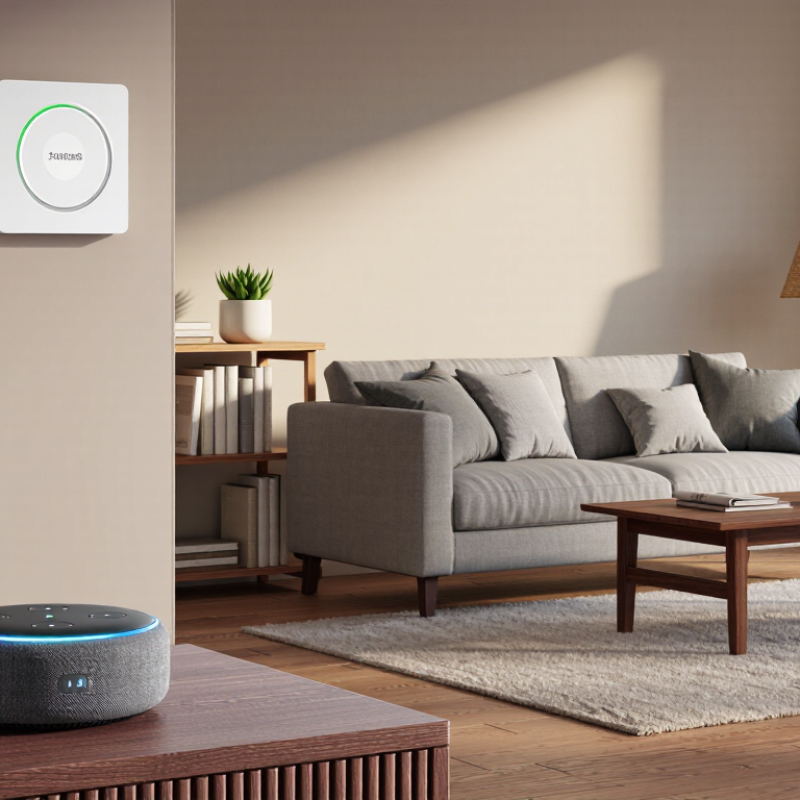
What Smart Home Electronics Design Encompasses
Smart home electronics design covers the parts that let devices sense, communicate, and respond safely. It connects sensors, circuit boards, wireless radios, power supplies, and control software. A motion sensor near a hallway, for example, must detect movement without reacting to every passing shadow. A door sensor needs a stable signal, even when the frame shifts slightly with temperature. Small choices matter.
Designers also consider how devices work together. They choose communication methods, manage power use, and plan for updates and recovery after a connection drops. A thermostat may need to keep basic controls available when the home network is down. Testing should include real rooms, not only a tidy workbench. Walls, distance, and nearby electronics can change performance. Testing takes patience.
Safety and privacy belong in the design, too. Engineers assess heat, electrical isolation, data handling, and what information a device truly needs. Clear status lights and simple controls help people understand what is happening without opening an app. Still, a design can pass bench tests and feel awkward in a lived-in home. That gap is easy to underestimate, so feedback from everyday use should shape later revisions.
How Design Connects Devices and Simplifies Everyday Use
Smart home electronics work best when devices feel like parts of one system, not separate gadgets. A hallway sensor can trigger a light, while a thermostat adjusts after the last person leaves. But the experience depends on clear setup, reliable connections, and controls people can understand at a glance. If a device needs repeated resets, convenience disappears quickly. That matters.
Interoperability helps reduce this friction. Shared communication standards let compatible devices exchange basic commands, while thoughtful interfaces make routines easier to create and change. The International Energy Agency’s 2023 Buildings report says buildings account for about 30% of global final energy use, making practical energy controls more than a novelty. The U.S. Environmental Protection Agency estimates that ENERGY STAR-certified smart thermostats can save about 8% on heating and cooling bills. Those savings depend on the home and how people use the controls. Designers should make schedules visible, explain what automation is doing, and keep manual overrides easy to find. A clever routine can still be confusing. Even a small delay or unclear status light can make people doubt whether a device is working.
Why Safety, Privacy, and Reliability Depend on Good Design
Why Is Smart Home Electronics Design Important?
A smart lock should respond quickly, but not to every voice or phone nearby. Good design makes authentication clear, limits unnecessary data collection, and keeps sensitive information protected. Privacy is not a settings-page afterthought.
Pew Research Center’s 2023 survey found that 81% of Americans felt the risks of companies collecting personal data outweighed the benefits. For connected devices, that concern can start with a microphone in the kitchen or a camera facing the front door.
NIST’s IoT cybersecurity guidance recommends capabilities such as secure configuration, data protection, and controlled access. These choices should shape a product before it reaches a home.
Reliability also depends on design decisions people rarely see. A door sensor needs to report a weak battery before it misses an opening. A hub should recover safely after a power cut, without silently restoring an old password.
Small details matter. Clear status lights and simple update controls help people notice problems and act. Still, no design removes every risk. An alert can be confusing; an update can interrupt a routine.
Designers should test these moments in real homes, including with tired users and unstable Wi-Fi. I would not assume that a feature is safe just because it worked in a lab. The better question is whether it fails predictably, protects household data, and gives people a practical way to respond.
How Thoughtful Design Supports Energy Efficiency and Accessibility
Thoughtful smart-home design can reduce waste without making daily routines harder. The International Energy Agency’s Energy Efficiency 2023 report says buildings account for about 30% of global final energy consumption. Well-designed controls can help households respond to that challenge. A motion sensor can switch off a hallway light after everyone leaves, while a clear thermostat schedule can prevent heating an empty room. Useful feedback matters, too: a simple display showing current use is easier to act on than a stream of unexplained alerts. Small details count.
Accessibility deserves equal attention. The World Health Organization estimates that 1.3 billion people, or roughly one in six worldwide, experience significant disability. Voice control, large high-contrast text, tactile buttons, and adjustable alert volume can make home systems easier to use across different abilities and ages. But choice is essential. Voice commands may fail in a noisy kitchen, and touchscreens can be difficult for someone with limited dexterity. A physical control should remain available. Still, designers can miss the mark; a feature intended to help may add another menu or confusing setup step. Testing controls with people who have varied needs can expose those problems before installation. Simple beats clever. A quiet, dependable device that shows what it is doing—and lets residents override it—can support both lower energy use and greater independence.
What Challenges Shape the Future of Smart Home Electronics Design
Smart-home electronics design must make separate devices work reliably in real homes, not just in clean demonstrations. IoT Analytics reported 16.6 billion connected IoT devices worldwide in 2023 and projected 18.8 billion for 2024. More devices mean more radios, software updates, and chances for interference. A door sensor may sit behind a metal frame; a router may be two rooms away. Small details matter. Designers need to test weak signals, power loss, and recovery after an update, not only ideal conditions.
Privacy and energy use create tougher trade-offs. The International Energy Agency reports that buildings account for about 30% of global final energy consumption. Smart controls can help reduce waste, but only when sensors measure accurately and settings suit people’s routines. A thermostat that reacts to an open window may save energy—or frustrate someone who likes fresh air. Security also depends on practical choices: secure device setup, clear update support, and data collection limited to what a feature needs. I would not call this solved. Connected products still ask households to manage too many apps and settings, and designers should question whether every “smart” feature earns its place.