Empowering Engineering Excellence: Innovate, Elevate, Deliver.

Why Choose Robot Warehouse Picking for Warehouses?

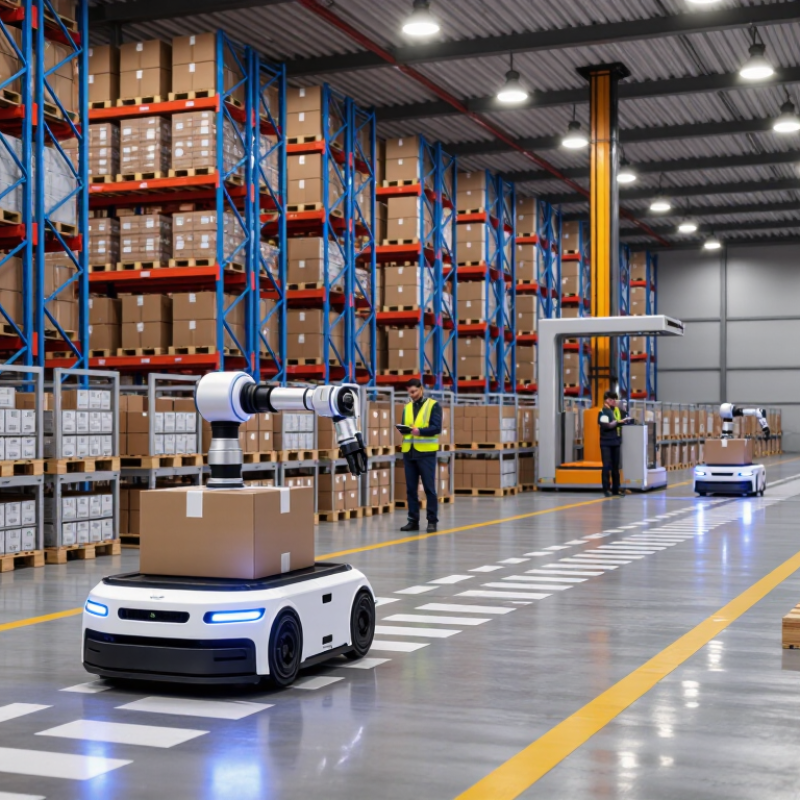
In modern fulfillment operations, speed matters, but dependable accuracy matters more. Robot Warehouse Picking combines mobile robots, robotic arms, vision systems, and warehouse software. These tools move items from storage to packing stations. Workers spend less time walking through long aisles. They can focus on quality checks, replenishment, and unusual orders. The workflow becomes easier to measure.

Practical warehouse experience shows that automation works best after careful process analysis. Managers should examine order profiles, product sizes, peak volumes, aisle layouts, and exception rates. A robot may handle uniform cartons efficiently. However, it may struggle with soft bags, reflective packaging, or misplaced products. It is not magic. Human judgment still matters during complex picks and unexpected equipment behavior.

Reliable implementation requires trained integrators, documented testing, maintenance planning, and transparent performance data. Site-specific safety assessments should guide the design. Attractive demonstrations should not replace operational evidence. The first layout is rarely perfect. Small changes to bin locations or gripper settings can produce meaningful gains. Costs, training time, software integration, and energy use also need honest review. Robot Warehouse Picking is not a universal shortcut. Yet it can become a scalable improvement when the technology matches the warehouse’s real constraints. Careful measurement makes the difference between useful automation and an expensive experiment.
Why Choose Robot Warehouse Picking for Warehouses?

Robot Warehouse Picking Explained: 37% Adoption in MHI’s 2024 Survey

Why Choose Robot Warehouse Picking for Warehouses?

MHI’s 2024 industry survey reported that 37% of respondents were adopting robotics. This figure makes robot warehouse picking difficult to ignore. It also needs careful interpretation. Adoption does not mean every warehouse is fully automated. Many operations use robots beside human pickers, especially during seasonal demand.

A typical system moves shelves, totes, or picked items across the floor. Workers then complete scanning, checking, and packing tasks. This arrangement can reduce walking distance and improve order consistency. It may also support safer handling of repetitive work. In a busy aisle, fewer unnecessary steps can save meaningful time. Small gains matter.

However, robots are not a universal answer. Poor inventory data can create delays, even with advanced equipment. Narrow aisles, irregular products, and frequent layout changes may weaken results. A practical evaluation should measure travel time, picking accuracy, training needs, maintenance, and payback. Start with a controlled zone. Review the evidence.

Warehouse teams should also plan for exceptions. A damaged carton, missing item, or failed scan still needs human judgment. The 37% adoption rate signals growing confidence, not guaranteed success. In my view, the strongest projects combine measured automation with experienced staff. That balance is less exciting, but often more reliable.

Why Choose Robot Warehouse Picking for Warehouses? - Robot Warehouse Picking Explained: 37% Adoption in MHI’s 2024 Survey

A data-based overview of warehouse robotics adoption, planning horizons, and the operational reasons companies consider robot-assisted picking.

Data Dimension Reported or Derived Data What the Data Indicates Source / Calculation
Current use of robotics and automation 37% More than one-third of surveyed organizations reported that they were already using robotics and automation in their operations. MHI Annual Industry Report 2024
Planned adoption within 1–2 years 23% Nearly one-quarter of respondents expected to implement robotics or automation in the short term, supporting the case for near-term warehouse modernization. MHI Annual Industry Report 2024
Planned adoption within 2–5 years 20% A further fifth of respondents placed automation in their medium-term investment plans. MHI Annual Industry Report 2024
Planned adoption beyond 5 years 20% Longer implementation timelines remain relevant for facilities requiring layout changes, process redesign, or significant capital planning. MHI Annual Industry Report 2024
Organizations not currently using robotics 63% This is the remaining share calculated as 100% minus the 37% current-adoption rate, indicating substantial room for market expansion. Derived from MHI 2024 data: 100% − 37%
Planned adoption within 5 years 43% The combined short- and medium-term planning share shows that many organizations are evaluating automation before a five-year horizon. Derived from MHI 2024 data: 23% + 20%
Potential total adoption within 5 years 80% If stated plans are implemented, current users plus organizations planning adoption within five years would represent a large majority of surveyed organizations. Derived from MHI 2024 data: 37% + 23% + 20%
Primary picking tasks suited to automation Repetitive, high-volume, and rule-based movements Robot-assisted picking is generally most suitable where item presentation, destination logic, and quality requirements can be standardized. General warehouse-automation operating principle
Main operational advantages Consistency, repeatability, traceability, and reduced walking Automated picking can help reduce non-value-added travel and provide more consistent execution when integrated with warehouse-control software. General warehouse-automation operating principle
Key implementation considerations SKU variability, item handling, system integration, safety, and payback period A successful deployment requires process standardization, suitable product profiles, operator training, safety controls, and a business case based on actual order patterns. Warehouse-automation feasibility criteria

Note: The percentages are based on the MHI Annual Industry Report 2024 adoption-timing data. Derived percentages are calculated from the reported values and may not represent a forecast of actual future implementation.

How Picking Robots Work: AMRs, AS/RS, Vision, and WMS Integration

Robot warehouse picking combines mobile movement, storage automation, cameras, and software coordination. Autonomous mobile robots carry shelves, totes, or picked orders between stations and storage zones. They map routes with sensors and adjust when workers, pallets, or temporary barriers appear. In a typical shift, an operator confirms the item while the robot handles repetitive travel. This reduces walking distance, but it does not remove the need for trained people. Shorter routes help.

Automated storage and retrieval systems place and retrieve bins from dense vertical racks. Their cranes or shuttles follow controlled locations, improving inventory accuracy and using overhead space. Vision systems inspect labels, barcodes, package positions, and damaged cartons before items enter the order flow. Good lighting matters. Dust matters too. A camera may read a label yet miss a crushed corner, so human checks remain valuable for exceptions.

The warehouse management system acts as the operational link. It sends order priorities, stock locations, and task rules to the robotic control layer. Then it receives confirmations and exception data. Integration should include clear interfaces, status tracking, and recovery procedures for network loss or blocked aisles. Testing with real order profiles reveals awkward edge cases, especially split orders and changing carton sizes. No deployment is perfect. Teams should measure pick accuracy, travel time, idle time, and manual interventions after launch. Early results can look impressive, but maintenance, staff training, and poor inventory data may quietly reduce performance.

Productivity Evidence: Up to 4× Throughput in Industry Case Studies

Robot warehouse picking is gaining attention because throughput can change dramatically when travel time falls. Industry case studies report increases of up to 4× in selected warehouse operations. These results usually combine robotic movement, optimized storage, and software-directed task allocation. The robot does not simply replace a worker. It reduces walking between shelving, picking stations, and packing benches.

The evidence is encouraging. MHI’s 2024 Annual Industry Report found that 55% of supply-chain professionals planned to increase technology investment over the following two years. Its findings also identify labor availability and productivity pressure as major automation drivers. In practical terms, a picker may spend less time pushing a cart through long aisles. Instead, goods can arrive at a fixed workstation, where scan checks and quantity prompts reduce avoidable errors.

4× The 4× figure needs careful interpretation. It may reflect a strong baseline, extended operating hours, or a redesigned workflow. It is not a universal promise. A warehouse with irregular products, poor inventory data, or congested aisles may see much smaller gains. That matters. Before installation, managers should measure lines per hour, walking distance, order profiles, and peak-season demand. A pilot should compare the same shift conditions before and after deployment. Even then, maintenance delays and exception handling can weaken the headline result. Productivity is measurable, but the measurement design is often imperfect.

DHL 2024 Data: Why 73% of Supply Chains Plan Robotics Investment

A 2024 global logistics survey found that 73% of supply chains plan to invest in robotics. That figure signals a practical shift, not temporary excitement. Warehouse picking is a clear starting point. Robots can move bins, identify items, and deliver them to human workers. This reduces walking time around long aisles.

The International Federation of Robotics reported 541,302 industrial robots were installed worldwide in 2023. Although the figure covers multiple industries, it shows stronger acceptance of automated work. In warehouses, picking robots can support faster order cycles and more consistent handling. They also collect useful data, including travel distance, picking errors, and peak-hour congestion.

The details matter. Poor item placement can still slow a robotic system. Unclear packaging may confuse vision sensors. Human oversight remains necessary. A 2024 industry report from MHI found that many organizations are increasing investment in automation, but labor skills and integration remain major concerns. That is the uncomfortable part.

Robotic picking is not an instant fix. It works best when warehouse layouts, software, and product data are ready. A pilot zone can expose weak assumptions before a full rollout. Measure accuracy, uptime, worker travel, and payback time. Then adjust the design.

Deployment Roadmap: Pilot, Integrate, Scale, and Measure ROI

Why Choose Robot Warehouse Picking for Warehouses?

Deployment Roadmap: Pilot, Integrate, Scale, and Measure ROI

Robot warehouse picking should begin with a controlled pilot, not a warehouse-wide purchase. Select one aisle, product category, or shift with repeatable demand. Record walking distance, pick accuracy, cycle time, labor hours, and safety observations. Use real order data for at least several weeks. Short tests can hide seasonal pressure.

Our early assumption was wrong. We expected speed to improve immediately. Instead, poor shelf placement caused delays and repeated robot trips. The pilot revealed a layout problem, not a machine problem. Adjusting slotting rules and replenishment timing produced clearer results. Keep human workers involved during testing. Their practical feedback often exposes exceptions that dashboards miss.

Integration should connect picking software with inventory, order management, and safety controls. Define who handles damaged goods, blocked paths, and urgent orders. Then scale gradually by zone, shift, or product type. Measure return on investment through labor productivity, accuracy, throughput, downtime, training cost, and maintenance expense. Compare results with the pre-pilot baseline. Include integration costs. Ignore them, and the business case becomes unreliable. Some gains may remain modest, especially where order volumes fluctuate. That is useful evidence, not failure. A measured pause can prevent an expensive expansion.

Download
Brochure