Why Choose a Textile Lamination Machine for Your Business?
Why choose a Textile Lamination Machine when fabric production already appears efficient? The answer lies in control, consistency, and product value. A modern laminator can join textiles with films, foams, membranes, or nonwoven layers. It can create waterproof jackets, medical fabrics, automotive interiors, protective covers, and breathable outdoor materials. The result is not merely a thicker textile. It is a designed performance surface.
Industry reports show why this capability matters. Smithers’ The Future of the Global Nonwovens Market to 2029 forecasts continued growth in nonwoven demand, supported by filtration, healthcare, construction, and transport applications. MarketsandMarkets also projects expansion in technical textiles, where durability and functional finishing remain central purchasing factors. These reports point toward opportunity, but they do not guarantee profit. Machinery must match the material.
Dr. Behnam Pourdeyhimi, a leading nonwovens researcher, describes nonwovens as “engineered materials, not simply fabrics.” That principle applies directly to lamination. A Textile Lamination Machine should be evaluated through coating weight, line speed, bonding strength, temperature stability, and energy use. Imagine a production roll moving beneath heated rollers, with pressure controlled within a narrow range. Small variations can create bubbles, weak edges, or uneven breathability. Uncomfortable, but real.
A reliable machine also supports repeatable quality and lower material waste. Yet automation alone cannot fix poor process settings or weak maintenance. The best investment is therefore not the fastest machine. It is the system that fits your substrates, workforce, floor space, and future orders.
What Is a Textile Lamination Machine?
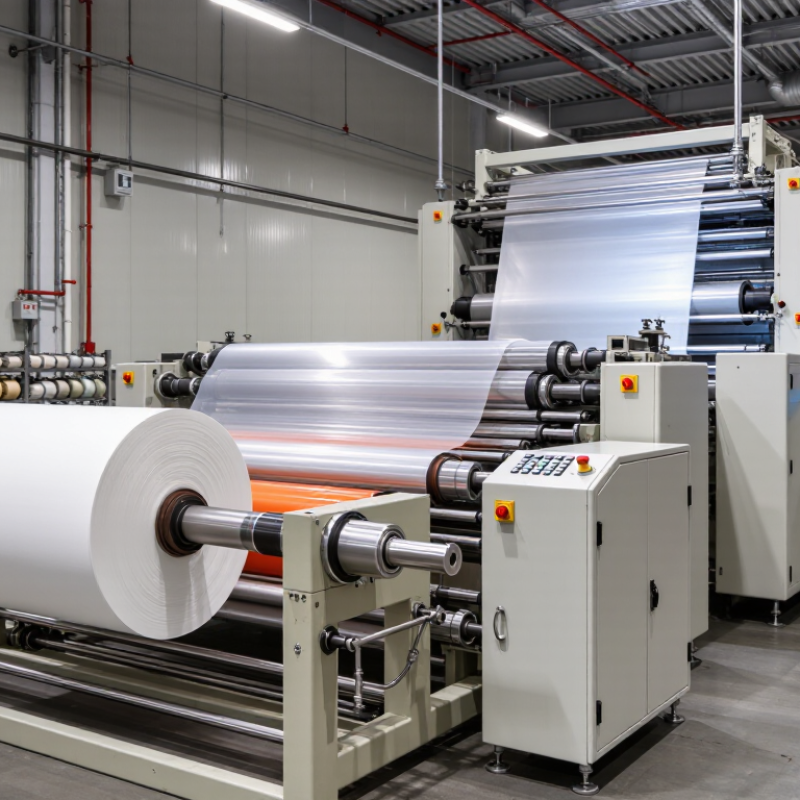
A textile lamination machine joins two or more flexible materials into one functional textile. It may bond fabric with film, foam, membrane, foil, or another textile layer. Heat, pressure, adhesive, or a combined process creates the bond. A typical machine includes unwinding units, coating equipment, heated nip rollers, cooling rollers, inspection systems, and a rewinder. The result can improve waterproofing, breathability, insulation, strength, or surface protection. It is a manufacturing system, not simply a heated roller.
Market data explains its growing relevance. Grand View Research valued the global technical textiles market at approximately USD 215.48 billion in 2023. The report forecasts a 6.2% compound annual growth rate from 2024 to 2030. Textile Exchange reported that polyester represented about 57% of global fiber production in 2023. These figures suggest strong demand for controlled, layered textile structures, especially in outdoor, medical, automotive, and protective applications. However, demand alone does not justify buying a machine.
The correct configuration depends on fabric weight, coating chemistry, line speed, and required bond strength. Dry lamination suits pre-coated adhesive films. Hot-melt systems can reduce solvent use, but temperature control becomes critical. In practice, results are rarely perfect. Wrinkles appear. Adhesive coverage varies. A small alignment error can create meters of waste. Experienced operators therefore test actual substrates before selecting rollers, heating zones, tension controls, and inspection settings. This practical trial is often more reliable than a brochure specification.
What Benefits Does Textile Lamination Offer?
Textile lamination offers more than a smoother appearance. It bonds two or more layers, creating fabrics with targeted protection, strength, and comfort. A laminated textile can resist rain, wind, abrasion, or heat while remaining flexible during use. In production, a controlled lamination machine applies pressure and heat evenly. This helps reduce wrinkles, uneven bonding, and avoidable material loss.
The 2024 Textile Exchange Materials Market Report estimates global fiber production reached 124 million tonnes in 2023. It may rise to 160 million tonnes by 2030. That growth makes material efficiency increasingly important. Lamination can combine separate functions into fewer layers, potentially reducing bulk and simplifying assembly. It may also support longer product life. Less replacement can mean lower resource demand.
Performance depends on process discipline. Poor temperature control can damage delicate fibers. Excess adhesive may reduce breathability. Real factory trials matter. A laboratory result is not enough. Lamination is not automatically greener, either. Some bonded structures are difficult to separate or recycle. The European Environment Agency continues to identify textile durability, reuse, and circular design as major industry priorities. Businesses should test peel strength, washing resistance, air permeability, and end-of-life options before investing. Small gains in consistency can matter. Mistakes remain expensive.
Which Industries Use Textile Lamination Machines?
Why Choose a Textile Lamination Machine for Your Business?
Textile lamination machines serve many industries because they bond fabrics with films, foams, membranes, or protective layers. Outdoor apparel manufacturers use them for waterproof jackets, breathable workwear, and insulated sleeping bags. The automotive sector applies laminated textiles to seat covers, door panels, headliners, and acoustic materials. According to Grand View Research, the global technical textiles market is projected to grow at about 5.5% annually from 2024 to 2030. That growth reflects rising demand for lighter, stronger, and more functional fabrics.
Medical textiles are another important application. Laminated materials support protective gowns, wound-care products, mattress covers, and breathable healthcare barriers. Fortune Business Insights valued the global medical textiles market at approximately USD 21.7 billion in 2023 and expects continued growth through 2030. Construction companies also use coated and laminated fabrics for roofing membranes, insulation facings, and temporary structures. Agriculture benefits from laminated greenhouse covers and crop-protection materials.
Each industry requires different pressure, temperature, adhesive, and line-speed settings. Small errors can cause wrinkles, weak bonding, or trapped air. That matters. In my experience, operators often focus on output speed before testing long-term durability. This can create expensive rework. A better approach combines trial runs, peel-strength testing, and careful inspection of fabric stretch. Industry reports show opportunity, but real performance still depends on process control and honest testing.
How Should Businesses Choose the Right Machine?
Why Choose a Textile Lamination Machine for Your Business?
How Should Businesses Choose the Right Machine?
Choosing a textile lamination machine starts with the fabric, not the advertised production speed. Measure fabric width, thickness, stretch, moisture sensitivity, and required bonding strength. A machine for protective workwear may need different heating zones than one for upholstery or outdoor fabrics. Check whether it supports hot-melt film, powder, adhesive paste, or flame lamination. Each method affects energy use, surface feel, and maintenance.
Textile Exchange reported that global fiber production reached 124 million tonnes in 2023. The report projects approximately 160 million tonnes by 2030. This growth increases pressure to reduce waste and improve material efficiency. Therefore, businesses should compare edge-trimming waste, adhesive consumption, heating recovery, and changeover time. A wider machine is not always better. It may create unnecessary energy demand for narrow orders. That assumption deserves testing.
Tips: Request a sample trial using your actual fabric and adhesive. Record bonding strength, line speed, temperature stability, and rejected meters. Ask operators to inspect roller access and cleaning time. Review service response and spare-part availability before signing. Small details matter.
Use pilot data instead of relying on brochures. The European Commission’s textile strategy also emphasizes durability, resource efficiency, and longer product life. A suitable laminator should support these goals through controlled tension and repeatable pressure. Still, laboratory results can disappoint on a busy production floor. Leave room for operator judgment, imperfect fabrics, and seasonal humidity.
Why Choose a Textile Lamination Machine for Your Business?
Typical operating ranges to consider when choosing a textile lamination machine
The right machine should match the required fabric width, production speed, bonding temperature, and working pressure. These industry-typical ranges are useful starting points for comparing equipment; actual values vary according to adhesive type, textile construction, and product requirements.