Why Are Automobile Bushings Important?
An Automobile Bushing is a small flexible component that helps connect moving parts while reducing vibration and noise. You may find bushings in suspension arms, steering linkages, and other chassis connections. Many are made from rubber or polyurethane, but material and shape vary by vehicle and application. Their job is not simply to soften the ride. They also help keep connected parts aligned as the vehicle moves over uneven pavement. Small part. Real responsibility.
When a bushing wears, the change may appear gradually. A driver might notice a dull knock over a pothole, extra vibration through the steering wheel, or less precise handling. These symptoms can have other causes, so they do not prove a bushing has failed. A qualified inspection can check for cracking, separation, excessive movement, or related damage. That distinction matters. Replacing parts based only on a noise can miss the real problem.
This article explores why automobile bushings matter, how they support comfort and control, and what signs may warrant attention. It also considers why replacement choices should follow the vehicle manufacturer’s specifications and a technician’s assessment. Not every squeak means urgent failure, and some wear is difficult to judge by sight alone. That uncertainty deserves attention, not guesswork. Understanding these modest components can help owners ask clearer questions during maintenance and recognize when a professional evaluation is sensible.
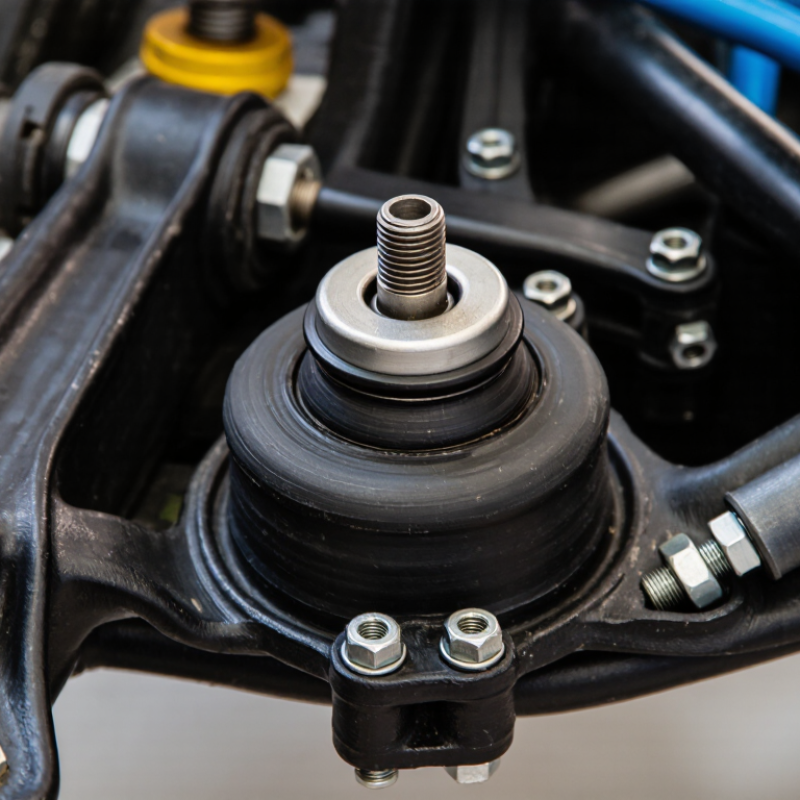
What Are Automobile Bushings?
What Are Automobile Bushings?
An automobile bushing is a compact sleeve or cushion fitted between connected parts, often where a suspension arm meets the vehicle frame. Most use rubber or another flexible elastomer around an inner sleeve, though designs vary. The material allows controlled movement while limiting metal-to-metal contact. Small part. Real work.
On a rough road, a control-arm bushing flexes as the wheel moves. It helps absorb vibration and reduce clunks transmitted into the cabin. Bushings also appear in stabilizer mounts, engine mounts, and other joints. They are not simply soft spacers: their stiffness affects how precisely components move and how the vehicle feels. Too much softness can dull response; excessive stiffness may pass more vibration through the body.
S&P Global Mobility reported that the average age of U.S. light vehicles reached 12.6 years in 2024. That figure describes vehicles, not bushing service life, but it highlights the long exposure these parts may face. Heat, road salt, repeated flexing, and oil contamination can contribute to wear. Cracks or looseness deserve inspection, though a small surface mark alone does not prove failure. Diagnosing the cause can be less tidy than the diagrams suggest.
How Do Automobile Bushings Work?
An automobile bushing is a flexible joint, usually made from rubber or polyurethane, fitted between suspension parts such as a control arm and the vehicle frame. As a wheel hits a ridge or pothole, the bushing compresses and twists. That movement helps absorb sharp impacts while limiting metal-to-metal contact and reducing vibration inside the cabin. It also lets suspension parts move through their designed arc without losing their intended alignment. Small part, busy job.
The U.S. Environmental Protection Agency’s 2023 Automotive Trends Report lists average new-vehicle weight at 4,329 pounds for model year 2022. That figure is not a bushing load rating, but it illustrates the repeated forces a vehicle’s suspension must manage. A bushing’s stiffness matters: too soft, and the wheel may shift more under braking or cornering; too stiff, and more road shock can reach the cabin. Engineers balance comfort, control, and durability, though there is no single ideal setting for every vehicle. Wear can be subtle at first. A dull knock over a driveway lip, uneven tire wear, or vague steering may justify a suspension inspection, but none proves a bushing has failed. EPA, Automotive Trends Report, 2023.
Where Are Bushings Located in a Vehicle?
Automotive bushings sit wherever a component needs controlled movement without metal-on-metal contact. In the suspension, look at the pivots joining control arms to the chassis, and at joints in trailing arms and stabilizer-bar links. Many are pressed into metal sleeves, with rubber or another elastomer cushioning bumps and limiting vibration. Small parts. Big effects.
At the front, bushings may also support the steering rack and strut assemblies; at the rear, they commonly connect suspension arms to the body or subframe. Separate mounts cushion the engine and transmission, while some vehicles use body or cab mounts between the frame and passenger compartment. Exact locations vary with suspension design, so a visual inspection should follow the vehicle’s service information rather than assume every layout is alike. A cracked edge, separated rubber, or shiny contact mark can help identify wear, but none proves the bushing alone caused a noise.
S&P Global Mobility reported that the average age of U.S. light vehicles reached 12.6 years in 2024. That fleet-wide figure is not a bushing replacement schedule, but it highlights why inspection matters on older vehicles. Check both sides. A bushing can look intact at rest yet shift under load, and diagnosis is not always obvious.
Why Are Bushings Important for Vehicle Performance and Safety?
Why Are Automobile Bushings Important?
Bushings are small flexible parts fitted between suspension components and the vehicle’s frame. Often made from rubber or similar materials, they absorb vibration and allow controlled movement. You may not see them during a routine walk-around. You can feel their effect on a rough road.
Healthy bushings help keep suspension parts aligned and reduce unwanted movement during braking, cornering, and acceleration. When they crack or soften, you might hear a clunk over bumps, feel extra vibration, or notice less precise steering. These symptoms can affect control, but they do not prove a bushing is the cause. Other worn parts can feel similar. A bushing also cannot compensate for damaged tires or poor alignment.
Tips: Ask for a close inspection if you hear repeated suspension knocks or feel a new change in steering. Look for splits, looseness, or uneven tire wear, but leave loaded suspension checks to a qualified technician. Repairs should match the vehicle’s design; replacing one part is not always the whole fix. Small details matter here. A quiet ride alone does not confirm that every bushing is sound.