What Are Double Glass Solar Panels?
What Are Double Glass Solar Panels? The name describes their structure: photovoltaic cells sit between two sheets of glass, rather than a glass front and polymer backsheet. That second glass layer creates a rigid, sealed sandwich. It can help protect cells from moisture, temperature changes, and mechanical stress. The panels are used in homes, commercial buildings, and large solar farms. Their appearance is familiar, but the construction changes how they handle weather and age.
PV reliability expert Dr. Sarah Kurtz’s work highlights an important principle: long-term field performance matters, not just a module’s rating on day one. This is a paraphrase, not a direct quotation. Double Glass Solar Panels can offer strong durability, and some designs allow light through from both sides. That can increase energy production when the rear surface receives reflected sunlight. But the result depends on installation height, ground color, shading, and system design. A white roof may reflect more light than dark soil. Small details matter.
There are trade-offs. Two glass layers can add weight, affect handling, and increase transport demands. Not every roof or mounting system suits them. And “glass-glass” does not mean maintenance-free. Buyers should check certified test data, warranty terms, and the panel’s intended climate. The construction is promising. Still, a datasheet cannot replace years of field evidence.
Definition and Basic Structure of Double Glass Solar Panels
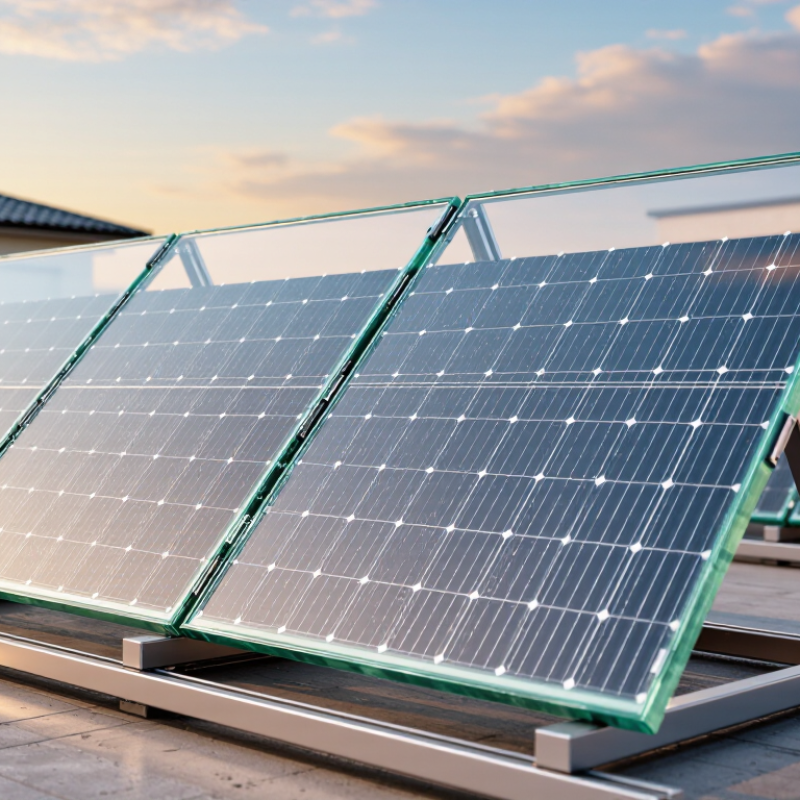
A double-glass solar panel, also called a glass-glass module, sandwiches its solar cells between two sheets of glass. The front sheet protects the cells from weather and impact. The rear sheet replaces the polymer backsheet used in many conventional modules. Encapsulant layers hold the cells in place and limit moisture exposure. A frame may support the glass edges, though some designs are frameless.
The basic stack is easy to picture: glass, encapsulant, interconnected cells, another encapsulant layer, then rear glass. In a bifacial version, light can reach the cells from both sides, so reflected light from pale ground may contribute to power output. The 2024 International Technology Roadmap for Photovoltaic (ITRPV) estimated bifacial cell technologies accounted for roughly 70% of the market in 2023. That figure concerns cell technology, not double-glass modules specifically; bifacial panels can also use transparent backsheets.
The construction has trade-offs. Two glass sheets can improve resistance to moisture and reduce reliance on polymer backsheets, but they add weight and require careful handling. That matters on a rooftop, where installers must consider lifting and mounting loads. More glass is not automatically better. Actual durability depends on glass thickness, edge sealing, encapsulant quality, and manufacturing control—details worth checking in a product’s technical documentation.
What Are Double Glass Solar Panels? - Definition and Basic Structure of Double Glass Solar Panels
| Layer or Feature | Typical Position or Specification | Material or Construction | Purpose and Notes |
| Definition | Front and rear surfaces of the module | A photovoltaic module with glass on both sides of the cell assembly | Unlike a conventional glass-backsheet module, it uses a glass rear cover instead of a polymer backsheet. |
| Front glass | Outermost, light-facing layer | Solar-grade tempered glass; thickness varies by module design and may be around 2–3.2 mm | Transmits sunlight and protects the cell stack from weather, impact, and surface wear. |
| Front encapsulant | Between the front glass and solar cells | A transparent polymer encapsulant, commonly EVA or POE | Bonds and cushions the cells, helps exclude moisture, and electrically insulates the cell assembly. |
| Solar cells and interconnections | Central layer of the module | Crystalline silicon cells connected by conductive ribbons or other electrical interconnects | Cells convert light into direct-current electricity; cell format and layout depend on the module design. |
| Rear encapsulant | Between the cells and rear glass | A transparent or application-specific polymer encapsulant, commonly EVA or POE | Encapsulates the rear side of the cells and bonds the cell assembly to the rear glass. |
| Rear glass | Outermost layer on the back of the module | Solar-grade glass; thickness varies, with designs often using glass around 2–3.2 mm thick | Replaces the polymer backsheet and provides a durable rear barrier. Transparent rear glass can allow light to reach bifacial cells. |
| Frame and edge sealing | Around the module perimeter; configuration varies | May include an aluminum frame, edge seal, or other edge protection | Supports handling and mounting and helps protect the laminated stack. Some designs use frameless construction. |
| Junction box and cables | Usually attached to the rear surface | Electrical enclosure, bypass diodes, and output leads | Collects module current and provides electrical connections; bypass diodes help limit the effects of cell-string shading. |
| Basic layer sequence | Front glass → front encapsulant → solar cells and interconnections → rear encapsulant → rear glass. Actual materials and thicknesses vary by module design. |
How Double Glass Solar Panels Convert Sunlight into Electricity
A double-glass solar panel uses glass on both its front and rear sides, with solar cells sealed between them. Sunlight passes through the front glass and reaches the cells, commonly made from silicon. The light’s energy releases charge carriers inside the silicon. Their movement creates direct-current electricity. Tiny metal contacts collect that current and carry it through wires. It starts with light.
The panel’s glass layers help shield the cells from moisture and mechanical stress. Some models can also collect reflected light from behind, but only when their cell design and installation allow it. An inverter then converts the panels’ direct current into alternating current for many household circuits. Actual output changes with sunlight, temperature, shading, and panel angle. The process sounds tidy; real roofs are less tidy, and a small shadow can reduce production.
Tips: Keep nearby branches and rooftop equipment from shading the panels. Ask an installer whether the rear glass can receive useful reflected light at your site. Check the system’s specifications and monitoring data rather than assuming every double-glass panel produces more electricity.
Key Materials and Design Features
What Are Double Glass Solar Panels?
Key Materials and Design Features
A double-glass solar panel places photovoltaic cells between two glass sheets. The front pane is often low-iron, tempered glass, allowing light through while resisting impacts. A second glass layer replaces the polymer backsheet used in many conventional panels. It may be thinner, but its role is demanding.
Between the panes, the cells sit in an encapsulant, commonly an ethylene-vinyl acetate or polyolefin-based film. This layer cushions the cells and helps limit moisture exposure. Conductive ribbons connect the cells, while sealed edges help keep water and contaminants out. Some designs include an aluminum frame; others use reinforced edges and specific mounting hardware. Details vary.
That difference matters. Glass can resist ultraviolet exposure and moisture, yet added weight may complicate handling and roof installation. A chipped edge is easy to miss. Installers should inspect corners, seals, and clamp placement, since concentrated pressure can stress the glass. Material thickness, seal quality, and assembly tolerances all affect durability. Not every double-glass panel performs the same. Some trade-offs deserve closer testing.
What Are Double Glass Solar Panels? — Key Materials and Design Features
Typical protective-layer thickness in a conventional backsheet module compared with a double-glass module.
The front cover is commonly solar glass. A conventional module typically uses a polymer backsheet at the rear, while a double-glass design uses glass on both sides to protect the encapsulated solar cells. Values shown are representative nominal thicknesses in millimeters; specifications vary by module.
Advantages and Limitations
Double-glass solar panels use glass on both the front and rear, replacing the polymer backsheet found in many conventional modules. This construction can provide stronger protection against moisture and environmental exposure, which may help limit degradation over time. In a bifacial design, light reaching the rear side can also contribute to power generation. The actual gain depends on the cells, mounting height, ground surface, and available reflected light. No magic here.
The trade-offs matter. Two glass layers usually make a panel heavier, so installers must account for handling, roof capacity, and mounting requirements. Glass can also crack if panels are poorly supported or struck during transport. Costs may be higher, and the extra durability does not guarantee better energy output in every installation. A shaded rooftop, for example, may see little benefit from rear-side generation. Check the product’s tested specifications and warranty terms, and compare them with local conditions. It is easy to focus on lifespan claims and overlook the practical burden of weight.
Common Applications and Selection Considerations
What Are Double Glass Solar Panels?
Common Applications and Selection Considerations
Double-glass solar panels enclose solar cells between two layers of glass. This construction can help protect the cells from moisture and mechanical stress. The added glass also affects weight, installation, and handling. Not every site benefits equally.
These panels are often considered for ground-mounted arrays, solar carports, and commercial rooftops. On suitable ground-mounted systems, light reaching the rear can contribute to production when the panel design supports bifacial generation. That depends on spacing, mounting height, and the surface below. Pale gravel may reflect more light than dark soil. Small details matter.
Selection starts with the site. Check the roof or support structure’s load capacity, since glass-glass modules may weigh more than some alternatives. Ask installers to compare dimensions, mounting requirements, electrical ratings, and performance under local temperature and weather conditions. For a rooftop, access and handling can be inconvenient. Worth checking early. Also review independent certification, product and performance warranty terms, and the installer’s experience with this module type. A long warranty is not the whole story; installation quality and clear service arrangements matter too. Claims about durability should be weighed against the project’s actual exposure, not treated as a guarantee.