Empowering Engineering Excellence: Innovate, Elevate, Deliver.
China’s White Birch Veneer market deserves careful supplier checks, not a ranking built on promotional claims. The FAO’s Global Forest Resources Assessment 2020 estimates that forests cover about 4.06 billion hectares, roughly 31% of global land area. That figure describes forests, not birch veneer production. The distinction matters: public forestry statistics rarely identify the quality, grade, or factory origin of every veneer sheet.
For buyers, a credible comparison starts with evidence they can inspect. Ask suppliers to identify the birch species, state veneer thickness and moisture targets, and provide clear grading criteria. Request recent production photos, traceable batch documents, and samples showing face quality, color variation, and repair work. Small details count. A pale sheet under warehouse lighting can look different beside a window or after finishing.
Trade databases, including UN Comtrade, can help buyers examine declared trade flows, but product categories may not isolate White Birch Veneer precisely. Treat shipment data as a clue, not proof of factory capability. A supplier’s sample, written specification, and response to technical questions offer more direct evidence. Even these checks have limits; one good sample cannot guarantee every future batch. This guide therefore considers suppliers through practical signals—product consistency, documentation, communication, and export experience—rather than unsupported claims of being “number one.” Reliable sourcing takes a little skepticism.
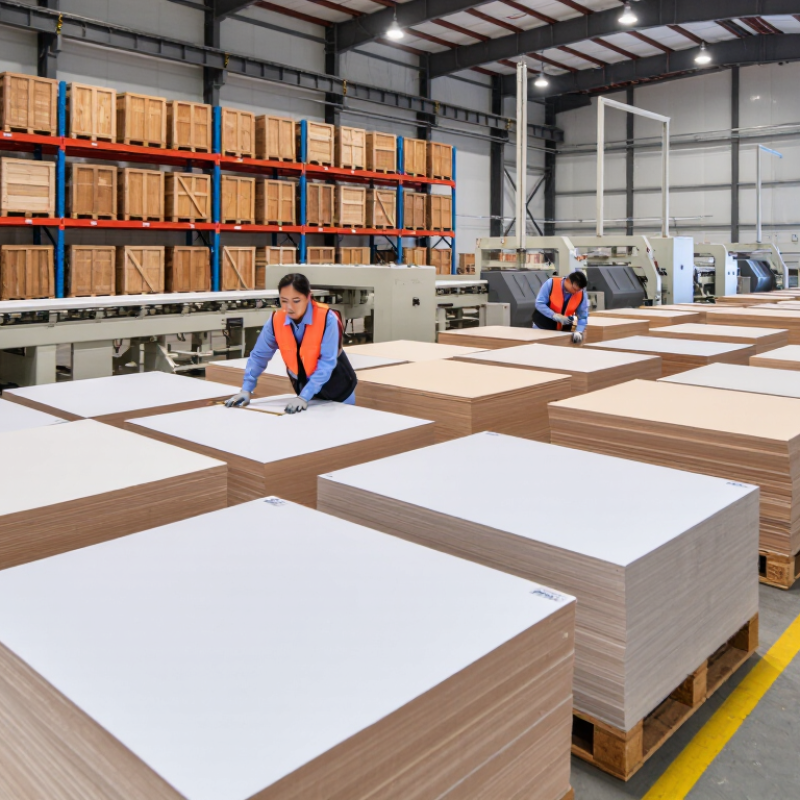
White birch veneer is a thin slice of birch wood, not a printed imitation. It is bonded to a stable core to make furniture panels, cabinet doors, wall lining, and interior trim. The term “white birch” can cover different birch species, so buyers should confirm the botanical name and origin. Names vary.
The USDA Forest Products Laboratory’s Wood Handbook describes veneer as thin sheets, commonly about 0.25–6.4 mm thick. It also reports a basic specific gravity of roughly 0.55 for paper birch, useful context when comparing weight and wood properties. These figures do not guarantee a finished panel’s performance; core material, glue, lay-up, and pressing matter too. A pale face veneer can show fine grain, small knots, or color shifts under clear coating. That variation is part of real wood—and sometimes a production headache.
In use, white birch veneer gives broad surfaces a light, quiet appearance while using less solid birch than a thick board would. It works well on wardrobes, desks, shelving, and decorative panels, especially where a consistent face is needed. Check veneer thickness, moisture, matching method, and finish samples before specifying a large order. A sample can look uniform; a full batch may not. The USDA handbook is a technical reference, but actual grades and tolerances should be confirmed with the supplier.
China’s white birch veneer supply chain starts with log sourcing, then moves through peeling, drying, grading, and delivery. Logs may come from domestic forests or overseas suppliers, depending on species availability, quality, and mill requirements. FAO’s Global Forest Resources Assessment 2020 estimates China’s forest area at about 220 million hectares. That figure covers all forest types, not the amount of commercially available birch. That distinction matters.
At the mill, workers inspect logs for diameter, defects, and moisture before rotary peeling. Veneer is clipped into sheets, dried, sorted by face quality, and packed for furniture or panel production. Buyers should request species details, thickness tolerances, moisture specifications, and batch-level inspection records. Not every sheet matches. Small differences in color or grain can appear between batches, even when the stated grade is unchanged.
The chain can include traders, processors, and transport providers, so traceability may weaken between harvest and shipment. Ask suppliers to explain where logs originate and how each batch is identified. Check sample sheets against production lots, not just showroom samples. A practical caution: published forest-area statistics cannot verify a supplier’s birch origin or veneer consistency. Those details need shipment records and independent quality checks.
When evaluating white birch veneer suppliers, ask for the botanical species, country of harvest, and batch-level traceability documents. Appearance alone is not proof of species. FAO’s Global Forest Resources Assessment 2020 reports that forest loss averaged 10 million hectares annually in 2015–2020. That figure makes credible sourcing records worth checking, not just a sustainability logo. Ask whether documents connect the logs, veneer lots, and finished sheets.
Inspect samples under consistent lighting. Look for open splits, mineral streaks, patch repairs, and color differences across adjacent leaves. Measure thickness at several points with a calibrated gauge, then compare the readings with the supplier’s stated tolerance. Request moisture-test records and bonding results, with methods identified; EN 635 addresses veneer appearance classification, while EN 314-2 covers plywood bond quality. Small details matter. A polished sample can still mislead.
A reliable supplier should provide dated inspection reports, clear grading rules, and repeatable results across production batches. Ask for a recent production sample, not only a showroom piece, and check how defects are recorded. Confirm packing protects edges from impact and moisture during transit. I would also compare lead times with actual capacity records. This takes time, and the paperwork may be imperfect; unexplained gaps deserve follow-up before a large order.
How to evaluate white birch veneer suppliers
This sample buyer-defined rubric allocates 100 points across six procurement criteria. It is an evaluation framework, not supplier-specific data or a market ranking. Verify each item with product documents, samples, and factory or shipment records.
Leading white birch veneer suppliers in China are best assessed by product consistency, technical support, and clear communication, rather than price alone. White birch veneer is valued for its pale tone, fine grain, and smooth surface.
Yet natural variation is normal. Ask suppliers for current samples and confirm the face grade, thickness tolerance, sheet size, and backing options before placing an order.
Reliable suppliers should explain how they control moisture, drying, and veneer matching across production batches. Request written specifications and inspect several sheets under neutral light; a sample can look different from a full shipment.
Check packaging details too, especially edge protection and moisture barriers for long-distance transport. Small details matter. Buyers may also ask about production capacity, lead times, inspection procedures, and how defects are handled.
These questions help distinguish a capable partner from a low-cost seller with vague promises. No supplier is perfect, and even careful grading can leave some color differences. A practical relationship depends on honest limits, prompt updates, and records that make each order easier to verify.
Supplier verification starts with the exact product, not a catalogue photo. Ask for the birch species, veneer grade, face and back construction, thickness tolerance, moisture range, and adhesive specification. Request recent production samples and batch-linked inspection records. Check whether the supplier can explain defects such as patches, open joints, color variation, or veneer splits. A polished sample is not enough.
FAO’s Global Forest Products Facts and Figures 2023 reports about 399 million cubic metres of wood-based panel production worldwide in 2022. This is useful market context, but it does not verify any single factory’s capacity. Ask for current capacity details, traceability documents, and independent test reports tied to the product being quoted. Confirm that reported test methods match your intended use. Paperwork can look convincing.
Compare like with like: use the same thickness, grade, dimensions, packing, order volume, lead time, and delivery terms for every quote. Ask suppliers to separate material, finishing, inspection, and freight costs. Clarify how they handle rejected panels and replacement shipments. A low price may reflect thinner face veneer or looser sorting. I would still inspect a trial order; even careful checks can miss defects inside a panel.