Empowering Engineering Excellence: Innovate, Elevate, Deliver.
China has become a major sourcing base for compact lifting equipment, including the Short Hydraulic Jack. Global buyers now expect more than low prices. They need stable performance, clear documentation, and dependable after-sales support.
A Short Hydraulic Jack may look simple on a workshop floor. Its small body must still handle pressure, heat, uneven loads, and repeated cycles. Cylinder finish, seal quality, relief-valve accuracy, and base stability deserve close attention. Dr. Herbert E. Merritt, a respected hydraulic-systems author, stated, “Pressure is created by resistance to flow.” This principle explains why poor component matching can cause slow lifting, overheating, or premature leakage.
The strongest Chinese suppliers usually provide load charts, test records, material details, and practical warranty terms. Experienced exporters can also explain differences between welded and forged bodies, low-profile models, and adjustable-height designs. These details matter when a jack must fit beneath construction machinery, delivery trucks, or crowded workshop benches.
Look beyond the catalog.
Factory audits, sample testing, and production traceability can reveal important differences. Buyers should request evidence of rated-load testing, oil-seal inspection, packaging strength, and replacement-part availability. International compliance requirements also vary by market, so supplier claims should be verified independently.
No supplier is perfect. Even a polished catalog may hide inconsistent finishing or vague tolerances. That is why careful buyers compare samples, not promises alone. A reliable sourcing decision balances price, engineering support, delivery discipline, and long-term service. This guide examines China’s leading Short Hydraulic Jack suppliers through those practical criteria.
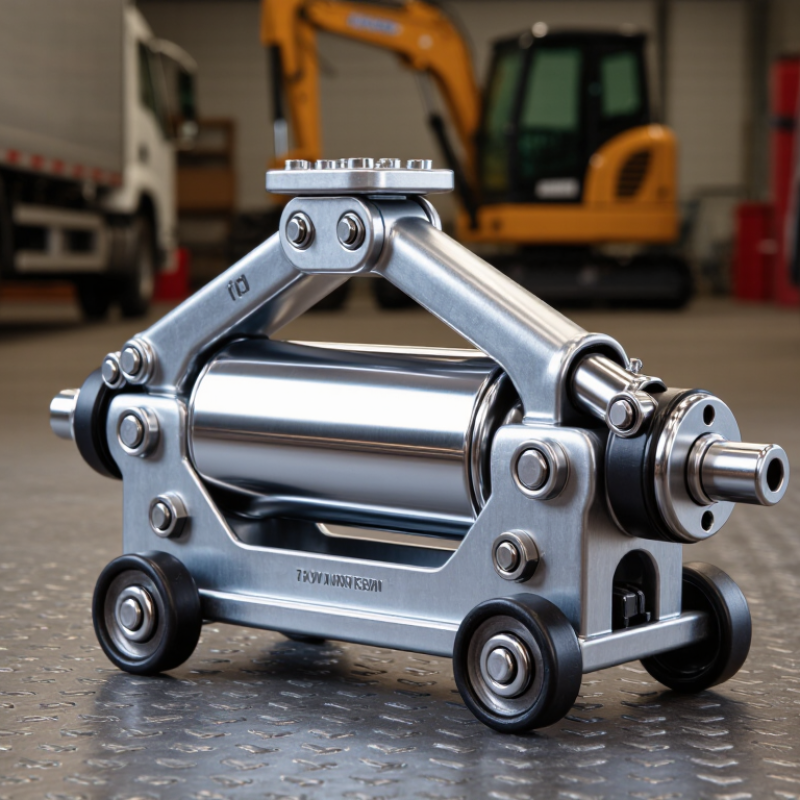
A short hydraulic jack is a compact lifting tool designed for vehicles and machinery with limited ground clearance. Its shorter body fits beneath narrow spaces where standard jacks cannot reach. It uses hydraulic pressure to multiply lifting force. When the handle moves, hydraulic fluid enters a cylinder. The fluid pushes a piston upward, raising the saddle and its load.
In practical workshop use, the jack should stand on firm, level ground. The saddle must contact a manufacturer-approved lifting point. Never rely on hydraulic pressure alone for extended support. Use properly rated stands after lifting. A short jack may offer excellent access, but its compact size does not mean unlimited capacity. Check the rated load, minimum height, maximum height, release-valve control, and fluid condition before purchase. Experienced buyers also inspect welds, seals, wheels, and handle movement. Small leaks matter.
Tips: Measure the lowest clearance first. Choose capacity above the normal working load. Keep the piston clean and fully retracted during storage. Test the release valve slowly. I once overlooked uneven flooring during a routine inspection. The jack remained stable, but the setup was not ideal. That mistake reinforced a simple lesson: lifting performance depends on the entire working surface, not only the tool. Global buyers should request clear specifications, inspection records, replacement-part information, and user instructions before placing an order.
Reliable short hydraulic jack suppliers should offer more than competitive prices. They need practical engineering experience and clear production controls. A dependable supplier explains lifting capacity, minimum height, stroke length, working pressure, and safety margins. These details help buyers match the jack to workshop and field conditions.
Look for documented material inspection and repeatable load testing. Each unit should receive checks for leakage, smooth release, valve performance, and stable lowering. Strong suppliers provide test records, drawings, manuals, and traceable batch information. Protective packaging also matters. A dented cylinder or damaged seal can create problems before installation. Communication is another useful indicator. Technical replies should be specific, not copied from a general catalog. Still, no supplier is perfect. A sample may pass inspection while later batches vary, so regular quality reviews remain necessary.
Tips: Request one sample before a large order. Test it under a controlled load. Confirm the jack remains stable on a firm, level surface. Ask how replacement seals and service guidance are handled. Check whether packaging suits long-distance transport and humid storage. A supplier that welcomes questions usually understands real operating conditions. However, friendly communication cannot replace evidence. Compare test documents, inspection methods, and delivery records before choosing a long-term partner.
When comparing China-based short hydraulic jack manufacturers, look beyond catalog prices. A low quote may hide thinner steel, weaker seals, or limited inspection records. Request drawings, rated-load test videos, material certificates, and batch inspection reports. Verify whether the supplier tests every unit or only samples. That difference matters when a 20-ton jack lifts uneven workshop equipment.
Use recognized benchmarks. ISO 10100 covers hydraulic cylinder acceptance testing, while ASME B30.1 addresses jacks and industrial lifting equipment. A capable manufacturer should explain how its testing reflects these requirements. The ISO Survey 2022 reported more than 1.26 million ISO 9001 certificates worldwide. Certification alone proves little, however. Check its scope, issuing body, expiry date, and factory address.
Production evidence should be specific. Ask for weld penetration records, pressure-holding times, relief-valve settings, and salt-spray results. Compare the warranty with actual replacement procedures. One supplier may promise two years but require costly return shipping. Another may provide seals locally, which can reduce downtime. The World Bank’s 2023 Logistics Performance Index gave China a score of 3.7, ranking it 19th globally. Logistics are strong, yet port delays and documentation errors still occur. Request carton dimensions, gross weight, HS classification, and a pre-shipment photo set.
A factory visit helps. Sometimes, not enough.
Personally, I would score quality evidence, engineering support, delivery control, and total landed cost separately. My earlier mistake was trusting polished product photos too quickly. A sample should be tested with a calibrated load, repeated lift cycles, and a slow-leak inspection before any large order.
For global buyers, a short hydraulic jack supplier must prove more than lifting capacity. Quality begins with traceable steel, controlled welding, and calibrated pressure gauges. The ISO Survey 2022 recorded over 1.2 million ISO 9001 certificates worldwide. Certification helps, but it does not replace product-level evidence.
Ask for test records linked to each production batch. Records should show rated-load lifting, load holding, leakage inspection, and overload testing under the applicable standard. EN 1494 covers mobile jacks in European markets, while ASME PALD is commonly referenced in North America. A practical inspection should include cylinder finish, release-valve response, weld appearance, and packaging damage. Small details matter.
Export compliance also requires accurate labels, manuals, customs codes, and declarations of conformity. For European shipments, suppliers should assess machinery safety obligations and provide risk documentation. The World Bank’s Logistics Performance Index 2023 emphasizes shipment reliability, tracking, and customs efficiency. Missing documents can delay a container even when the jack performs well. I have seen buyers trust certificates too quickly. A certificate may cover a factory system, not every model or batch. That weakness deserves review. Ask for independent inspection when order value is high, and verify gauge calibration dates before shipment.
China Top Short Hydraulic Jack Suppliers for Global Buyers?
Global buyers should judge short hydraulic jack suppliers by evidence, not catalog photos. The global hydraulic equipment market reached about USD 49.96 billion in 2023, according to Fortune Business Insights. This growth increases supplier choices, but also increases quality differences. A buyer should compare rated capacity, minimum height, lifting stroke, oil volume, and relief-valve performance. These details matter on crowded workshop floors where every millimeter counts.
Request a load-test report for each model. The report should show test pressure, holding time, leakage results, and serial-number traceability. Ask about seal materials, corrosion protection, spring durability, and replacement-part availability. ISO 4413 provides useful hydraulic safety principles, but certification claims still require verification. Review factory quality procedures, production samples, and inspection records before placing a large order. A sample may lift correctly once, yet fail after repeated cycles. That weakness is easy to miss.
MarketsandMarkets has projected steady growth for hydraulic equipment through 2028, with demand supported by construction, maintenance, and industrial machinery. Buyers should therefore assess production capacity and delivery consistency, not only unit price. Confirm packaging strength, export documents, warranty terms, and technical response times. In practical sourcing, the cheapest quotation is rarely the cheapest ownership cost. I would still challenge that assumption with real cycle testing. The first supplier chosen may not remain the best supplier.
| Selection Dimension | Practical Benchmark for Short Hydraulic Jacks | Why It Matters to Global Buyers | Recommended Verification Evidence | Procurement Priority |
|---|---|---|---|---|
| Rated lifting capacity | Common product classes range from approximately 2 to 50 tonnes; select a rated capacity above the maximum working load. | A jack should not be operated at or beyond its rated limit. The vehicle or machinery manufacturer’s lifting points and load distribution must also be considered. | Technical datasheet, rating plate photograph, load-test record, and written confirmation of the intended application. | Critical |
| Closed height | Short-body designs are typically chosen where the available clearance is limited; compare the minimum closed height with the actual access point. | A jack with excessive closed height may not fit beneath low-clearance vehicles, industrial frames, or machinery. | Dimensioned engineering drawing, inspection sample, and measurement report with tolerance information. | Critical |
| Maximum lifting height | Compare the total lifting range with the required service height; the exact range varies by capacity and cylinder design. | Insufficient travel can prevent wheel removal, component replacement, or alignment work even when the load capacity is adequate. | Full-stroke measurement, product drawing, and functional test under the specified load. | Critical |
| Hydraulic leakage control | Supplier should define acceptance limits for visible leakage, pressure loss, seal performance, and post-test holding capability. | Leakage can reduce lifting performance, create slipping hazards, contaminate work areas, and increase warranty claims. | Hydraulic pressure test procedure, inspection checklist, seal specifications, and batch test records. | Critical |
| Overload protection | A pressure-relief or overload-control system should be specified, correctly adjusted, and protected against unauthorized modification. | Overload protection helps reduce the risk of structural or hydraulic failure caused by operation beyond the rated load. | Valve specification, calibration record, factory test report, and sample inspection of the adjustment seal. | Critical |
| Materials and corrosion protection | Review steel grade or material specification for load-bearing parts, surface treatment, coating system, and exposed-machined-surface protection. | Material quality and corrosion resistance affect service life, especially during sea transport, outdoor storage, or humid operation. | Material certificates where applicable, coating specification, salt-spray or corrosion-test data, and pre-shipment photographs. | High |
| Stability and base design | Assess base footprint, center of gravity, saddle design, handle position, and operating requirements for level, firm surfaces. | Stability is influenced by the surface, load position, lifting height, and side forces—not only by the jack’s rated capacity. | Engineering drawing, stability assessment, operating manual, and sample demonstration under controlled conditions. | Critical |
| Applicable standards and conformity | Request the exact standards applicable to the destination market and product type; do not rely only on general statements such as “CE approved.” | Correct conformity documentation supports customs clearance, workplace safety review, distributor approval, and product liability management. | Declaration of conformity, relevant test reports, instruction manual, risk assessment, and traceable certificate issuer details. | Critical |
| Factory quality control | A mature supplier should use incoming-material inspection, in-process checks, final functional testing, nonconformance control, and traceable batch records. | Documented quality controls reduce variation between production batches and make corrective action easier. | Quality manual, inspection plan, sample records, calibration certificates, and independent pre-shipment inspection results. | High |
| Customization capability | Evaluate capability for dimensions, saddle type, handle configuration, packaging, labeling, manuals, and destination-market requirements. | Controlled customization can improve fit and compliance, but uncontrolled changes may invalidate test results or warranties. | Approved drawings, engineering change process, prototype sample, and written confirmation of design responsibility. | High |
| Minimum order quantity and sampling | Confirm sample availability, sample lead time, minimum order quantity, tooling charges, and whether the sample matches mass-production specifications. | A low-risk qualification process allows buyers to validate fit, performance, packaging, and documentation before a large order. | Pro forma invoice, sample specification, approval record, and signed golden-sample or reference-sample agreement. | High |
| Lead time and production capacity | Obtain separate timelines for sampling, mass production, inspection, export preparation, and peak-season orders. | Reliable delivery planning reduces stockouts, project delays, and emergency freight costs. | Capacity statement, production schedule, historical on-time delivery data, and agreed delay-notification procedure. | High |
| Export packaging and shipping dimensions | Confirm individual packaging, pallet or carton configuration, gross weight, cubic volume, moisture protection, and drop or compression protection. | Packaging affects damage rates, container utilization, handling safety, and total landed cost. | Packing list, packaging drawings, shipping marks, photographs, and transport simulation or inspection records where required. | High |
| Warranty and spare parts | Clarify warranty duration, exclusions, claim procedure, replacement seals, release valves, saddles, handles, and other service parts. | Serviceable components can reduce downtime and lower the total cost of ownership over the product life cycle. | Written warranty, spare-parts list, exploded-view drawing, response-time commitment, and claim-resolution records. | High |
| Supplier traceability and communication | Require consistent technical contacts, document revision control, batch or serial traceability, and clear escalation procedures. | Traceability improves recall management, complaint investigation, and long-term supplier coordination. | Business registration information, factory audit, organization chart, traceability example, and communication service-level agreement. | High |
| Total landed cost | Calculate product price together with tooling, inspection, packaging, inland transport, freight, insurance, duties, taxes, and after-sales costs. | The lowest unit price may not produce the lowest delivered cost or the best reliability. | Itemized quotation, Incoterms, freight estimate, tariff classification, payment terms, and cost-of-quality assumptions. | High |