Empowering Engineering Excellence: Innovate, Elevate, Deliver.
In 2026, a Metal Sandwich Panel Roof can describe several different roof systems, not one standard product. The panel usually combines metal skins with an insulating core, but its profile, joint design, and core material affect performance. These differences matter on real projects. A low-slope warehouse roof, for example, faces different drainage and access needs than a small workshop roof.
This guide compares common panel types by their construction and practical use. It looks at standing-seam and through-fastened profiles, along with cores such as PIR or polyurethane, mineral wool, and EPS. Each option brings trade-offs in thermal performance, fire behavior, weight, cost, and installation. No single type fits every building. The right choice depends on climate, roof geometry, project requirements, and verified product specifications.
Small details count. A joint that looks secure in a sample may need careful detailing around gutters, ridges, and roof penetrations. Panel thickness alone does not determine the whole roof’s performance; installation quality and compatible accessories matter too. Product data should be checked against the project’s needs, rather than relying on broad marketing claims. The terminology is not always tidy, and product names can vary between manufacturers. That deserves a closer look. The sections ahead explain what distinguishes the leading roof types and which questions help narrow the choice.
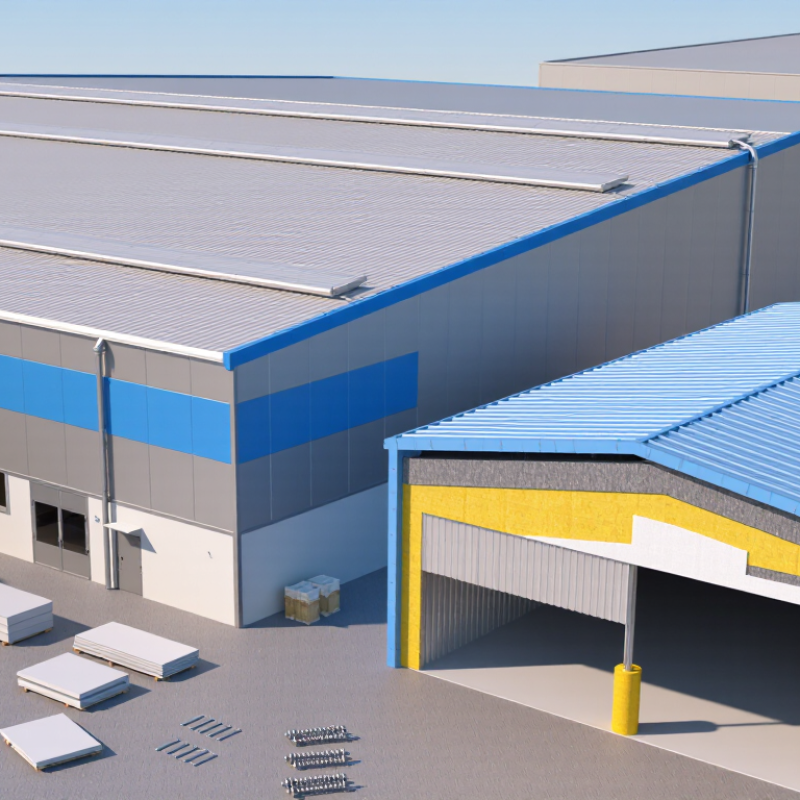
A metal sandwich roof panel combines two metal facings with an insulating core. The outer sheet sheds rain and resists weather, while the inner sheet forms the finished ceiling surface. Between them, a bonded core helps limit heat transfer and adds stiffness. Common cores include mineral wool, polyisocyanurate, and expanded polystyrene. Each behaves differently in fire, moisture, and thermal performance, so the right choice depends on the building and its use. These panels arrive as a single unit. That can simplify installation, but it does not remove the need for careful detailing.
Panel joints, fasteners, and edge closures are just as important as the core. Side laps and end joints need to align properly to reduce water entry and air leakage. Fasteners must suit the panel profile and supporting structure; over-tightening can distort the metal skin. Roof slope, wind exposure, drainage paths, and expected loads should be checked during design. Small details matter. A poorly sealed cut edge or loose flashing can undermine an otherwise well-built roof. I would not judge a panel by thickness alone.
Metal sandwich roof panels are usually classified by their insulating core: polyisocyanurate (PIR), polyurethane (PUR), mineral wool, or expanded polystyrene (EPS). PIR and PUR panels provide strong insulation with relatively slim profiles, useful where roof depth is limited. EPS is lightweight and often economical, though performance depends on panel thickness and detailing. Mineral-wool panels are heavier but valued for fire resistance and sound absorption. The right choice depends on the building, not just the core’s advertised rating.
The scale of the issue is significant. UNEP’s Global Status Report for Buildings and Construction 2024/2025 reports that buildings and construction used 34% of global energy and produced 37% of energy- and process-related carbon dioxide emissions in 2022. Better roof insulation can help reduce heat flow, but panel joints, fasteners, and penetrations matter too. A small gap at a ridge or gutter can undermine an otherwise capable panel.
Panel profiles also differ. Concealed-fix systems hide fasteners and allow cleaner roof lines; exposed-fix panels make attachment points visible and accessible for inspection. Check declared thermal performance, load capacity, and fire-test documentation against the project conditions and applicable standards. A specification can look convincing on paper. Site workmanship still decides much of the outcome.
What Are the Top Metal Sandwich Panel Roof Types in 2026?
How Core Materials and Roof Profiles Affect Performance
Metal sandwich roof panels pair two metal sheets with an insulating core. In 2026, common options include PIR or PUR, mineral wool, and EPS cores. Each behaves differently. PIR and PUR often provide strong insulation with relatively slim panels. Mineral wool can support better fire performance and sound absorption, but panels may be heavier. EPS is lightweight and economical, though its suitability depends on project requirements. Check tested assembly ratings, not just core descriptions.
Roof profiles matter, too. Concealed-fix panels hide fasteners and reduce exposed points where water may enter. Through-fastened, ribbed panels are often straightforward to install and inspect. Their visible screws need careful placement and maintenance. Panel width, slope, wind exposure, and drainage details all affect performance. A profile that works on a sheltered shed may not suit a broad, windy roof. Specifications should match the building, not just the catalogue.
Tips: Ask for the full panel system’s thermal and fire test data. Check that laps, fasteners, and flashings suit the roof slope. On site, inspect cut edges and sealant work closely. Small details matter. I’ve seen neat panels let water in at poorly finished eaves. The selection is not always obvious; confirm details with a qualified designer or installer.
Metal sandwich roof panels usually pair two steel sheets with an insulating core. The main choices include mineral wool and rigid foam cores, such as PIR or PUR. Their trade-offs are clearest when fire performance, insulation, and installed cost are compared together.
Mineral wool cores are generally non-combustible, which can help where fire resistance is a major design concern. However, the whole roof assembly matters: joints, fixings, and tested panel details affect performance. Foam-core panels often provide strong insulation with less thickness, useful when roof height or weight is limited. Their fire behavior varies by core and assembly, so check independent test data rather than relying on a product label. Details matter.
Costs depend on more than the panel price. Mineral wool options can cost more upfront, while foam cores may reduce heating and cooling demand through their thermal performance. Yet poor sealing can undermine either choice. At a roof edge, a small gap may invite drafts or moisture. Not always obvious. Compare installed prices, core thickness, fire test results, and maintenance needs for the exact building. A quick cost comparison can miss the awkward part: labor and detailing sometimes outweigh the panel difference.
How to read this chart: Typical thermal resistance is shown as approximate R-value per inch of core thickness. Higher values indicate better insulation. Actual performance varies by product, thickness, joints, and installation.
Fire safety: Mineral wool cores are noncombustible. PIR and EPS are combustible foam plastics; their fire performance depends on the tested panel assembly and applicable building codes. Check certified test results for the complete roof system.
Cost: Installed costs depend on panel thickness, spans, finishes, local labor, and project requirements. EPS is often the lower-cost option, PIR is commonly mid-range, and mineral wool often costs more; obtain project-specific quotations.
Choosing a metal sandwich roof starts with the building’s main constraint: heat loss, fire performance, noise, or installation speed. PIR-core panels can provide substantial insulation within a relatively thin assembly, which can help where roof height is limited. Mineral-wool-core panels are often considered where fire resistance and sound control matter more. Actual performance depends on the full assembly, not just the core.
Profile and joint design matter too. Deep-rib panels can suit long roof spans, while concealed-fix systems reduce exposed fasteners and potential leak paths. But neither choice removes the need to check slope, drainage, wind loads, and connection details.
The U.S. Department of Energy’s Energy Saver guidance reports that reflective roofs can be up to 50°F cooler at the surface than conventional roofs in hot, sunny conditions. That is useful context, not a guaranteed indoor temperature reduction.
For a refrigerated warehouse, continuous insulation and careful joint sealing may outweigh appearance. A workshop may place more value on impact resistance and straightforward repairs. Coastal or high-wind sites need tested attachment details matched to local conditions.
One detail is easy to overlook: thermal performance can suffer at penetrations and poorly sealed edges. There is no universal best panel. The right choice can still be wrong if installation quality is weak.