Top 10 Distillery Filtration Systems for Global Buyers
Choosing the right distillery filtration system affects clarity, flavor, yield, and production consistency. Global buyers must look beyond equipment price. They should examine filtration media, flow capacity, cleaning procedures, energy use, and supplier support. A polished brochure cannot replace a factory visit.
Dr. Charles W. Bamforth, a respected brewing and beverage science expert, offers a useful process principle: “Filtration is not a rescue operation; it is part of process design.” This idea fits modern distilling. A system should protect the spirit’s character, not simply remove visible particles. Small details matter. Imagine a cloudy bottle under warehouse lighting, or a filter clogging during a busy filling shift. These moments expose weak planning.
This guide reviews the top 10 distillery filtration systems for global buyers. It compares cartridge, membrane, depth, plate, lenticular, and activated-carbon solutions. Each option brings strengths and compromises. Some systems deliver brilliant clarity but may reduce throughput. Others simplify maintenance but demand more frequent replacement. No system is perfect.
The selection process also considers water quality, alcohol strength, botanical content, batch size, and local service availability. Documentation matters too. Buyers need traceable materials, validated operating limits, and clear replacement schedules. A supplier’s technical response can reveal more than its sales presentation.
Real-world performance may differ from laboratory results. That deserves attention. The best choice is usually the system that remains stable during ordinary production, seasonal changes, and inevitable operator mistakes.
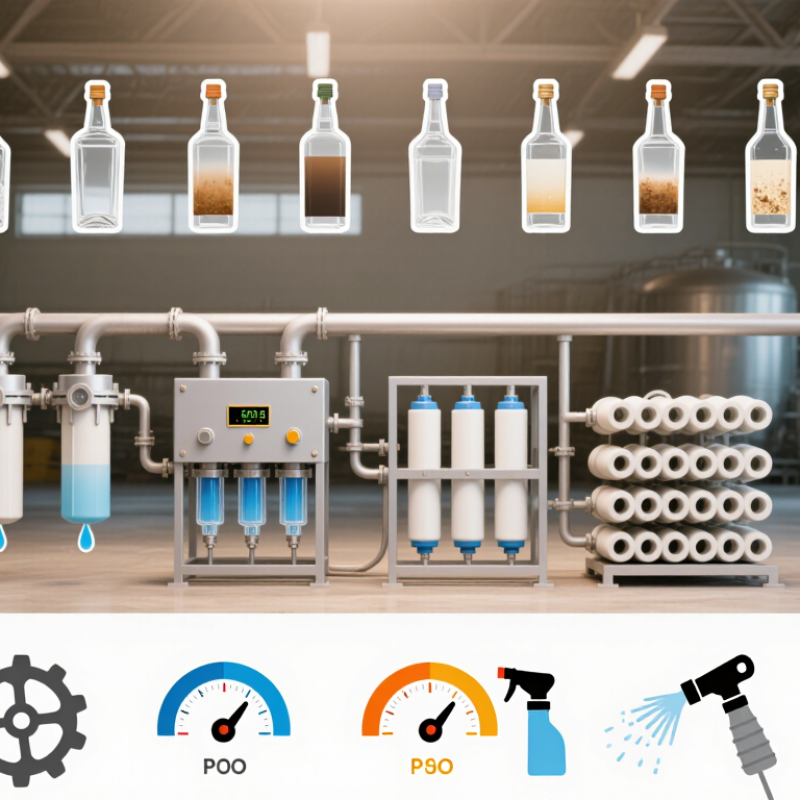
Distillery Filtration Systems: Purpose, Scope, and Selection Criteria
Distillery filtration systems are not simply polishing machines. They control clarity, aroma retention, microbial risk, and product loss. Their scope covers incoming water, process liquor, final spirit, and cleaning-water loops. During plant audits, I check feed temperature, solids load, alcohol strength, flow rate, and cleanability first. Small details matter. A filter sized for average flow may fail during seasonal production surges. IWSR’s 2024 beverage alcohol review reported approximately 7% global volume growth for no-and-low products in 2023. This trend increases demand for gentle, repeatable filtration.
Selection should follow the liquid, not the catalog. Depth media suit suspended solids. Membranes provide tighter separation. Activated carbon can reduce color or odor, but it may strip desirable botanicals. Not always. I prefer staged trials with representative batches. Measure turbidity, pressure drop, throughput, yield, sensory change, and cleaning cost. Mordor Intelligence’s 2024 membrane filtration market analysis identifies food and beverage as a leading application area, supporting continued investment in hygienic separation systems. However, laboratory results can mislead when viscosity and temperature change at production scale.
Global buyers should verify food-contact materials, hygienic drainability, validation records, spare-part access, and local electrical compatibility. FDA food-contact requirements and European Regulation (EC) No 1935/2004 provide useful references, not automatic approval. I have seen polished systems underperform because operators ignored prefiltration and cartridge-change intervals. That is an uncomfortable lesson. Total cost includes water, labor, downtime, waste, and product retained inside the housing.
Top 10 Distillery Filtration Systems for Global Buyers
Typical filtration ratings used in beverage and distillery processing. Lower micron values indicate finer particle separation; actual performance depends on feed composition, pressure, temperature, and filter media.
The values are representative industry ranges expressed as a single midpoint or nominal rating for comparison. Microfiltration, ultrafiltration, and reverse osmosis ratings are not directly equivalent to screen or depth-filter ratings.
Top 10 Distillery Filtration Systems for Global Buyers
Top 10 Distillery Filtration Systems for Global Buyers
Choosing among the top 10 distillery filtration systems requires more than comparing flow rates. Cartridge filters suit final polishing, while bag filters handle heavier suspended solids before bottling. Plate-and-frame units offer adjustable depth filtration for larger production rooms. Lenticular systems reduce exposure during enclosed processing. Membrane systems provide tighter separation, but they demand careful pressure control and cleaning records.
Depth filters can protect finer stages from rapid clogging. Activated carbon systems may reduce unwanted color or aroma, though aggressive treatment can remove desirable character. Crossflow filtration supports continuous operation and lowers manual handling. Ceramic membranes tolerate demanding cleaning routines, yet their initial cost can challenge smaller facilities. Diatomaceous earth systems remain effective for certain clarification tasks, but dust control needs serious attention. Centrifugal separation is not always called filtration, but it can reduce the solids burden efficiently.
In real facilities, water quality often changes the result. A filter rated for ten thousand liters may perform differently with high mineral content or variable turbidity. Measure pressure before and after every stage. Keep replacement cartridges sealed and traceable. Taste testing still matters.
Numbers can mislead.
A compact system may suit seasonal production better than an oversized skid. Noise, drainage, operator access, and local service availability also affect reliability. I have seen teams focus on micron ratings and overlook gasket compatibility. That mistake caused delays. Buyers should request validation data, cleaning instructions, spare-part lead times, and documented food-contact compliance for their destination market.
Comparing Performance, Cost, Maintenance, and Compliance
Top 10 Distillery Filtration Systems for Global Buyers
Performance, cost, maintenance, and compliance separate filtration systems more sharply than advertised flow rates. The ten common options are depth, bag, cartridge, activated carbon, lenticular, plate-and-frame, microfiltration, ultrafiltration, nanofiltration, and reverse osmosis. Depth and bag filters offer low entry costs, but their media replacement can become frequent during high-solids production. Cartridge systems provide cleaner polishing, often below one micron. They need disciplined pressure tracking.
Membrane systems deliver stronger control over haze, particles, and dissolved contaminants. However, fouling increases cleaning time, chemical use, and downtime. A 2022 review in Separation and Purification Technology reported flux losses of 20–50% under poorly controlled fouling conditions. That range is operationally significant. Reverse osmosis usually carries the highest capital cost. It also creates a concentrate stream that requires documented handling. Activated carbon removes selected flavor compounds, but excessive contact time may reduce desired character.
Compliance must guide the purchase. WHO’s 2022 Guidelines for Drinking-water Quality identify less than 1 NTU turbidity as a performance target for effective disinfection, although spirits require product-specific validation. EHEDG hygienic-design guidance stresses drainability, cleanable surfaces, and minimized dead legs. ISO 22000:2018 supports documented hazard controls and verification records. Stainless steel is not automatically compliant. Gaskets, adhesives, and filter media also need food-contact evidence. I have seen systems underperform because operators trusted supplier averages instead of testing their own wash cycles. That mistake remains expensive.
How to Choose the Right Filtration System for Your Distillery
Choosing the right distillery filtration system starts with the liquid, not the equipment catalogue. Measure turbidity, solids, alcohol strength, temperature, viscosity, and flow rate. A clear sample can still contain fine particles that block cartridges quickly. Run a pilot test with actual spirit and wash water. Small differences matter.
For process water, the World Health Organization recommends turbidity below 1 NTU where effective disinfection is required (WHO Guidelines for Drinking-water Quality, 2022). This benchmark is not a spirit specification, but it shows why upstream water quality deserves attention. Use depth filtration for suspended solids, activated carbon for selected odor compounds, and membrane filtration for tighter polishing. Confirm chemical compatibility with ethanol, cleaning agents, seals, and stainless-steel surfaces. Pressure loss is easy to ignore.
It becomes expensive later.
Market demands also influence the choice. The IWSR Drinks Market Analysis 2024 reported 7% volume growth for no- and low-alcohol products across its tracked markets in 2023. These products may need gentle filtration because aroma and mouthfeel are easily reduced. Consider recovery rate, energy use, cleaning time, and replacement frequency. A system with the smallest pore size is not automatically the best system. It may strip desirable character or create unnecessary waste. Ask suppliers for test data, particle-retention results, and validated sanitation procedures. Then challenge the assumptions. A perfect laboratory result may fail during a busy harvest season.