Top 10 Commercial Smart Locks for Global Businesses
commercial smart locks are becoming practical infrastructure for offices, hotels, warehouses, campuses, and managed properties. Fortune Business Insights estimated the global smart lock market at approximately USD 2.51 billion in 2023. It projects the market to reach about USD 6.86 billion by 2032. The report indicates a compound annual growth rate near 11.9%.
That growth reflects real operational pressure. Businesses want faster employee access, clearer audit trails, and fewer physical keys. Yet a connected lock is not automatically a secure lock. Battery failure, weak network coverage, poor installation, and unclear data policies can still disrupt a busy entrance. Small details matter. Think of a loading door at 6:00 a.m., with cold weather, gloves, and a nearly empty battery.
Bruce Schneier, a respected security technologist and author, famously said, “Security is a process, not a product.” His warning applies directly to commercial smart locks. A reliable system needs lifecycle management, credential reviews, firmware updates, backup entry methods, and trained administrators. This guide compares ten leading solutions across access control, integration, durability, monitoring, and total operating value. It considers products used in demanding commercial environments, not just attractive devices in a showroom. The comparison is useful, but not perfect. Vendor specifications can differ, and real performance depends heavily on installation quality. Readers should verify certifications, local requirements, cybersecurity practices, and support coverage before purchasing. A low upfront price may become expensive when batteries, integrations, and service calls accumulate.
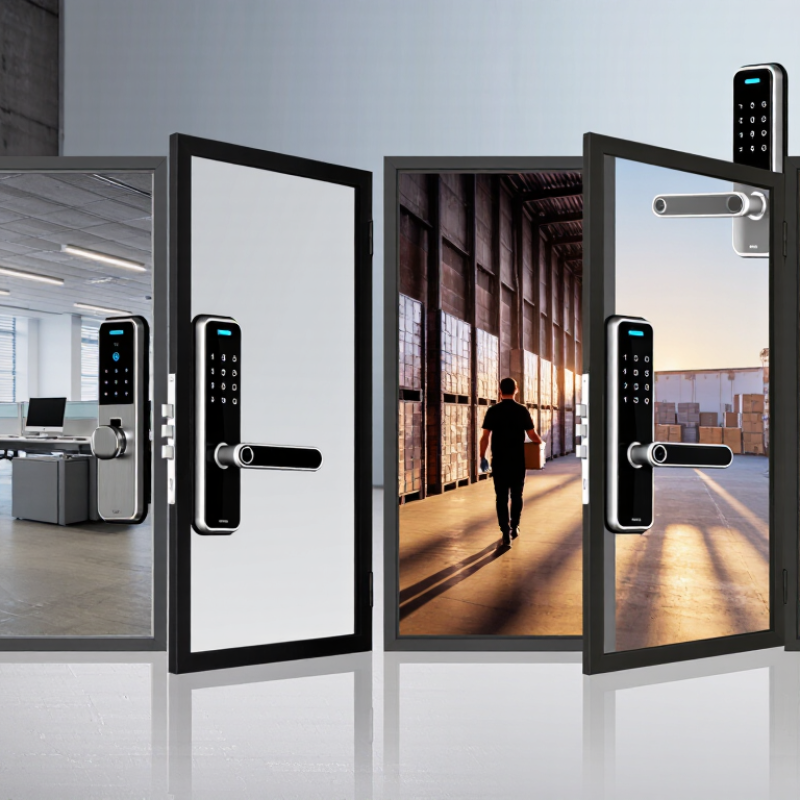
What Defines a Commercial Smart Lock for Global Business Use
A commercial smart lock for global business use must do more than open a door remotely. It should support different sites, time zones, currencies, languages, and access policies. Grand View Research estimates that the global smart lock market will grow at a 19.6% CAGR from 2024 to 2030. That growth increases choice, but not necessarily quality.
Security begins with identity control. The lock should support strong authentication, role-based permissions, encrypted communication, and detailed access logs. NIST SP 800-63B provides practical guidance for digital authentication and account protection. Verizon’s 2024 Data Breach Investigations Report also found that the human element appeared in 68% of breaches. Therefore, administrators need simple controls, fast credential removal, and alerts for unusual access. A sophisticated system can still fail through poor training.
Tips: Test offline access before deployment. Check battery warnings in a real building. Confirm compatibility with existing doors and emergency procedures. Demand independent security testing, documented firmware updates, and clear data-retention rules. Local support matters.
Interoperability is equally important. A global business may connect locks with HR, visitor management, elevators, and facility platforms. Open APIs can reduce manual work, but they may increase exposure if poorly governed. This is where many specifications feel incomplete. A lock may pass a laboratory test yet frustrate staff during a network outage. Pilot one busy entrance first, measure failed entries, response time, and administrator workload, then expand carefully.
Core Technologies and Access Methods Behind Commercial Smart Locks
Commercial smart locks combine electronic hardware, secure software, and carefully managed access policies. A typical unit includes a motorized deadbolt, encrypted memory, tamper sensors, and a battery system. Some models continue operating during network outages by checking approved credentials locally. That detail matters in warehouses, clinics, and office buildings with unstable connections.
Access methods vary by business risk and workflow. PIN codes work well for temporary contractors, but shared codes weaken accountability. RFID or NFC cards provide quick entry at staff doors, while mobile credentials use Bluetooth or near-field communication.
Biometric readers can verify fingerprints or facial features, yet privacy, lighting, and user acceptance require serious review. Multifactor access combines a credential with a PIN or second device. It is stronger, but slower.
Cloud dashboards help administrators issue, revoke, and schedule permissions from one location. Audit logs can show who opened a door, when, and through which method. Reliable systems protect these records with encryption and role-based controls. Field testing should include dead batteries, forced doors, lost phones, and delayed synchronization. Small failures reveal more than polished demonstrations.
In my experience, convenience often receives too much attention. A lock may be technically advanced but poorly suited to emergency routines, shared spaces, or staff training. Physical key override procedures also deserve clear control and regular inspection.
Evaluation Criteria for Comparing the Top Ten Smart Lock Solutions
Choosing among the top ten commercial smart locks requires more than comparing prices and app features. A practical scorecard should measure credential types, mobile access, audit logs, battery life, offline operation, and integration with existing access-control systems. Test it physically. A door in a busy warehouse may face dust, vibration, and hundreds of daily unlocks.
Security deserves measurable weight. The 2024 Data Breach Investigations Report found that the human element appeared in 68% of breaches. Therefore, evaluate role-based permissions, multi-factor authentication, administrator controls, and instant credential revocation. NIST SP 800-63B also provides useful guidance for assessing authenticator strength and phishing resistance. A polished interface cannot compensate for weak recovery procedures.
Reliability should include a 30-day pilot across different sites and network conditions. Record failed unlocks, battery warnings, response time, and support resolution. Compare total cost, including gateways, installation, software subscriptions, replacement batteries, and staff training. The IBM Cost of a Data Breach Report 2024 placed the global average breach cost at 4.88 million US dollars, making secure administration financially relevant. Interoperability matters too; verify documented APIs, common protocols, data export, and regional hosting options. No scorecard is perfect. Weighting convenience too heavily may hide maintenance problems that appear six months later.
Deployment, Security Management, and International Business Considerations
Top 10 Commercial Smart Locks for Global Businesses
Deployment, Security Management, and International Business Considerations
Commercial smart locks should be deployed as part of an access strategy, not as isolated hardware. Start with entrances, server rooms, and shared offices. Test connectivity, battery life, emergency access, and local network behavior before wider installation. A failed update can still lock out a legitimate employee. That risk deserves honest planning.
Security management depends on disciplined identity controls. The Verizon 2024 Data Breach Investigations Report analyzed 10,626 confirmed breaches and found human involvement in 68% of breaches. Therefore, businesses should use role-based permissions, multi-factor authentication, short-term visitor codes, and immediate offboarding. Keep detailed access logs, but limit retention and review them regularly. The IBM Cost of a Data Breach Report 2024 placed the average breach cost at $4.88 million. A lock is not a complete security system.
Tips: Create one global policy, then adapt it locally. Check data residency, privacy duties, labor rules, and emergency-access requirements in each market. The GDPR can require breach notification within 72 hours, depending on the circumstances. Use UTC for central reporting and local time for door schedules. Document who can override a lock, when, and why. This is often overlooked. NIST Cybersecurity Framework 2.0 also supports clear governance, continuous identification, protection, detection, response, and recovery. No deployment is perfect; quarterly access reviews can expose assumptions that installation teams missed.
Top 10 Commercial Smart Locks for Global Businesses
Comparative evaluation of deployment suitability, centralized security management, and international business readiness
Scores are normalized from 0 to 100 using practical commercial criteria: installation flexibility, access-control administration, auditability, offline resilience, integration potential, regional compliance support, and suitability for multi-site operations. Higher scores indicate stronger suitability for international business deployment; they are technology-category benchmarks rather than brand-specific ratings.