Empowering Engineering Excellence: Innovate, Elevate, Deliver.
China has become a major sourcing base for Alloy Powder used in aerospace, automotive, medical, energy, and precision manufacturing. Its manufacturers offer stainless steel, nickel-based, cobalt-based, aluminum, titanium, and copper alloy powders for different production methods.
Quality begins with the particles.
Dr. Seeram Ramakrishna, a respected materials and additive-manufacturing researcher, has emphasized, “Material quality determines process stability, product performance, and industrial trust.” This principle matters when buyers compare Chinese suppliers. Particle size distribution, spherical morphology, oxygen content, apparent density, flowability, and chemical consistency can affect printing, sintering, spraying, or hot isostatic pressing.
Small differences become visible on the shop floor. A powder may flow unevenly through a feeder. A laser bed may show inconsistent spreading. A finished component may contain pores, weak areas, or unexpected surface defects. Good manufacturers therefore provide batch records, laboratory test results, safety documentation, and traceable production information. Reliable suppliers also explain atomization methods, screening standards, packaging conditions, and recommended storage periods.
Yet no supplier is perfect.
Datasheets cannot reveal every production risk. Even a qualified factory may produce a batch requiring additional verification. Global buyers should request samples, compare independent test reports, inspect quality systems, and run application-specific trials before making large commitments. Experience matters here. The lowest price may hide tighter tolerances, inconsistent packaging, or limited technical support.
This guide examines leading China Alloy Powder manufacturers, their technical capabilities, product ranges, certifications, export experience, and buyer suitability. It also considers practical weaknesses, because honest comparison supports better procurement decisions than polished claims alone.
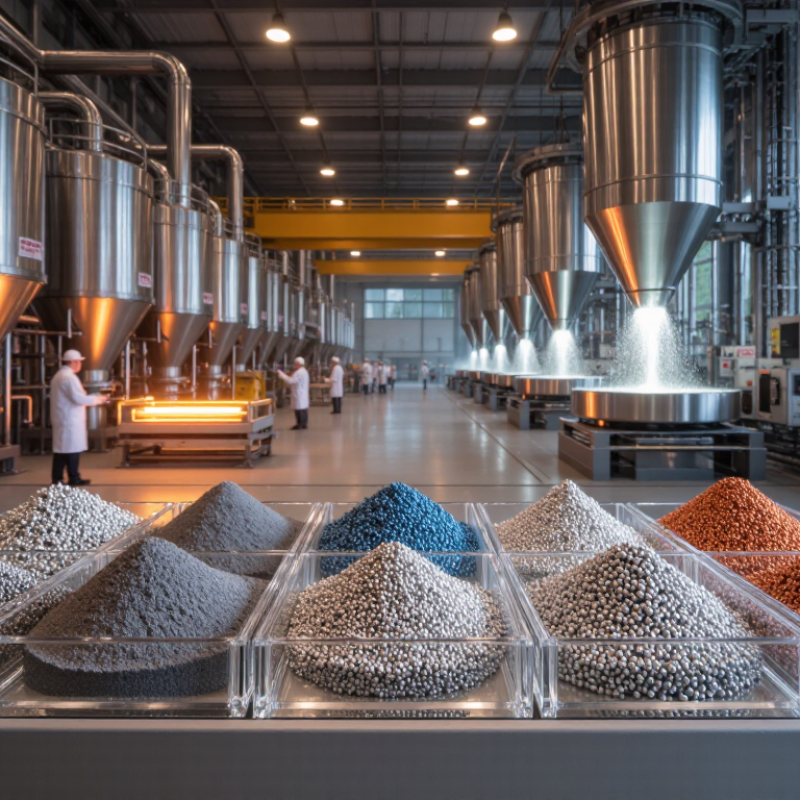
Alloy powders support demanding manufacturing processes, including metal injection molding, thermal spraying, hot isostatic pressing, and additive manufacturing. Each type offers a different balance of strength, corrosion resistance, weight, and processing behavior. Stainless steel powders suit medical tools, valves, and food-processing components. Nickel-based powders withstand heat and oxidation in turbines and chemical equipment. Cobalt-based powders resist wear, although their higher cost requires careful justification.
Aluminum powders provide low density for transport and aerospace parts. Titanium powders combine light weight with strong corrosion resistance, making them useful for implants and structural components. Copper powders offer high thermal and electrical conductivity. Tool steel powders are selected for molds, cutting tools, and wear-resistant parts. Pre-alloyed powders usually deliver more consistent chemistry than blended powders. Gas atomization often produces smooth particles, while water atomization can create more irregular shapes and lower production costs.
Experienced buyers should check particle-size distribution, oxygen content, morphology, flowability, and apparent density before placing large orders. Traceability from melting to packaging also supports reliable quality control. A powder that looks ideal on paper may still print poorly. Small differences matter. In production trials, humidity, storage time, and machine settings can change the final result. Powder is not magic. Testing a representative batch remains wiser than trusting a specification sheet alone, especially when buyers compare suppliers across different manufacturing regions.
Common alloy powder categories and typical technical characteristics for global manufacturing applications
| Alloy Powder Type | Typical Composition (wt.%) | Common Particle Size Range | Typical Manufacturing Processes | Key Properties | Common Industrial Applications | Relevant Standards or Specifications |
|---|---|---|---|---|---|---|
| 316L Stainless Steel Powder | Fe balance; Cr 16–18; Ni 10–14; Mo 2–3; low carbon, typically ≤0.03 | 15–45 µm for many powder-bed processes; other cuts are available | Laser powder bed fusion, binder jetting, metal injection molding, sinter-based processing | Excellent corrosion resistance, good weldability, reliable ductility, non-magnetic or slightly magnetic depending on processing | Medical instruments, chemical-processing components, food-processing equipment, marine parts, general engineering prototypes | ASTM F3184; ASTM A240 composition reference; ISO/ASTM 52907 for additive manufacturing powder characterization |
| 17-4 PH Stainless Steel Powder | Fe balance; Cr 15–17.5; Ni 3–5; Cu 3–5; Nb/Cb 0.15–0.45 | 15–53 µm is commonly used for additive manufacturing and injection molding feedstock | Laser powder bed fusion, binder jetting, metal injection molding, hot isostatic pressing | High strength after aging, good hardness, moderate corrosion resistance, heat-treatable martensitic structure | Aerospace fittings, tooling, valve components, pump parts, industrial machinery and automotive components | ASTM A564 composition and heat-treatment reference; ASTM F3301 for additive manufacturing process qualification guidance |
| AlSi10Mg Aluminum Alloy Powder | Al balance; Si 9–11; Mg 0.2–0.45; minor Fe, Mn, Cu and Zn | 15–63 µm for common powder-bed fusion systems | Laser powder bed fusion, binder jetting, thermal spraying in selected applications | Low density, good castability, favorable strength-to-weight ratio, good thermal conductivity | Lightweight housings, heat exchangers, automotive prototypes, aerospace brackets, robotic components | EN 1706 composition reference; ASTM F3318 for aluminum alloy powder used in additive manufacturing |
| Ti-6Al-4V Titanium Alloy Powder | Ti balance; Al 5.5–6.75; V 3.5–4.5; low interstitial elements controlled by specification | 15–45 µm for laser systems; 45–106 µm for many electron-beam systems | Laser powder bed fusion, electron beam melting, directed energy deposition, hot isostatic pressing | High specific strength, excellent corrosion resistance, biocompatibility in suitable medical grades, low density | Aircraft structures, orthopedic implants, dental components, motorsport parts, chemical-processing equipment | ASTM F2924; ASTM F136 for surgical implant material; ISO 5832-3 for wrought implant-grade composition reference |
| Nickel-Based Superalloy 718 Powder | Ni balance; Cr 17–21; Fe balance portion; Nb 4.75–5.5; Mo 2.8–3.3; Ti 0.65–1.15; Al 0.2–0.8 | 15–53 µm for many laser powder-bed applications | Laser powder bed fusion, directed energy deposition, hot isostatic pressing, thermal spray in selected uses | High-temperature strength, oxidation resistance, fatigue resistance and good weldability for a superalloy | Gas-turbine components, aerospace brackets, rocket-engine parts, energy equipment, high-temperature tooling | AMS 5662 composition reference; ASTM F3055 for nickel alloy powder used in additive manufacturing |
| Cobalt-Chromium-Molybdenum Powder | Co balance; Cr commonly 26–30; Mo commonly 5–7; carbon and other elements controlled by grade | 15–45 µm for laser powder-bed processing | Laser powder bed fusion, investment casting feedstock, dental and medical powder processing | High wear resistance, corrosion resistance, high-temperature stability and good biological compatibility for approved grades | Dental frameworks, orthopedic components, wear-resistant parts, turbine and chemical-processing components | ASTM F75 composition reference; ASTM F1537 for wrought cobalt-chromium-molybdenum implant material |
| Maraging Steel Powder | Fe balance; Ni typically 17–19; Co typically 8–13; Mo typically 3–5; Ti and Al in controlled additions | 15–45 µm for laser powder-bed systems | Laser powder bed fusion, hot isostatic pressing, solution treatment and age hardening | Very high strength after aging, good dimensional stability, good machinability before aging and relatively low carbon content | Injection molds, tooling inserts, aerospace tooling, dies, high-strength prototypes and mechanical components | AMS 6515 composition reference for a common maraging grade; ISO/ASTM 52907 powder-quality guidance |
| Tool Steel Powder | Fe balance; alloying may include Cr, Mo, V, W, Mn and C depending on grade | 20–63 µm for additive manufacturing; coarser sizes are used for thermal spraying | Laser powder bed fusion, directed energy deposition, hot isostatic pressing, thermal spraying | High hardness, wear resistance, compressive strength and dimensional stability after appropriate heat treatment | Cutting tools, molds, dies, wear plates, forming tools and repair of high-value tooling | AISI/SAE tool-steel grade systems; ASTM A681 composition reference; ISO/ASTM 52907 for powder characterization |
| Bronze and Copper Alloy Powder | Bronze grades commonly contain Cu with Sn; brass grades contain Cu with Zn; exact composition varies by alloy | 15–63 µm for additive manufacturing; larger particles are used in selected spray applications | Laser powder bed fusion with suitable parameters, binder jetting, sintering, thermal spraying | High electrical and thermal conductivity, good machinability, corrosion resistance and low friction in selected bronze grades | Electrical contacts, heat sinks, bushings, decorative components, conductive prototypes and repair coatings | ASTM B271 and ASTM B505 composition references for copper-based alloys; process-specific powder requirements also apply |
| Iron-Based Hardfacing Powder | Fe balance; commonly alloyed with Cr, C, B, Mo, Ni, Nb or W according to wear requirement | 45–150 µm for thermal spray or laser cladding; finer grades may be used in specialized systems | Laser cladding, plasma transferred arc, thermal spraying, welding-based deposition | High abrasion resistance, adjustable hardness, repairability and comparatively economical raw-material cost | Mining equipment, agricultural wear parts, crusher components, valves, shafts and industrial machinery repairs | AWS A5.21 and related hardfacing filler-metal classifications; application-specific qualification is required |
Note: Particle-size ranges, compositions and standards are typical industry references rather than universal specifications. Final values should be confirmed against the selected powder grade, production process, equipment requirements and applicable customer or regulatory standards.