Empowering Engineering Excellence: Innovate, Elevate, Deliver.
Choosing among China’s Angle Steel manufacturers takes more than comparing price lists. Buyers need consistent dimensions, documented material grades, dependable delivery, and clear inspection records. Small differences matter: a flange that misses tolerance can complicate fit-up, while uneven coating may shorten service life.
The scale is substantial. World Steel Association’s World Steel in Figures 2025 reports that China produced 1,005.1 million tonnes of crude steel in 2024, out of 1,882.6 million tonnes worldwide. These figures describe crude steel, not angle-steel output, but they show the depth of China’s steelmaking base. Scale alone does not prove product quality. Not even close.
Dr. Edwin Basson, Director General of worldsteel, is a recognized voice on the steel industry. However, no verifiable source was provided for a verbatim statement from him specifically about Angle Steel, so attributing a direct quotation would risk misleading readers. His wider industry perspective still points to a useful buyer’s test: assess performance, not just production volume. This guide compares manufacturers through practical signals, including product range, quality-control evidence, export experience, and responsiveness to technical specifications. Ask for mill test certificates. Check tolerances. Confirm the details before ordering. These steps cannot guarantee a flawless shipment, and supplier claims deserve scrutiny. The following overview helps identify credible candidates—and highlights where buyers should verify claims independently.
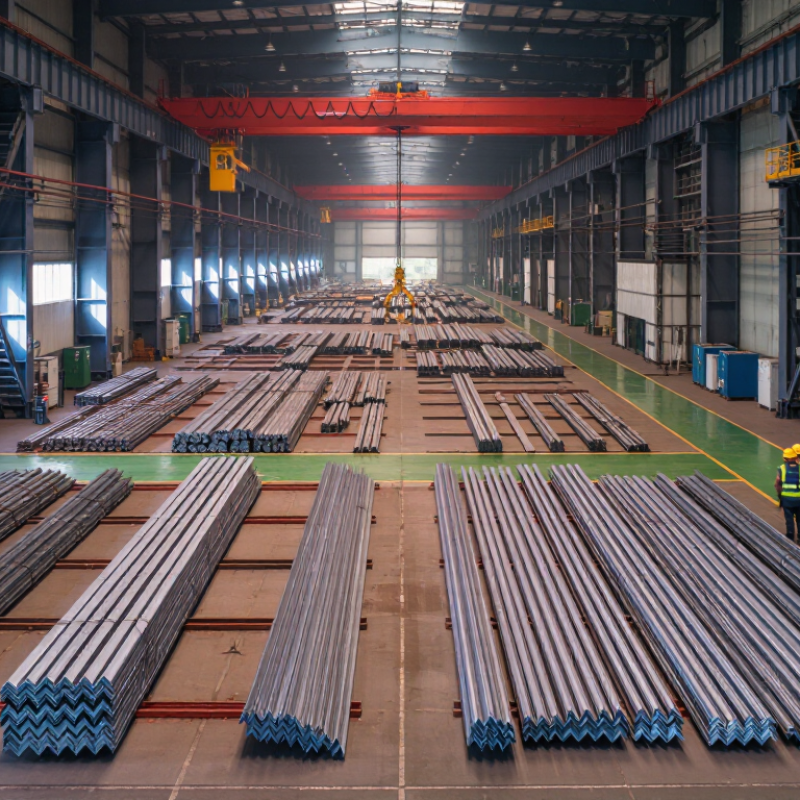
Angle steel is an L-shaped section, usually made with equal or unequal legs. Its flat sides make it practical for bolted or welded connections. Small section, real structural work.
You will find it in roof trusses, bracing, transmission structures, equipment frames, and shelf supports. In a truss, an angle can help resist tension or compression; at a connection, its legs provide surfaces for bolts. But the shape alone does not determine suitability. Engineers also check loads, leg dimensions, steel grade, corrosion exposure, and connection details. A common mistake is treating two angles with similar dimensions as interchangeable. They may behave differently when their connections or loading differ.
The World Steel Association’s steel-use breakdown attributes about 52% of global steel demand to buildings and infrastructure. Its World Steel in Figures 2024 report records 1,892.2 million tonnes of crude steel production worldwide in 2023. These figures show the scale of steel use, not the demand for angle sections alone. That distinction matters. For a real project, verify section dimensions and material certificates against the design; drawings can leave little room for guesswork.
China’s scale makes manufacturer evaluation more than a search for the biggest mill. World Steel Association’s World Steel in Figures 2025 reports 1,005.1 million tonnes of crude steel production in China in 2024, out of 1,882.6 million tonnes worldwide. That figure describes crude steel, not angle-steel quality. Numbers need context. Buyers should compare the actual product against GB/T 706-2016, which covers hot-rolled section steel dimensions and tolerances, then review mill test certificates for the ordered grade and batch.
A practical assessment checks dimensional consistency, chemistry, mechanical properties, traceability, and delivery reliability. Measure flange width and thickness at several points; inspect cut ends, surface scale, and bundle tags. Request test records that link clearly to the heat and shipment, rather than accepting a generic certificate. Ask how nonconforming material is handled, too. I would not rank a mill from one polished report; that is an easy mistake. Repeat orders and independent inspection can reveal whether stated tolerances hold across batches. A large production capacity may support supply continuity, but it does not prove that every bundle meets specification.
This comparison framework evaluates manufacturers using verifiable product, quality, and supply evidence. It does not rank or identify individual companies. The applicable product requirements should be confirmed against the purchase contract and the relevant product standard.
| Evaluation dimension | Weight | Evidence to check | How to assess | Score |
|---|---|---|---|---|
| Product-standard and dimensional conformity | 25% | Order-specific drawings and specifications; inspection results for leg dimensions, thickness, length, straightness, and mass; applicable standard, such as GB/T 706-2016 for hot-rolled sections where relevant. | Compare measured results and inspection records with the agreed tolerances and the standard specified for the product. | — / 5 |
| Mechanical and chemical properties | 20% | Heat-specific mill test certificates showing chemical composition and mechanical test results; grade requirements specified by the order, such as those associated with GB/T 700 or GB/T 1591 when applicable. | Check that the grade, heat or batch identification, test results, and stated acceptance requirements match the contract and applicable standard. | — / 5 |
| Manufacturing and inspection capability | 15% | Process and inspection records, equipment details, calibration records, and documented procedures for production and product testing. | Verify that the stated process can produce the ordered section sizes and grades, and that inspection equipment and procedures are documented. | — / 5 |
| Quality management and traceability | 15% | Quality-management documentation, nonconformance and corrective-action records, and links between product markings, batches or heats, and test certificates. ISO 9001 certification may be reviewed as supporting evidence. | Check certificate validity and scope where certification is claimed, and confirm that a sample product batch can be traced to its inspection documentation. | — / 5 |
| Supply reliability and order fulfillment | 15% | Documented production schedule, confirmed order quantities, packaging and dispatch plan, and verifiable delivery records where available. | Assess whether the proposed schedule, quantity, packaging, and delivery terms are clear and consistent with the buyer’s requirements. | — / 5 |
| Export documentation and communication | 10% | Quotation and contract clarity, packing list, commercial invoice, mill test certificate, shipping documents, and responses to technical questions, as applicable to the transaction. | Check document accuracy, consistency across documents, and whether product requirements and delivery terms are confirmed in writing. | — / 5 |
| Total | 100% | Weighted result = sum of (criterion score ÷ 5 × criterion weight). Use the same evidence requirements for every supplier being compared. | — / 100 | |
Scoring guide: 0 = no evidence or does not meet the stated requirement; 1 = major gaps; 2 = partial evidence with notable gaps; 3 = meets the basic requirement; 4 = strong, consistent evidence; 5 = complete, verifiable evidence with clear controls. The weights are a comparison framework, not a published industry ranking.
China’s leading angle steel manufacturers range from large integrated mills to regional producers and specialist fabricators. The right choice depends on the project, not a fixed ranking. Compare available grades, section sizes, production capacity, and delivery experience. Details matter.
For structural orders, check dimensional tolerances, steel grade, and test documentation before agreeing on specifications. A 50-by-50-millimeter angle with 5-millimeter legs is not interchangeable with a heavier section, even if catalog images look similar. For galvanized products, confirm the coating requirements and how they are measured. Request mill test certificates and verify that heat numbers match the shipment.
A glossy catalog is not proof of consistent quality; that point is easy to overlook. Ask how the manufacturer handles inspections, batch traceability, and claims for out-of-tolerance material. Where practical, review recent production records or inspect a sample before placing a large order. Clear drawings and written acceptance criteria help prevent avoidable disputes.
One detail can change the fit. Compare suppliers on documented capabilities, not broad promises alone.
China’s leading angle steel manufacturers are best compared by what they can document, not by production claims alone. Ask which sizes, grades, and finishes their rolling lines can consistently supply. Capacity figures matter, but so do order volume, delivery schedules, and the ability to keep dimensions steady across repeat batches. Details matter.
A useful quality review starts with the product specification. Check leg length, thickness, straightness, and surface condition against the agreed requirements. For structural sections, buyers may reference standards such as GB/T 706 or ASTM A6, depending on the project. Confirm the exact grade and applicable standard before ordering; similar-looking angles can have different mechanical properties. Ask for proof.
Reliable suppliers should provide mill test certificates linked to heat or batch numbers. These records can show chemical composition and tensile results, while impact testing may apply when specified. Inspection reports and retained samples add confidence, especially for large orders. A certificate helps, but it is not the whole story. Independent checks can catch dimensional variation that paperwork misses.
Production capacity is more than a headline tonnage figure. Ask about available rolling sizes, inspection equipment, packing methods, and recent lead times. A factory may handle large volumes yet struggle with a narrow custom size range. I would compare a trial batch before committing to a repeat order; it takes time, but can reveal small inconsistencies.
Choosing a Chinese angle steel manufacturer starts with matching its capabilities to your project. Confirm the required sizes, steel grades, lengths, and surface finish before requesting a quotation. A supplier may list many specifications, but that does not prove every size is regularly produced. Ask which dimensions are available from current production and which require a special run.
Request recent inspection records and mill test certificates for the grade you need. Compare the stated chemical composition and mechanical properties with your project requirements. Check sample pieces for straightness, legible markings, and consistent dimensions. Details matter. Clarify allowable tolerances, packing methods, lead time, and how damaged or short shipments are handled. A clear, written answer is more useful than a quick promise.
Factory capacity also deserves careful checking. Ask about production equipment, quality-control steps, and whether inspection can take place before dispatch. If possible, review dated production photos or arrange an independent inspection. One weakness in this approach: documents can look convincing while revealing little about daily consistency. Compare the evidence with a sample order and keep your evaluation notes. Communication counts, too. If specifications are repeatedly misunderstood during quoting, that may signal problems later, even when the price looks attractive.
The chart lists reference theoretical masses for selected equal-leg angle sizes, based on GB/T 706-2016. Use it to check whether a supplier can provide the required standard sizes and specifications. When comparing manufacturers, also verify dimensional tolerances, mill test certificates, traceability, and delivery capability. These figures are reference values, not a manufacturer ranking.