Top 10 3/8 Tube Hairpin Bender Suppliers Worldwide
A 3/8" Tube Hairpin Bender helps form U-shaped tube bends used in heat exchangers and HVAC production. The right machine can reduce manual handling, keep bend geometry consistent, and support a steady production rhythm. Small details matter. Tube material, wall thickness, bend radius, leg length, and end alignment all affect the finished hairpin. A machine suited to one production line may not suit another.
This guide introduces ten suppliers serving markets around the world. It offers a practical starting point, not a verified ranking of every available manufacturer. When comparing options, buyers should examine supported tube sizes, tooling changeover, control systems, production capacity, and access to spare parts. Ask for specifications that match your actual tube and required dimensions. Where possible, review sample bends or arrange a production trial. A clean-looking brochure is not enough.
Service deserves close attention. Check whether the supplier provides installation guidance, operator training, clear manuals, and responsive technical support in your region. Confirm delivery scope and lead times in writing, since these details can vary by model and destination. I may give too much weight to serviceability; for a high-volume plant, cycle time could matter more. Still, a fast machine is a poor fit if tooling changes are difficult or support is hard to reach. Use the supplier profiles to shape questions, then verify each answer against your production needs.
What Is a 3/8-Inch Tube Hairpin Bender?
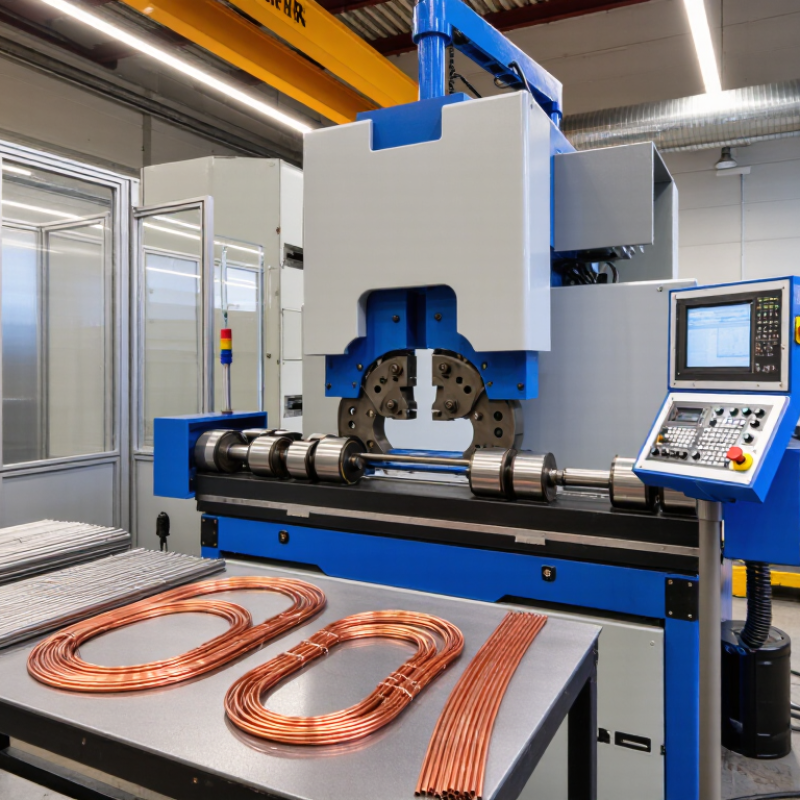
A 3/8-inch tube hairpin bender is a forming tool that bends tubing into a compact U-shaped return, often called a hairpin. The “3/8-inch” size usually refers to the tube’s outside diameter, but product descriptions can vary. Check the machine’s specifications before ordering. A close fit between the tube, bending die, and clamp helps prevent slipping, flattening, or surface marks.
The finished bend depends on more than tube diameter. Material, wall thickness, bend radius, and springback all affect the result. Copper and aluminum generally behave differently from stainless steel, so settings should match the actual tube. A practical setup includes a correctly sized groove, a secure hold-down, and a way to repeat the same bend angle. Small test pieces help reveal problems early. They also take time.
When comparing suppliers, ask for the supported tube dimensions, minimum centerline radius, and sample bends made with similar material. Confirm whether the machine is manual, powered, or programmable. A stated capacity alone may not tell the whole story. I would also check how adjustments are documented; unclear setup instructions can turn a simple job into repeated trial and error. Some variation is normal, but it should be measured, not guessed.
Top 10 3/8 Tube Hairpin Bender Suppliers Worldwide - What Is a 3/8-Inch Tube Hairpin Bender?
A 3/8-inch tube hairpin bender forms tubing into U-shaped return bends, commonly used in heat exchangers and refrigeration equipment. The table below provides ten practical criteria for comparing suppliers and verifying machine suitability; it does not rank or identify individual companies.
| No. | Evaluation Dimension | Factual Baseline | What to Confirm with the Supplier |
| 1 | Tube outside diameter | 3/8 inch equals 0.375 inch, or 9.525 mm. Tube size should be checked by its specified outside diameter and applicable standard. | Verify the machine and tooling are rated for the actual tube OD and tolerance. |
| 2 | Hairpin shape and dimensions | A hairpin is a U-shaped tube bend; leg length, bend angle, and centerline radius depend on the part design. | Request confirmation against the customer drawing or a sample part. |
| 3 | Bend radius and tooling | The achievable bend radius depends on the machine design, tube material, wall thickness, and matched bending tools. | Confirm the available radius, tooling set, and whether changeover tooling is included. |
| 4 | Tube wall thickness | Wall thickness affects bending behavior and must be considered together with tube diameter and material. | Ask for the machine's approved thickness range for the specified tube material and OD. |
| 5 | Tube material compatibility | Copper, aluminum, and steel tubing have different forming characteristics; compatibility is machine- and tooling-specific. | Provide the exact alloy or material grade and obtain written compatibility confirmation. |
| 6 | Feed and control method | Hairpin benders may use manual, semi-automatic, or automatic operation, depending on their design. | Clarify loading, feeding, cut-off, bend-cycle control, and operator involvement. |
| 7 | Cut length and end condition | Finished leg length and tube-end condition are determined by the part specification and production process. | Check length tolerance, cut quality, and whether end finishing is performed by the machine. |
| 8 | Production rate | Cycle time varies with machine configuration, part geometry, feeding method, and loading or unloading arrangement. | Request a cycle-time estimate based on the actual part and clarify how it is measured. |
| 9 | Quality and acceptance testing | Inspection requirements may include leg length, bend geometry, surface condition, and repeatability. | Agree on sample parts, inspection criteria, and acceptance documentation before shipment. |
| 10 | Installation and after-sales support | Commissioning, operator training, spare parts, and service availability differ by supplier and location. | Confirm warranty terms, documentation language, training options, and support response arrangements. |
Note: Machine limits and performance are model-specific. Validate all dimensions and material requirements against the supplier's technical documentation and a representative production trial.
How a Tube Hairpin Bender Forms Refrigeration Coils
A 3/8-inch tube hairpin bender turns straight tubing into U-shaped sections for refrigeration coils. The operator feeds a measured length into the machine, where clamps hold the tube steady. A forming die then bends it around a set radius, leaving two parallel legs. Those legs can pass through a fin pack and connect with return bends to create the coil’s flow path.
The bend must be smooth. Excessive pressure can flatten the tube or wrinkle its inner wall, while springback may leave the legs slightly out of position. Before production, technicians check the tube material, wall thickness, bend radius, and finished leg spacing. A sample bend helps reveal problems before a full batch is run. The first setup is rarely perfect. That is normal. Small adjustments to the stop or forming pressure can improve repeatability, but settings should be checked against the actual tubing, not assumed from a previous job. A quick visual inspection can miss slight ovality, so periodic measurement is worthwhile. The process looks simple, yet consistent coils depend on careful setup and patient checks.
Common Refrigeration Tube Sizes: Outside Diameter
A hairpin bender feeds, clamps, and bends straight tubing into a U-shaped return. The chart shows inch-to-millimeter conversions for common nominal tube sizes; 3/8 inch corresponds to 9.525 mm outside diameter. Actual tubing dimensions and tolerances depend on the applicable product specification.
Key Features to Compare When Selecting a Hairpin Bender
When comparing 3/8-inch tube hairpin benders, start with the tube, not the brochure. Check compatibility with your tube material, wall thickness, and temper. These details affect how tubing feeds and bends. Confirm the machine can produce your required leg lengths and bend radius without flattening the tube. Ask for sample parts made from your own material. A neat bend on a different alloy proves little.
Look closely at repeatability, not just maximum speed. A practical trial should show bend dimensions across several consecutive parts. Check whether controls let operators adjust leg length and bend angle, and whether saved settings are easy to retrieve. Tooling matters too: ask how long a changeover takes and whether common wear parts are straightforward to replace. Small delays add up. Cycle-time claims can be misleading if loading and unloading are excluded.
Consider floor space, operator access, guarding, and the quality of setup instructions. Ask what maintenance the machine needs and how support is handled when a fault stops production. Some buyers focus heavily on automation; that may be right for steady, high-volume work, but less useful for frequent product changes. I would not assume the most automated option is always the best fit. Compare the machine using your actual part mix, staffing, and production targets.
Top 10 3/8-Inch Tube Hairpin Bender Suppliers Worldwide
A dependable 3/8-inch tube hairpin bender supplier should demonstrate how its machine handles the exact tube material and bend radius you use. A stated tube capacity alone is not enough. Ask for sample bends, setup guidance, and repeatability data before comparing suppliers. Small details matter.
Worldwide suppliers may offer manual, pneumatic, or automated equipment, with different levels of tooling and service. Check whether the standard die set fits your required hairpin dimensions, and confirm how quickly replacement parts can be shipped. A clear video of a machine bending your tube can reveal feed slippage, uneven legs, or surface marks. Ask for evidence.
When reviewing ten suppliers, compare more than the purchase price. Look at commissioning support, operator instructions, warranty terms, and access to technical staff across time zones. Request written confirmation of tube diameter, wall thickness, and minimum bend radius; these details can affect performance. No ranking is perfect, and published specifications may not reflect a busy production floor. I would still want a trial run. Even a small mismatch in tooling can create scrap, while a practical service contact can save hours during setup.
How to Evaluate Suppliers for Production Needs
Top 10 3/8 Tube Hairpin Bender Suppliers Worldwide
How to Evaluate Suppliers for Production Needs
A strong supplier should prove fit on your actual tube, not just show a polished machine video. Specify the 3/8-inch tube material, wall thickness, bend radius, and target cycle time. Then request sample parts and measure leg length, bend angle, surface marks, and repeatability. Ask for results across a sustained production run, not one perfect sample. Numbers matter. Deloitte and MAPI’s 2024 Smart Manufacturing Survey found that 92% of manufacturers viewed smart manufacturing as a competitiveness driver within three years. For buyers, that makes controls, traceability, and usable production data worth checking—not just machine speed.
Compare suppliers on changeover time, tooling life, operator training, maintenance access, and spare-parts availability. Request a written acceptance plan with tolerances and test conditions. ISO’s 2023 Survey counted over one million ISO 9001 certificates worldwide, but certification alone cannot prove a bender will meet your process needs. Verify the supplier’s quality records and ask how it handles out-of-tolerance parts. A detail often missed: confirm that quoted output includes loading and unloading, not only the bending cycle.
Tips: Send identical tube samples and a simple part drawing to every shortlisted supplier. Ask each to record cycle time, scrap, and setup duration. Watch the test yourself. Leave room for doubt: one successful trial does not guarantee stable output on a busy shift.