Empowering Engineering Excellence: Innovate, Elevate, Deliver.

What Are the Top 10 Core Drill Rig Manufacturers in China?

Choosing a Core Drill Rig manufacturer in China takes more than comparing catalog prices. These machines support mineral exploration, geotechnical investigation, and water-well projects, where downtime can affect schedules and budgets. A rig that looks capable on paper may perform differently on fractured rock, steep ground, or remote sites. Details matter. Buyers should compare drilling depth, drilling methods, feed systems, power options, mobility, and access to replacement parts. No single specification tells the whole story.

This article introduces ten Chinese manufacturers and outlines practical points for evaluating their equipment. It is a starting point, not a universal ranking: project conditions and buyer priorities vary. Look beyond brochures. Check the manufacturer’s product documentation, service arrangements, spare-parts support, and relevant customer references. Where possible, discuss the actual formation, planned hole diameter, and working conditions with the supplier. Confirm current specifications directly, since models and configurations can change. Even a well-built rig can be a poor fit for a particular project. That is easy to overlook. A careful comparison should balance performance, operating costs, serviceability, and the supplier’s ability to answer technical questions clearly. Some claims may be hard to verify from a website alone, so request evidence rather than relying on impressive wording. The right choice depends on the work ahead.
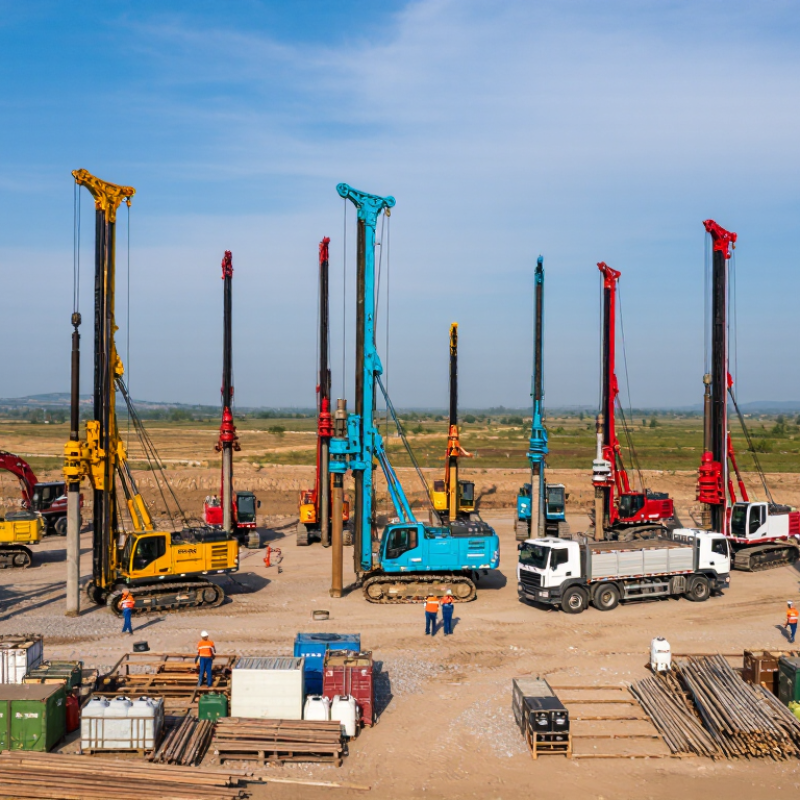
What Are the Top 10 Core Drill Rig Manufacturers in China?

What Core Drill Rigs Do in Mineral Exploration and Geotechnical Drilling

Core drill rigs recover cylindrical rock samples from below the surface, helping geologists examine mineralized zones without relying only on surface clues. In mineral exploration, a rotating bit cuts an annular path, leaving a core that can be logged for rock type, fractures, alteration, and mineral content. The rig advances in controlled intervals, and crews place recovered sections in labeled core boxes. That matters. Sample depth and order must remain clear; a misplaced run can weaken later interpretation.

In geotechnical drilling, cores and borehole observations help engineers assess ground conditions for foundations, tunnels, slopes, and other projects. Operators may adjust bit selection, rotation, feed pressure, and drilling fluid as formations change. Too much pressure can break weak rock, while poor fluid control may destabilize the hole or reduce recovery. Small details count. Core recovery, depth records, and visible fracture surfaces all affect how confidently teams describe the ground.

Rig choice depends on access, target depth, rock hardness, and the quality of samples required. A compact setup may suit a restricted site, while deeper work can demand greater lifting capacity and reliable wireline handling. Equipment alone cannot guarantee useful results. Experienced crews still need careful procedures, calibrated instruments, and clear reporting. Even a neat core box can tell an incomplete story if recovery losses or drilling disturbance are ignored.

What Are the Top 10 Core Drill Rig Manufacturers in China? What Core Drill Rigs Do in Mineral Exploration and Geotechnical Drilling

Core drill rigs recover cylindrical rock samples that help geologists assess subsurface conditions during mineral exploration and geotechnical investigations. The chart compares typical nominal core diameters for standard wireline core sizes.

Typical nominal core diameters: BQ 36.5 mm, NQ 47.6 mm, HQ 63.5 mm, and PQ 85.0 mm. Actual recovered core may be smaller or irregular because of rock conditions, breakage, or wear.

Wireline Core Standards: BQ–PQ Core Diameters Range from 36.5 to 85 mm

Wireline core sizing is a practical benchmark when comparing core drill rigs made in China. ISO 3551-1, the metric wireline core-barrel standard, gives nominal core diameters of 36.5 mm for BQ, 47.6 mm for NQ, 63.5 mm for HQ, and 85 mm for PQ. These figures describe the recovered core, not the borehole diameter. It matters.

The increase from BQ to PQ supports different sampling needs. Smaller BQ cores can suit compact equipment and narrower access; PQ cores provide a larger sample for logging and laboratory testing. Larger barrels also need compatible rods, bits, and hoisting capacity. A millimetre on paper can become a field problem if the complete wireline assembly is mismatched.

When assessing a manufacturer, ask for barrel drawings and measured dimensions, then check them against the selected standard and project requirements. ASTM D2113 provides guidance for diamond core drilling in rock, including factors that affect core recovery. A stated size alone does not guarantee good recovery. Inspecting sample runs, joints, and wear parts gives a more realistic view, though it takes time and can still miss inconsistent production.

How to Assess Manufacturers by Drilling Depth, Torque, and Core Recovery

When comparing core drill rig manufacturers, treat drilling depth as a conditional figure, not a guarantee. Ask what rod size, hole diameter, and ground conditions support the stated maximum. A rig reaching 500 meters in stable rock may perform differently in fractured formations. Request test records or job logs that show actual depth, setup time, and interruptions. Numbers need context.

Torque deserves the same scrutiny. Check torque at the working speed, not only the advertised peak. High torque at low rotation may suit hard ground, while variable speed can help operators adjust to changing layers. Ask how the rig handles sustained loads and whether pressure readings are recorded during drilling. These details reveal more than a single specification.

Core recovery is usually expressed as recovered core length divided by drilled interval length. Yet fractures, flushing, and operator technique can change the result. Review recovery logs from comparable geology, and ask how samples are handled when core arrives broken or incomplete. Field evidence is useful. It is not perfect. I would also compare maintenance records and operator feedback, while recognizing that one successful project cannot predict every site.

Profiles of 10 Chinese Core Drill Rig Manufacturers

China’s core drill rig market serves mineral exploration, construction surveys, and geotechnical work. These ten capability-based profiles focus on what manufacturers offer, rather than company names or unsupported rankings. One manufacturer may specialize in compact rigs for narrow sites, where a small footprint and quick setup matter. Another may build truck-mounted units for teams moving between remote locations. A third may emphasize hydraulic systems and straightforward controls. A fourth may produce modular rigs that can be adjusted for different drilling conditions. Details matter.

A fifth profile centers on deep-hole equipment, with attention to mast strength and rod handling. A sixth focuses on lightweight rigs that crews can transport to steep or confined terrain. A seventh offers integrated drilling tools and related components, helping buyers source a more complete package. An eighth develops rigs for routine geological sampling, where steady operation and accessible maintenance can save time. Yet brochures rarely show the full picture.

The ninth type serves project contractors with configurable equipment and practical after-sales support. The tenth focuses on established production lines and consistent parts availability. These descriptions are not a substitute for checking a specific supplier’s records. Compare rated depth, core diameter, feed force, power requirements, and service coverage. Ask for operating references under similar ground conditions. A rig can look capable on paper, then struggle with fractured rock or limited site access. That is worth questioning.

Compare Rig Configurations, Power Systems, and After-Sales Support

A useful comparison of China’s core drill rig manufacturers starts with the worksite, not the brochure. Compact rigs suit restricted urban sites, while crawler-mounted configurations offer steadier movement on uneven ground. Check mast height, feed stroke, clamping range, and the space required to set up. These details affect whether a rig can reach the target safely and handle the planned core diameter. Bigger is not always better.

Power systems shape both operating costs and site flexibility. Diesel units can work where grid power is unavailable, but fuel use, noise, and ventilation deserve attention. Electric systems may suit indoor or noise-sensitive projects, provided the supply matches the motor’s load. Ask for rated torque and operating ranges, not just peak figures. Specifications can look clear on paper and still leave questions about performance in hard, fractured rock.

After-sales support is easier to assess with specific questions. How quickly can common seals, rods, or hydraulic parts be supplied? Is remote troubleshooting available, and can technicians provide hands-on training? Request service intervals and parts lists before comparing prices. A detailed response is reassuring. Still, delivery promises are not proof of service quality; ask for realistic lead times and written support terms. One site visit may reveal gaps that a polished quotation cannot.

What Are the Top 10 Core Drill Rig Manufacturers in China? — Compare Rig Configurations, Power Systems, and After-Sales Support
No. Representative Rig Configuration Typical Power System Common Applications Configuration Considerations After-Sales Support to Verify
1 Surface wireline rig on skid Diesel engine driving a hydraulic system Mineral exploration on prepared or relatively accessible sites Confirm the supported wireline rod and core-barrel sizes, mast setup, and rated capacity for the target drilling conditions. Ask about commissioning, operator training, hydraulic troubleshooting, and availability of pumps, seals, and filters.
2 Crawler-mounted surface wireline rig Diesel-hydraulic power; crawler tracks provide mobility Exploration sites with uneven ground or limited vehicle access Check transport dimensions, track width, gradeability, ground pressure, and leveling arrangements for the site. Verify track and undercarriage parts support, service response arrangements, and recommended maintenance intervals.
3 Truck-mounted core drilling rig Truck engine with hydraulic power take-off or a dedicated hydraulic power unit Road-accessible exploration, geotechnical, and water-resource projects Confirm vehicle payload, road regulations, mast working envelope, and the rig’s setup requirements at the borehole. Check whether support covers both the drilling package and vehicle-mounted systems, including hydraulic and electrical components.
4 Trailer-mounted surface rig Diesel-hydraulic or electric-hydraulic, depending on the model Projects where a towable rig is suitable and a dedicated truck rig is unnecessary Compare towing limits, site maneuverability, stabilizer design, and the time and equipment needed for setup. Request a spare-parts list and clarify warranty coverage for the rig, power unit, and trailer components.
5 Compact underground core drilling rig Electric-hydraulic or diesel-hydraulic, subject to mine requirements Underground exploration in confined headings and mine workings Check machine width and height, turning space, boom reach, ventilation requirements, and applicable mine-safety approvals. Confirm underground service capability, technician access, electrical documentation, and supply of critical wear parts.
6 Directional underground core drilling rig Usually hydraulic power with controls suited to directional drilling Longer underground exploration holes and planned directional drilling programs Evaluate feed travel, rod handling, steering compatibility, measurement systems, and the contractor’s required hole-path accuracy. Ask about control-system support, survey-tool compatibility, calibration, and operator training for directional work.
7 Hydraulic top-drive surface rig Diesel-hydraulic or electric-hydraulic Surface coring where hydraulic feed control and flexible rig positioning are priorities Compare rotation speed and torque ranges, feed force, mast configuration, and compatibility with the intended drilling tools. Verify support for hydraulic motors, valves, hoses, and control components, as well as access to service manuals.
8 Electric-hydraulic rig for fixed or mine-site power Electric motor driving hydraulic pumps Sites with reliable electrical supply where local emissions or noise constraints matter Confirm voltage, frequency, motor rating, starting current, cable requirements, and suitability for the operating environment. Check availability of electrical schematics, motor and drive support, and qualified technicians for the site’s power standard.
9 Modular or split-frame core drilling rig Typically diesel-hydraulic or electric-hydraulic, with separable modules Remote, steep, or access-constrained locations where equipment must be transported in sections Review module weights, lifting points, assembly procedure, transport packaging, and the tools required for field setup. Request assembly training, illustrated parts documentation, and confirmation that replacement modules can be shipped separately.
10 Geotechnical core drilling rig with wireline capability Diesel-hydraulic or electric-hydraulic, depending on the site Geotechnical investigation and rock coring for infrastructure or site-characterization projects Match the rig to the investigation plan, core diameter, ground conditions, sampling needs, and required borehole inclination. Verify commissioning and training options, warranty terms, response times, and support for the selected tooling and consumables.
Comparison note: These are representative rig configuration types, not a verified ranking or profiles attributed to individual manufacturers. Exact capabilities, drilling capacity, power ratings, certifications, warranty terms, and service coverage vary by model and supplier. Request model-specific technical data and written after-sales commitments before purchasing.

Article Source:

Download
Brochure