Empowering Engineering Excellence: Innovate, Elevate, Deliver.
Air Cooling Chiller selection matters as cooling demand grows and energy costs remain a concern. The International Energy Agency’s 2018 report, The Future of Cooling, projects that global installed space-cooling capacity could more than triple by 2050. That trend puts greater pressure on buyers to compare efficiency, dependable operation, and service support—not just purchase price.
Energy-efficiency expert Amory Lovins is often quoted as saying, “The cheapest energy is the energy you don’t use.” For chiller buyers, that idea makes operating performance worth close attention. A unit serving a factory in a hot, dusty climate may face very different demands from one cooling a clean commercial building. Details matter. This guide to the top 10 Air Cooling Chiller manufacturers gives global buyers a practical starting point for comparing product ranges, application experience, and international support. Published efficiency figures are useful, but test conditions and system design can affect real-world results. No shortlist is perfect. Verify specifications, local service availability, and lifecycle costs against your project before choosing a supplier.
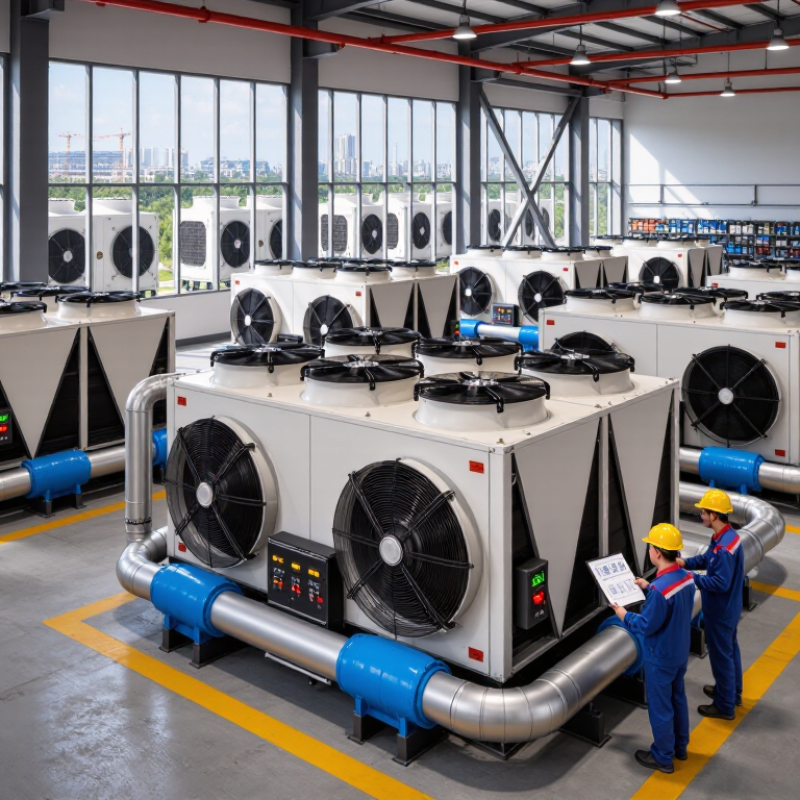
An air-cooled chiller removes heat from process water or glycol and rejects it through outdoor coils. Compressors circulate refrigerant, while fans pull air across the condenser. No cooling tower is needed. That simplifies installation, but the chiller still needs clear airflow and regular coil cleaning. Dust on the fins can reduce heat transfer, especially near busy roads or dusty production areas.
These systems serve data centers, food plants, plastics processing, and factories that cool machine tools. A stable leaving-water temperature matters when a production line depends on tight process tolerances. Yet high outdoor temperatures can lower capacity and raise power use, so local summer conditions belong in the design brief.
IEA’s The Future of Cooling (2018) projects global space-cooling electricity demand could reach 6,200 TWh by 2050, up from 2,020 TWh in 2016. The report covers space cooling broadly, not chillers alone.
UNEP’s Global Cooling Watch (2023) estimates that a sustainable cooling pathway could cut projected 2050 cooling emissions by 60%.
For buyers, compare performance at both peak and part load, not just a single rating point. Check ambient design temperature, required water temperature, sound limits, service access, and expected operating hours. A unit sized only for the hottest afternoon may cycle inefficiently during mild nights. That detail is easy to miss. A site load profile helps, though real production schedules can be messy.
Evaluate air-cooled chiller manufacturers against your actual operating conditions, not brochure claims. The IEA’s 2018 report, The Future of Cooling, projected global space-cooling electricity demand could rise from about 2,000 TWh in 2016 to 6,200 TWh by 2050. This covers space cooling broadly, not chillers alone, but it highlights why efficiency deserves close scrutiny. Ask for independently verified performance data, including capacity and power use at your specified outdoor and water temperatures.
Check whether the quoted model is certified under AHRI Standard 550/590, and compare full-load and part-load efficiency figures. Confirm that the test conditions match your project’s peak summer temperature. Also review sound levels, coil protection, warranty exclusions, spare-parts availability, and local service response times. A polished brochure is not proof; assumptions can be easy to miss. I would treat any comparison as provisional until operating conditions and scope align.
Tips: Request a sample selection sheet and a written list of included components. Ask who handles commissioning and what response time applies. Compare lifecycle costs, not just purchase prices. Small details matter. A low quoted price may still leave gaps.
Suggested procurement scoring weights for comparing suppliers. These are buyer-priority recommendations, not manufacturer ratings or market-survey results.
Score each supplier against the same evidence: independently verified performance data, lifecycle energy use, quality documentation, service coverage, operating limits, applicable compliance, and delivery commitments. Weights total 100% and can be adjusted to fit project priorities.
The ten profiles below describe different strengths buyers may find among air-cooled chiller manufacturers. They are comparison points, not a verified ranking.
A broad-line manufacturer may offer several capacities and configurations, making it useful for varied facilities.
A modular-system producer can help sites expand cooling in stages, though connections between units need careful planning.
A process-cooling specialist may support steadier temperature control for production equipment.
A compact-unit manufacturer targets rooftops and plant rooms where floor space is scarce.
A heat-recovery-focused supplier may help capture rejected heat for nearby uses; actual savings depend on operating conditions.
A noise-conscious manufacturer designs for sites near offices or residential areas, but published sound figures need context.
A cold-climate specialist emphasizes low-temperature operation and defrost strategies.
A retrofit-oriented producer prioritizes dimensions and piping that may fit older installations.
A controls-focused manufacturer offers monitoring and alarms that can reveal unusual operating patterns.
A service-led manufacturer may have local technicians and spare parts, which matter when downtime is costly.
Details matter. Buyers should compare capacity at stated outdoor temperatures, efficiency data, sound levels, warranty terms, and service coverage. One profile may not fit neatly; real projects often expose trade-offs between footprint, efficiency, noise, and maintenance access.
Air-cooled chiller manufacturers differ less by headline capacity than by how their product ranges fit real sites. A compact modular unit may suit a clinic or small factory, while a large process plant may need staged capacity, broad operating limits, and redundancy. Compare published cooling capacity at stated conditions, not just the maximum figure. Details matter. Check low-ambient controls, sound levels, refrigerant options, and whether the range includes free-cooling or heat-recovery configurations. These features can affect energy use and installation choices.
Market coverage is another useful comparison. Manufacturers serving hot, dusty regions may emphasize coil protection and high-ambient performance; those focused on dense urban sites may prioritize low noise and a smaller footprint. Neither profile is automatically better. Ask how local service teams handle commissioning, spare-parts availability, and warranty claims. Request references for applications with similar loads. Strong engineering documents help, but field support often determines downtime.
One caveat: catalog ranges rarely reveal part-load behavior or control quality. A site-specific load profile, measured across seasons, can expose gaps a brochure cannot. Even careful comparisons leave uncertainty; installation quality and maintenance habits still shape results.
Global buyers comparing air-cooled chiller manufacturers should look beyond rated capacity and purchase price. Ask for performance data at the entering-water and outdoor-air temperatures expected on site. A unit sized for a mild climate may struggle during a hot afternoon or under partial load. Check sound levels, electrical requirements, corrosion protection, and service clearances against the installation plan. Small details matter.
Before ordering, confirm how commissioning, remote diagnostics, and warranty claims work across borders. Ask who stocks common parts and how quickly they can ship them. Confirm that manuals and control interfaces are available in the required language. Request references from installations with similar weather, water quality, and operating schedules. A polished proposal is not proof of reliable support. Time-zone delays are easy to overlook, too.
Tips: Share site conditions and load profiles before requesting quotes. Ask for a written start-up checklist and a named service contact. Compare response commitments carefully; vague promises can mean costly downtime.