Empowering Engineering Excellence: Innovate, Elevate, Deliver.

7 Tips for Choosing Spectrum Stained Glass Sheets

Choosing Spectrum Stained Glass Sheets is not just a color decision. The right sheet must suit the project’s light, scale, cutting method, and intended use. Hold a sample near a window. Watch how its texture shifts as daylight changes. A vivid red on the workbench may look darker when sunlight passes through it. Small differences matter.

Professional references can help keep selection grounded. The National Park Service’s Preservation Brief 33, “The Preservation and Repair of Historic Stained and Leaded Glass,” emphasizes examining glass and its condition before repair or replacement. ASTM C1036 provides a recognized framework for evaluating flat-glass quality, though it is not a Spectrum-specific color guide. These sources offer useful context, not a substitute for checking the actual sheet. Louis Comfort Tiffany, the influential glass artist and designer, is often credited with the line, “Color is to the eye what music is to the ear.” It captures the emotional pull of glass, but practical choices still need testing.

This guide shares seven selection tips, from color consistency and surface texture to thickness, compatibility, and ordering samples. Compare sheets under the lighting they will face in the finished piece. Check for visible bubbles, striations, or variation across the panel. Those features may enrich a design—or distract from it. There is no universally perfect sheet. A choice that works beautifully in a small suncatcher may feel too busy in a large window. The details deserve a second look.
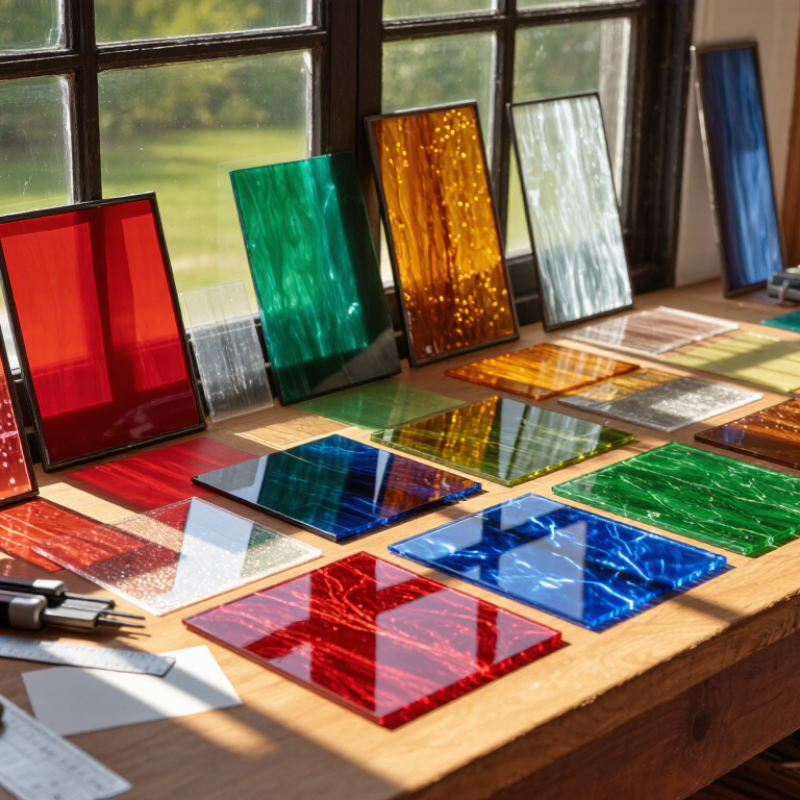
7 Tips for Choosing Spectrum Stained Glass Sheets

Define the Project Requirements for Spectrum Stained Glass

Before choosing stained glass sheets, define what the finished piece needs to do. Start with the use. A cabinet insert, a sunlit window, and a hanging panel face different conditions. Note the finished dimensions, support method, and viewing distance. Measure the opening twice, including any frame overlap. A few millimeters can matter when the glass must fit a fixed space.

Check the light. A sample that looks rich on a workbench may appear pale against a bright window. Observe the project location at different times of day, and consider whether privacy or a clear view matters more. Then choose a color range and texture that suit the setting. For a panel with small details, test whether the chosen glass allows shapes to remain readable. Hold a sample near the intended pattern; photographs often misrepresent transparency.

Also account for how the glass will be cut and assembled. Irregular textures or strong streaks can make small pieces harder to position consistently. Ask a knowledgeable supplier about sheet variation, available sizes, and handling characteristics, then inspect samples when possible. One detail is easy to overlook: your first color plan may not survive real daylight. Revise it before cutting, not after. Document the final dimensions, color preferences, and acceptable variation so the selection reflects the actual project, rather than a guess made under store lighting.

7 Tips for Choosing Spectrum Stained Glass Sheets - Define the Project Requirements for Spectrum Stained Glass

Tip Project Requirement What to Define Why It Matters
1 Project type and location Specify whether the glass is for a panel, window, cabinet insert, lamp, or another application. Note whether it will be indoors or exposed to outdoor conditions. Use, location, and exposure affect the appropriate glass, construction method, and protective framing.
2 Finished dimensions Record the opening size, finished panel size, edge allowances, and any required clearances. Make a full-size pattern for complex shapes. Accurate measurements help estimate sheet quantities and reduce cutting waste or fit problems.
3 Construction method Choose the intended method, such as copper foil or lead came, and note any structural supports, framing, or reinforcement required. Different methods can call for different glass thicknesses, piece sizes, and design details.
4 Color and light transmission Describe the desired colors, transparency, and visual contrast. Consider how daylight or room lighting will pass through the finished piece. Glass appearance can change with lighting and surroundings, so samples viewed in the intended setting can help guide selection.
5 Texture and visual consistency Decide whether the design needs smooth, textured, or patterned glass. Identify where directional patterns or consistent appearance matter. Texture affects both the look of the panel and how clearly objects can be seen through it.
6 Quantity and cutting plan Estimate the required area from the pattern, then allow for layout, offcuts, breakage, and replacement pieces. Check sheet dimensions before ordering. Glass is typically cut from larger sheets, and usable yield depends on the shapes, sizes, and arrangement of the pattern pieces.
7 Safety and care requirements Consider handling, transport, installation, cleaning, and whether the panel needs additional protection or support in its final setting. Planning for safe handling and suitable installation helps protect both the glass and the people working with it.

Explore the Colors, Textures, and Opacity of Available Sheets

When choosing stained glass sheets, judge color in transmitted light, not only under shop lamps. Hold each sample against a bright window; ruby may glow, while pale amber can look nearly clear. Texture changes that effect. Rippled or hammered surfaces scatter light into shifting highlights, while smooth sheets show cleaner outlines. Keep a small sample beside the intended frame. It is easy to overvalue a dramatic sheet before seeing it in the finished setting.

Opacity deserves its own check. The National Fenestration Rating Council’s technical ratings express visible transmittance on a scale from 0 to 1 for rated glazing assemblies. This is a useful measurement model, not a certification for craft sheets. For a practical comparison, photograph samples over the same white card, using the same light and camera settings. A lower-transmitting sheet may soften a bright window, but it can also muddy nearby colors. Test combinations together.

Texture can disguise color differences. A rough surface may scatter light and make a sheet appear paler from one angle, then richer from another. Ask for offcuts when possible, and inspect them morning and afternoon. I would not rely on a catalog image alone; screens alter color, and that is easy to forget. Note the sheet’s face, thickness, and orientation before cutting. Small variations are part of the material, though they can complicate a precise pattern.

Match Glass Properties to the Intended Cutting and Firing Methods

The right sheet depends on what your hands and kiln will ask of it. For hand cutting, look for glass with a consistent thickness and a surface that lets you see your score line clearly. Heavy texture can hide the line and make narrow curves less predictable. Try a small offcut first. A clean score should run steadily without forcing the cutter.

Firing changes the selection. Check that the glass is compatible with the other pieces in the project, including their stated coefficient of expansion. Do not assume similar colors or appearances mean compatible glass. Review the technical information for the specific sheet, then follow a tested firing schedule for your kiln and intended result. A full fuse, tack fuse, and slumped piece place different demands on the material. Test a sample.

Consider transparency, opalescence, and thickness together. A translucent sheet may look bright on the table but darken when layered or viewed against a window frame. Thick pieces can also need more cautious heating and cooling. Keep notes on the sheet, cut quality, and firing outcome; small details matter. I would not trust one successful test as proof that every sheet in a batch will behave identically. Recheck when the texture, thickness, or firing plan changes.

Check Sheet Quality, Dimensions, and Compatibility

Before buying stained glass sheets, inspect the surface in daylight and under the lighting where the finished piece will sit. Look for cracks, sharp chips, and uneven thickness. Small bubbles or streaks may be part of the glass’s character, not defects. Decide whether they suit your design.

Check the sheet’s stated dimensions, then measure your pattern and allow room for trimming. A sheet that looks large online can feel surprisingly small on the worktable. Color may also shift between batches, so buy enough for the project at once when consistency matters. Keep a little extra for test cuts. That can save frustration.

Compatibility matters just as much as appearance. Confirm that the glass works with your cutting method and the project’s construction, especially if several pieces must fit closely. Compare thickness across sheets; noticeable differences can complicate assembly. For a mixed-glass design, test a small offcut before committing. I would not assume two similar-looking sheets behave alike. That assumption is easy to make, and worth questioning. Inspect each sheet again after unpacking, since shipping can reveal damage that was not obvious at purchase.

Compare Options and Select Sheets for Your Budget and Design

Compare sheets by usable area, not shelf price. A low-cost sheet can lose value through uneven edges, breakage, or awkward dimensions. Clear glass keeps painted details crisp; opalescent glass softens them, while textured sheets scatter light. Ask for a small sample. View it beside your pattern in daylight and warm indoor light.

The U.S. Geological Survey’s Mineral Commodity Summaries 2024 estimated U.S. industrial sand and gravel production at about 120 million tons in 2023. That figure describes bulk material, not specialty stained-glass prices, but it highlights an important distinction: color, texture, and finishing affect sheet costs beyond raw silica. Compare quoted prices per usable square foot, then include delivery and expected offcuts. A narrow sheet may suit a small panel but waste more on a large design.

Check sheet size, thickness, and cutting behavior before committing. Ask suppliers about variation between batches; a replacement sheet may not match the first one exactly. Keep a simple palette and spend more on one focal color rather than every piece. I still find color samples deceptive under cool shop lighting. Test before ordering a full set. One caveat: a sample cannot reveal every flaw across a large sheet, so inspect the delivered glass before cutting.

Choosing Stained Glass Sheets: Compare Sheet Areas

Compare example sheet sizes by nominal area to estimate how much glass a project may need. Areas are calculated from the dimensions shown; sizes and availability vary by seller. Prices depend on color, texture, and supplier.

Tip: Sketch your pattern and estimate the pieces before buying. Allow extra material for trimming and mistakes, and check the actual sheet dimensions and price before you choose.

Download
Brochure