7 Tips for Buying an RCC Pole Making Machine
An RCC pole may look simple once it stands beside a road, but making consistent poles takes controlled production and careful quality checks. The right Rcc Pole Making Machine should match your pole dimensions, reinforcement layout, expected output, and available workshop space. A high production figure on a brochure is not enough. Ask how that figure was measured, and whether it reflects your required pole length and curing process. Small details matter.
Before comparing prices, check the machine’s forming method, mold options, motor specifications, and control system. Ask for clear drawings and a written list of included parts. If possible, watch a working unit produce a pole, then inspect its surface, dimensions, and finish. A neat demonstration helps, but it does not replace references from buyers with similar production needs. This is where rushed decisions can become expensive.
Also examine installation, operator training, spare-part availability, and service response times. Confirm which tasks your staff can maintain safely, and request practical operating instructions. Compare the total cost of ownership, not only the purchase price; power use, downtime, and mold replacement can affect daily costs. A supplier’s answers should be specific and consistent. If something is unclear, pause and ask again. That extra conversation may feel slow. It can prevent a costly mismatch. No machine is perfect for every plant, and buyers should leave room to reassess their assumptions. The following seven tips offer a practical way to compare equipment, suppliers, and long-term operating needs before making a commitment.
Define Pole Specifications and Production Requirements
Before comparing machines, define the pole you will actually produce: finished length, butt and tip diameters, taper, lifting points, reinforcement cage, and required load class. These details determine mold dimensions, cage-making capacity, concrete volume, and the machine’s usable cycle time. EN 12843:2004 covers precast concrete masts and poles, including product requirements and testing. Use the applicable project specification alongside it; one standard cannot define every utility’s loading needs. Be specific. A vague “standard pole” can lead to expensive tooling changes.
Then calculate output from saleable poles per shift, not the machine’s advertised cycle alone. Include concrete mixing, cage placement, demolding, curing, and changeovers. Set concrete strength targets with the engineer and agree on a testing plan before purchasing. ASTM C39/C39M describes compression testing of concrete cylinders measuring 150 × 300 mm or 100 × 200 mm, offering a practical reference for quality-control sampling. Match your chosen specimen size and test schedule to the approved mix and project requirements. Check the details. A fast line is not useful if curing space becomes the bottleneck. I would also document the mold-change time; it is easy to underestimate, and that estimate may be wrong.
Compare Machine Types, Capacity, and Automation Levels
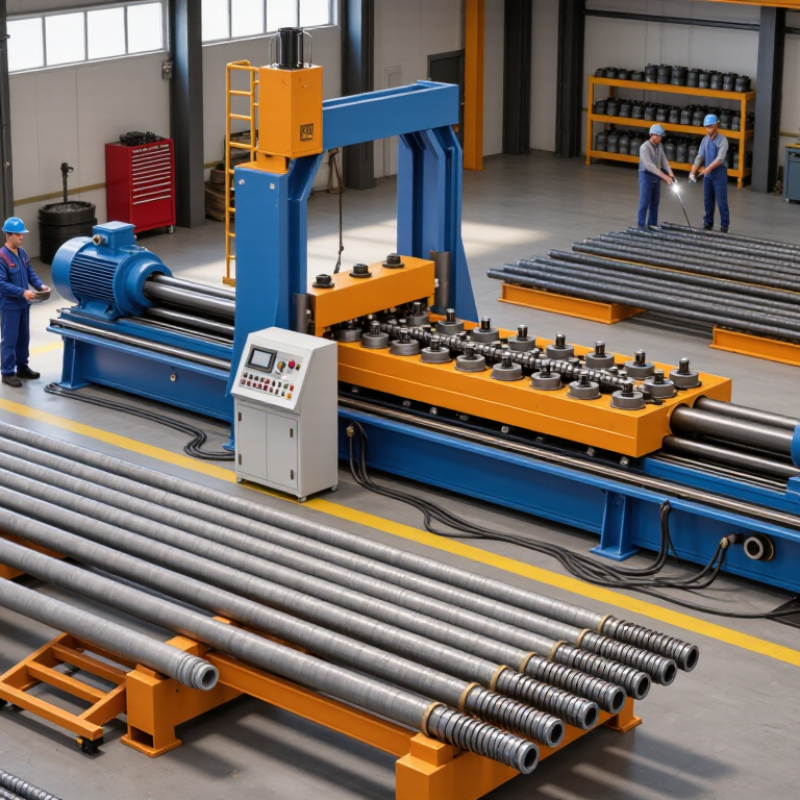
For an RCC pole making machine, compare the forming method before comparing price. Centrifugal spinning suits tapered poles and helps compact concrete against the mould wall. Vertical vibration systems can simplify handling, but pole geometry and mix consistency need close control. Ask suppliers to demonstrate your actual pole length, reinforcement cage, and concrete mix. A neat sample is not enough.
Capacity figures need careful reading. A quoted cycle time may exclude mould changes, loading, cleaning, and curing. Request finished poles per shift, plus the assumptions behind that number. Check how many moulds are included and whether common pole lengths require separate tooling. Small details matter. The International Energy Agency’s Cement report notes that cement production accounts for about 7% of global CO₂ emissions. That figure does not measure pole-machine performance, but it underlines why energy use and material waste deserve attention.
Automation can range from manual mould handling to PLC-controlled spinning, batching, and cycle monitoring. More automation may improve repeatability, but it also adds maintenance and operator-training needs. Compare controls, safety interlocks, spare-part availability, and fault records—not just the advertised automation level. Track actual output during a trial, including rejects and setup delays. I would still treat supplier capacity claims cautiously; production conditions rarely match a clean factory demonstration.
7 Tips for Buying an RCC Pole Making Machine
Compare machine types, capacity, and automation levels
Indicative planning ranges for poles per 8-hour shift—not guaranteed machine specifications. Actual output depends on pole design, mould count, curing method, changeover time, and crew experience. Ask suppliers for verified cycle-time data using your product dimensions.
Calculate Total Ownership Costs Before Choosing a Machine
An RCC pole making machine’s purchase price is only the starting point. Calculate the full cost over several years, including delivery, installation, foundations, electrical upgrades, and operator training. Ask for a written estimate of routine maintenance and replacement parts. A small component can become a costly delay if it is difficult to source. Tip: Request a parts list.
Estimate operating costs using your expected production schedule, not the machine’s maximum rated output. Include electricity, labor, molds, curing space, and material handling. Compare expected output with the number of poles you can actually sell and cure. A machine running below capacity may cost more per pole than the quotation suggests. Check cycle times under conditions similar to your plant, and confirm what is included in each figure. Estimates can still miss things.
Tip: Compare like with like. Review warranty coverage, service response times, and any fees for commissioning or technician visits. Ask current users about common maintenance needs, while remembering that their working conditions may differ from yours. Build a contingency into your budget; the exact amount depends on local service access and operating intensity. Your spreadsheet may look precise, but a few assumptions will probably need revisiting after production begins.
7 Tips for Buying an RCC Pole Making Machine - Calculate Total Ownership Costs Before Choosing a Machine
Illustrative 10-year planning comparison for three machine-line sizes. All figures are estimates in USD, not supplier quotations; replace them with local prices, tariffs, wage rates, and verified production data.
| Buying Tip / Cost Dimension | Basic Line | Mid-Size Line | High-Capacity Line |
| 1. Compare the machine purchase price | $42,000 | $78,000 | $135,000 |
| 2. Include installation and commissioning | $6,000 | $9,000 | $18,000 |
| 3. Estimate annual electricity costs | $8,000
About 66,700 kWh at $0.12/kWh | $13,000
About 108,300 kWh at $0.12/kWh | $20,000
About 166,700 kWh at $0.12/kWh |
| 4. Budget annual operating labor | $42,000 | $36,000 | $33,000 |
| 5. Allow for annual maintenance and spare parts | $5,000 | $7,500 | $12,000 |
| 6. Include annual mold and tooling costs | $6,000 | $8,000 | $12,000 |
| 7. Verify realistic annual saleable output | 8,000 poles | 14,000 poles | 22,000 poles |
Estimated initial cost
(purchase + installation) | $48,000 | $87,000 | $153,000 |
Estimated annual operating cost
(electricity + labor + maintenance + tooling) | $61,000 | $64,500 | $77,000 |
| Estimated 10-year total ownership cost | $658,000 | $732,000 | $923,000 |
| Estimated machine-line cost per pole over 10 years | $8.23 | $5.23 | $4.20 |
Calculation assumptions: 10 years of operation, annual costs and output held constant, and production figures treated as saleable output after normal operating losses. Total ownership cost = initial cost + (annual operating cost × 10). Cost per pole = 10-year total ownership cost ÷ 10-year output. These estimates exclude concrete, reinforcement steel, land, financing, taxes, and other factory-wide costs; confirm machine capacity, mold compatibility, energy use, and service requirements before purchasing.