What is the Sand Molding Process and How is it Done?
The sand molding process is a vital technique in the metal casting industry. It plays a significant role in producing intricate metal components. According to a report by MarketsandMarkets, the global sand casting market is expected to reach USD 17.27 billion by 2026. This growth highlights the industry's reliance on this method.
This process involves creating a mold from sand and then pouring molten metal into it. The ability to produce complex shapes is one of the main advantages of sand molding. However, it is not without challenges. Issues such as sand contamination and mold stability can arise, leading to production flaws. Industry statistics show that nearly 20% of castings produced may require rework or rejection.
Moreover, the environmental impact of sand extraction is a growing concern. Sustainability initiatives are necessary to mitigate the ecological footprint of the sand molding process. Continuous process improvements are essential to enhance efficiency and reduce waste. As manufacturers strive for innovation, addressing these challenges will shape the future of the sand molding industry.
Definition of Sand Molding Process
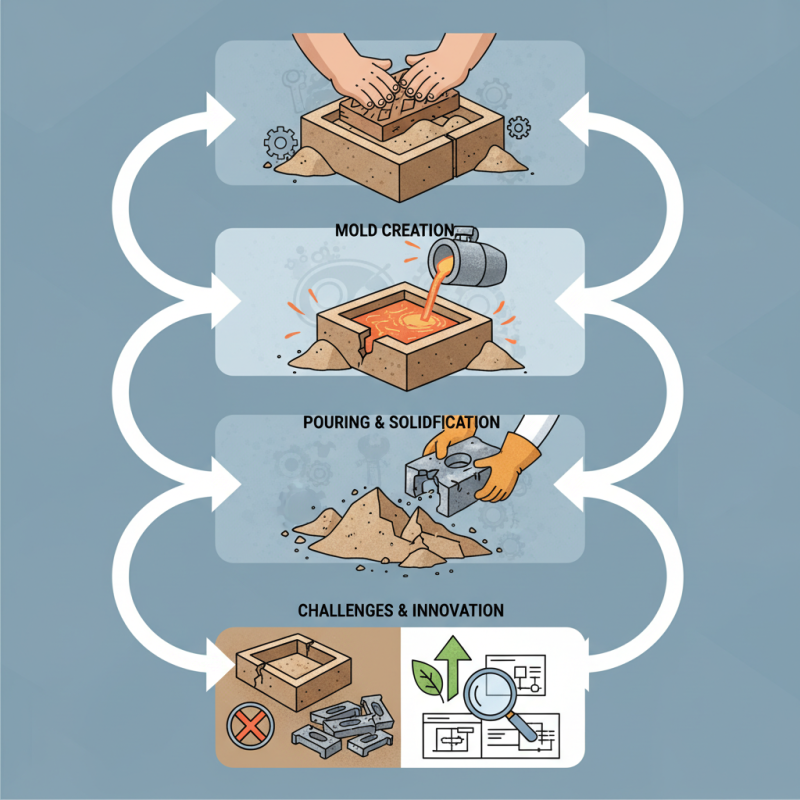
The sand molding process is a vital method in metal casting. It involves creating molds from sand to shape molten metal. This technique is widely used due to its simplicity and cost-effectiveness. A typical sand mold consists of two halves, called the cope and the drag. These halves are formed with a mixture of sand and binding agents.
To create a mold, sand is compressed around a pattern. The pattern represents the final product’s shape. After the sand settles, the pattern is removed, creating a cavity. This cavity is where molten metal will pour. The mixture's composition can greatly affect the mold's strength. Poor mixtures may result in mold collapse during casting.
Attention to detail is crucial during this process. Even small imperfections in the mold can lead to flaws in the final product. Many factors, such as humidity and temperature, can affect the outcome. Achieving the right balance is a challenge. Continuous improvement in sand molding is essential for better quality results.
Materials Used in Sand Molding
Sand molding is a popular casting process. The materials used are crucial for success. The primary ingredient is sand, often mixed with clay. This mixture creates a strong mold. The type of sand influences the detail and strength of the final product. Different sands have varying grain sizes, which affects the quality of the molds.
Additives like water and bonding agents are also essential. They help the sand maintain its shape. Too much water can weaken the mold. It’s a delicate balance. Using the wrong type or amount can lead to poor casting outcomes. This affects the final product’s integrity.
Other materials include metal or ceramic cores. These are needed for complex shapes. Cores enhance the mold's speed and efficiency. They can be challenging to work with. Designing them requires careful consideration. Overall, choosing the right materials is vital for success. Small flaws in material choice can lead to larger issues in production.
Step-by-Step Procedure of Sand Molding
The sand molding process is a key technique in casting metals. It involves creating molds from sand. This method allows for various shapes and sizes. Here’s a step-by-step look at how it’s typically done.
First, create a mold pattern. This can be made of wood or metal. The pattern is shaped like the final object. Next, prepare the sand mixture. Generally, this includes sand, a binding agent, and water. Achieving the right consistency is crucial. Too dry or too wet can lead to flaws. Once the mixture is ready, pack the sand around the pattern. Ensure it’s tightly packed to avoid defects. After this, remove the pattern carefully, leaving behind a detailed sand mold.
Now, it’s time for pouring the metal. Heat the metal until it’s molten. Pour it into the sand mold carefully. Watch for any overflow or irregularities. The cooling time varies, but patience is important. After it cools, break the sand apart to reveal the cast object. Inspecting the final product is essential, as imperfections can lead to issues later on. Overall, while the process seems straightforward, attention to detail is vital for quality results.
Applications and Advantages of Sand Molding
Sand molding is widely embraced in various industries due to its versatility. This process creates molds using sand, making it ideal for producing metal castings. The simplicity of the sand molding technique draws many manufacturers. It allows for quick adjustments and lower costs. Sand can be reused, reducing waste and promoting sustainability.
Applications of sand molding span multiple sectors. It is especially useful in automotive, aerospace, and art industries. Automotive parts often require intricate shapes. Sand molds can achieve this detail efficiently. In sculpture, artists utilize sand molding for unique textures and forms. Each piece tells a different story, showcasing creativity and skill.
Despite its advantages, sand molding has challenges. The process can be messy, with sand particles everywhere. Uniformity can be hard to achieve. Some molds might not retain the exact shape, leading to imperfections. Continuous improvement is necessary. Skilled workers are crucial for getting better results. They must address the inconsistencies that can arise during production.
Common Challenges in Sand Molding Process
The sand molding process is widely used in metal casting. However, it is not without its challenges. One common issue is mold strength. Inadequate bonding agents can lead to molds that break under pressure. Recent studies show that over 30% of defects in castings are linked to poor mold integrity. This not only impacts the quality but also increases production costs.
Another challenge is moisture levels in the sand. Too much water can lead to weak molds, while too little can cause the sand to dry out too quickly. The ideal moisture content for sand molding is around 2-4%. Maintaining this balance proves difficult, especially in varying environmental conditions. Surveys indicate that nearly 40% of foundries struggle to manage consistent moisture levels, leading to production delays.
Temperature fluctuations during the pouring process can also create issues. If the metal is too hot, it can cause erosion of the mold surface. Conversely, if it is too cool, the mold might not fill properly. Finding the right pouring temperature is crucial. Many foundries report that temperature control failures contribute to nearly 25% of defects. Addressing these challenges is essential for improving product quality and operational efficiency.
Sand Molding Process: Common Challenges