What is a Position Sensor and How Does it Work?
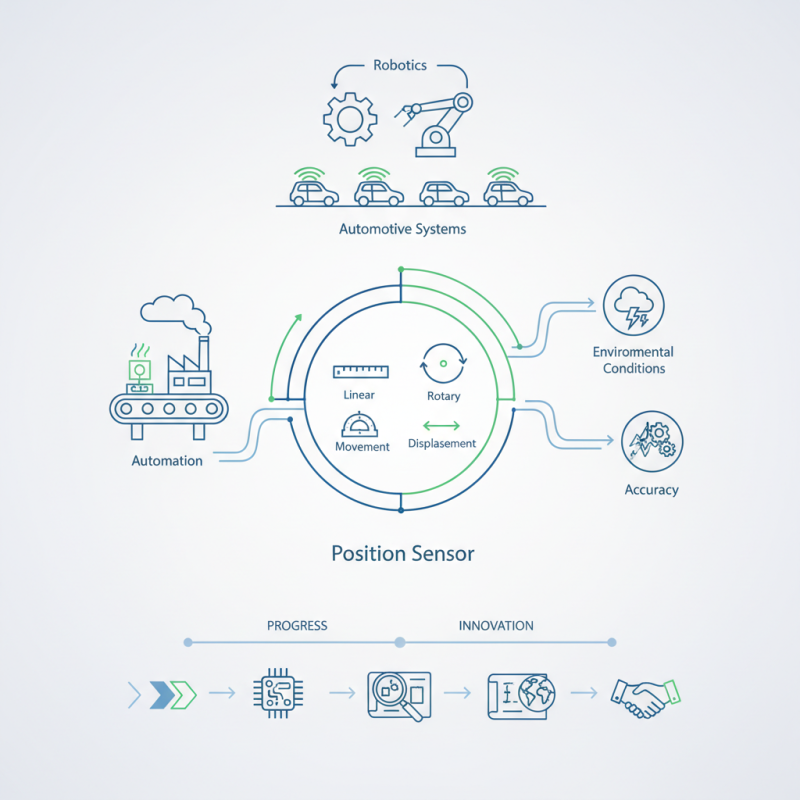
A Position Sensor is a crucial component in many engineering applications. It determines the location of an object relative to a reference point. These sensors play a vital role in automation, robotics, and automotive systems. Understanding how they work can reveal their significance in everyday technology.
Position Sensors come in various types, including linear and rotary sensors. They can detect movement, angle, or displacement. This functionality allows machines to operate smoothly and efficiently. For example, in a robotic arm, the Position Sensor ensures accurate positioning. However, the intricacies of their operation might seem daunting at times.
Many factors can affect the performance of a Position Sensor. Environmental conditions can introduce noise, impacting accuracy. Calibration is often needed to maintain precision. Despite these challenges, the importance of Position Sensors in modern technology cannot be overstated. They serve as the backbone for countless applications, enabling progress and innovation in multiple fields.
What is a Position Sensor?
A position sensor measures the location of an object. It's crucial in various applications, from robotics to automotive systems. These sensors help determine angles, distances, and displacement. They can be found in everyday devices, such as smartphones and game controllers.
There are different types of position sensors. Some use potentiometers, while others utilize encoders. Each type has its strengths and weaknesses. For instance, optical encoders provide high precision but can be sensitive to dust and dirt. You need to choose based on your specific requirements.
**Tips:**
When selecting a position sensor, consider the environment. Will it be exposed to moisture or high temperatures? This could affect performance. Also, think about the required accuracy. Sometimes, less precision is acceptable.
Position sensors can be tricky to work with. Calibration is essential for accurate readings. Take your time to set them up correctly. Incorrectly calibrated sensors can yield misleading data, leading to poor system performance. Always double-check your settings.
Position Sensor Data Analysis
Types of Position Sensors and Their Applications
Position sensors are crucial in many applications, converting physical positions into electrical signals. They come in various types, each suited for specific needs. Common types include potentiometric, capacitive, inductive, and optical sensors. Potentiometric sensors are widely used due to their simplicity. They measure linear or rotational position by varying resistance.
Capacitive sensors detect changes in capacitance. They are often found in touch screens and proximity devices. Inductive sensors rely on electromagnetic fields, making them effective for non-contact position measurements. Optical sensors, on the other hand, use light to determine position. They are prevalent in digital encoders and laser measurement systems.
Each type has its advantages and disadvantages. For instance, while capacitive sensors are sensitive, they might not perform well in dirty environments. Meanwhile, inductive sensors can be robust but may face issues with metallic interference. It's essential to choose the right sensor for the application. This decision can affect overall performance and reliability. Sometimes, the ideal choice is not clear, and further exploration is necessary to address specific challenges.
How Position Sensors Work: Principles and Mechanisms
Position sensors are crucial devices in various applications. They detect the position of an object and convert it into a readable signal. This information is vital in automation, robotics, and industrial processes. Understanding how these sensors operate is key to harnessing their full potential.
The basic principle of position sensors involves detecting changes in an object's location. Some sensors use magnetic fields, while others rely on light or electrical currents. For example, potentiometers change resistance based on the movement of a slider. In contrast, optical sensors detect light interruptions to determine position. These mechanisms highlight the versatility of position sensors.
However, the functioning of position sensors is not always flawless. Factors like environmental conditions can affect accuracy. Dust, temperature fluctuations, and even electromagnetic interference might alter readings. It’s essential to reflect on these limitations when implementing position sensors in critical applications. Fine-tuning and regular calibration are often necessary to ensure reliable performance. Balancing efficiency and precision in different settings remains a challenge.
What is a Position Sensor and How Does it Work?
| Sensor Type | Principle of Operation | Common Applications | Advantages | Disadvantages |
| Potentiometric Sensors | Variable resistance based on position | Robotics, audio equipment | Simple design, cost-effective | Limited lifespan, susceptible to wear |
| Magnetic Sensors | Detects magnetic field changes | Automotive, industrial machinery | Durable, precise measurements | Can be affected by external magnetic fields |
| Capacitive Sensors | Change in capacitance based on distance | Smartphones, touch screens | No mechanical wear, high sensitivity | Sensitivity to environmental conditions |
| Optical Sensors | Uses light interruption to measure position | Cameras, industrial automation | High precision, non-contact measurement | Requires line of sight, affected by dust or fog |
| Laser Distance Sensors | Measures time of flight of a laser beam | Construction, robotics | Long-range measurement, very accurate | Expensive, sensitive to obstructions |
Common Uses of Position Sensors in Different Industries
Position sensors play a crucial role in various industries. They help track the position of objects with precision. In manufacturing, for example, these sensors ensure machinery operates correctly. They provide feedback to control systems, preventing misalignments or malfunctions. Without reliable position sensors, production lines could face significant downtime.
In the automotive industry, position sensors enhance safety and performance. They are often installed in vehicles to monitor the position of seats, pedals, and gear shifts. This information allows for better adjustments and driver comfort. Some sensors even play a role in advanced driver-assistance systems. However, the complexity of these systems can lead to challenges in calibration and integration.
Aerospace also relies on position sensors to maintain safety and efficiency. They help with navigation and monitoring the position of critical components. Any failure in these sensors can have serious consequences. Engineers must often reflect on their designs, ensuring reliability and durability in high-stress environments. The right balance between technology and robustness is vital for optimal performance.
Future Trends in Position Sensor Technology
Position sensors are crucial in a variety of industries, from automotive to robotics. As technology advances, the demand for more precise and efficient sensors grows. Future trends indicate that position sensors will become smarter and more integrated into various systems. According to a recent market report, the global position sensors market is expected to reach $8 billion by 2026, with a CAGR of over 6%.
Emerging technologies like IoT and AI are driving these advancements. Smart sensors can now communicate data in real time, providing valuable insights. Furthermore, miniaturization techniques make it possible to embed sensors in even the tightest spaces. However, with this rapid development comes challenges, such as ensuring data security and maintaining sensor accuracy over time.
Tips: Always consider the environment when selecting a sensor. The operating conditions can significantly affect performance. Additionally, be wary of overcomplicating designs. Simplicity often leads to better reliability and ease of maintenance. Evaluate if your application really needs the latest technology, or if a simpler solution might be more effective.