Empowering Engineering Excellence: Innovate, Elevate, Deliver.
Choosing reliable mild steel pipe manufacturers is a practical decision for global buyers. The right supplier affects project safety, delivery timing, and long-term operating costs. This guide examines established manufacturers serving construction, infrastructure, energy, water, and industrial markets.
A dependable Mild Steel Pipe supplier should provide clear specifications, consistent production, and traceable quality records. Buyers should review pipe diameter, wall thickness, length tolerance, surface condition, and connection requirements. Material test certificates matter. So do independent inspections.
Manufacturing experience is valuable, but it is not enough. A factory may have modern equipment yet communicate poorly during urgent orders. Another supplier may offer low prices but limited export support. These differences become visible when containers are delayed, documents contain errors, or pipes arrive with uneven coating.
This overview compares manufacturers through practical purchasing factors. These include production capacity, quality control, international certifications, packaging, lead times, and after-sales communication. It also considers whether suppliers can support custom sizes and project-specific standards.
Details matter.
For example, protective caps can reduce damage to pipe ends during inland transport. Strong steel frames can prevent bundles from shifting inside containers. Accurate labels can simplify receiving inspections at a busy construction site. However, no ranking remains perfect for every buyer. Requirements vary by climate, application, budget, and destination regulations.
The companies discussed here should be verified directly before any purchase. Request recent certificates, sample inspection reports, factory information, and realistic shipping schedules. Compare written quotations carefully. A thoughtful buying process may take longer, but it can prevent expensive surprises after production begins.
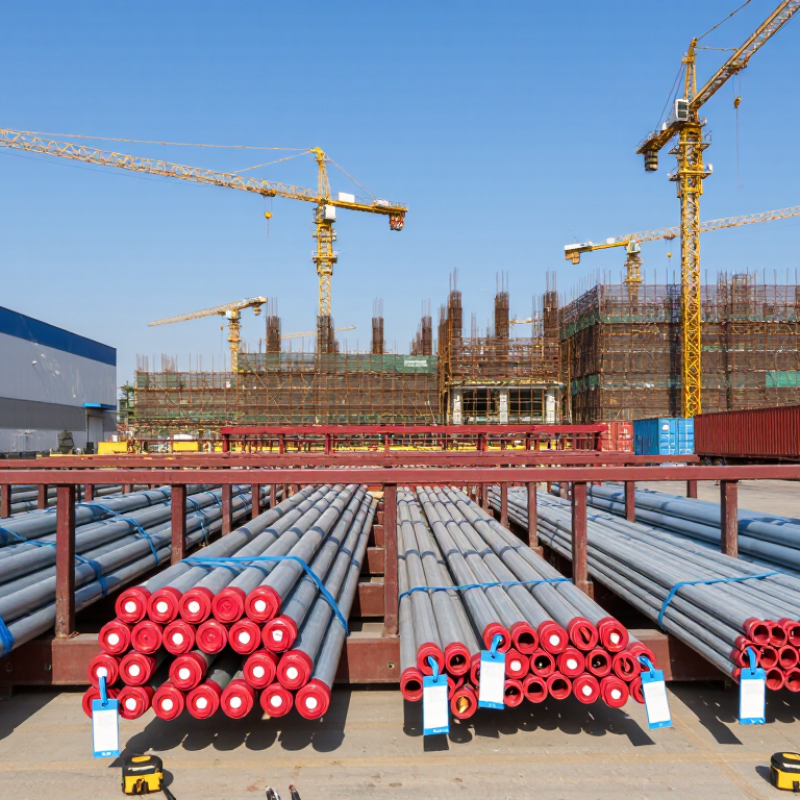
Mild steel pipe remains a practical choice for global buyers because it balances strength, weldability, and cost. The term usually describes low-carbon steel, often containing below 0.25% carbon. However, this limit is not universal. Product standards and mill specifications can differ. The label is useful, but imperfect.
The World Steel Association reported about 1.89 billion tonnes of crude steel production in 2023. That scale supports broad supply, but quality still depends on traceability and testing. ASTM A36 is a common structural grade, while EN 10255 covers many general-purpose steel tubes. API 5L grades, such as L245 and L360, serve pipeline applications with stricter mechanical requirements. Buyers should check carbon content, yield strength, tensile strength, and impact performance.
Pipe sizes vary widely. Small diameters suit compressed-air lines and light fabrication. Larger outside diameters support water transmission, piling, structural columns, and industrial frameworks. Wall thickness affects pressure capacity and weight. Do not select by diameter alone.
Tips: Request the mill test certificate, dimensional tolerances, coating details, and applicable standard. Confirm whether the pipe is seamless or welded. For outdoor use, plan corrosion protection before shipment. A 2024 industry review may show strong supply, yet delivery reliability can still vary by region and port. This is where buyers often underestimate risk.
This chart shows selected nominal pipe sizes (NPS) and their standard outside diameters for common mild steel pipe dimensions. The values are based on ASME B36.10M dimensions; NPS is a nominal designation and does not equal the measured outside diameter.
Mild steel pipe generally refers to low-carbon steel products, commonly supplied under specifications such as ASTM A53, ASTM A106, and API 5L. Depending on the grade and standard, maximum carbon content is typically around 0.20%–0.30%. These pipes are widely used for water, air, steam, structural supports, oil and gas transportation, and general industrial service.
Global buyers should match the pipe standard to its service, not only its price. ASTM A53 covers welded and seamless steel pipe for mechanical and pressure applications. ASTM A106 focuses on seamless carbon steel pipe for high-temperature service. These differences affect testing, wall thickness, and safe operating limits.
API 5L and ISO 3183 address line pipe used in oil, gas, and other pipeline systems. They define grades, manufacturing controls, chemical limits, and inspection requirements. ISO 3183 aligns closely with international pipeline practice, while API 5L is widely requested by energy contractors. EN 10255 covers non-alloy steel tubes suitable for welding, threading, and other general uses. “Mild steel” is a useful trade term, but it is not a complete specification. That detail is often missed.
Tips: Ask for the exact standard edition, grade, size range, and delivery condition. Check heat numbers against the mill certificate. Confirm hydrostatic testing, dimensional tolerance, and coating requirements before shipment. Third-party inspection can add confidence, especially for unfamiliar suppliers. A sample certificate helps, but it does not replace physical inspection. Some buyers rely too heavily on paperwork. That can be a costly assumption. Verify markings, end protection, and actual wall thickness. Small inconsistencies may reveal larger quality problems.
Top Mild Steel Pipe Manufacturers for Global Buyers
Reliable manufacturers select the forming method according to diameter, wall thickness, and service conditions. ERW pipes are made by forming steel strip and joining the seam with electrical resistance. They suit many structural and fluid applications. Seamless pipes begin as solid billets, then undergo piercing and rolling. This process avoids a welded seam, but it usually costs more. LSAW pipes form wide plates into large diameters, followed by longitudinal submerged arc welding. They are common in demanding infrastructure projects. Seam quality matters.
A capable factory controls steel chemistry before production. Carbon, manganese, sulfur, and phosphorus levels affect weldability and toughness. Experienced buyers should request tensile, yield, and elongation results. Hydrostatic testing can reveal leaks under controlled pressure. Ultrasonic testing helps detect internal flaws, while radiographic inspection may assess critical welds. Dimensional checks must cover outside diameter, wall thickness, straightness, and ovality. Records matter. Traceability should connect each pipe to its heat number, inspection report, and production batch.
Certificates alone are not enough. A document can look complete while sampling remains weak. Buyers should compare test methods, acceptance criteria, and calibration dates. I have found that small inconsistencies often deserve more attention than polished photographs. Factory audits can review welding parameters, storage conditions, and coating preparation. Even strong suppliers may miss a detail during busy production periods. That is why independent inspection, clear specifications, and retained samples remain practical safeguards for global purchasing.
| Manufacturing Method | Production Process | Common Commercial Size Range | Typical Wall Thickness | Typical Standards and Grades | Typical Applications |
|---|---|---|---|---|---|
| ERW (Electric Resistance Welded) | Hot-rolled steel strip is formed into a round shape and longitudinally welded using electric resistance heat. The weld bead is normally inspected and, where specified, removed or processed. | Approximately 15–610 mm outside diameter, depending on the applicable standard and production line. | Approximately 1.5–16 mm; actual limits depend on diameter, grade, and standard. | ASTM A53/A53M Grade B; API 5L Grade B; EN 10217-1; ISO 3183. | Water lines, structural supports, low-pressure fluid service, general mechanical piping, and oil or gas gathering lines. |
| Seamless | A solid steel billet is heated, pierced, elongated, and rolled or drawn without a longitudinal weld seam. Heat treatment may be applied according to the product standard. | Approximately 6–610 mm outside diameter for common carbon-steel pipe products. | Approximately 2–60 mm; heavier walls are available for selected sizes and specifications. | ASTM A106/A106M Grade B; ASTM A53/A53M; API 5L Grade B; EN 10216-1. | High-temperature service, pressure piping, boiler and heat-exchanger systems, hydraulic lines, and applications requiring no welded seam. |
| LSAW (Longitudinal Submerged Arc Welded) | Heavy steel plate is formed by U-ing and O-ing or by progressive forming, followed by internal and external longitudinal submerged arc welding. | Approximately 406–1,520 mm outside diameter for common large-diameter pipe production. | Approximately 6–40 mm; project specifications may require thicker walls. | API 5L Grades B, X42, X52, X60; ISO 3183; EN 10219-1; ASTM A671 for selected applications. | Transmission pipelines, water conveyance, piling, offshore structures, and large-diameter structural or process piping. |
| QC Test | Purpose | Common Reference Standard | Typical Acceptance or Verification Items | Buyer Documentation |
|---|---|---|---|---|
| Chemical Composition Analysis | Confirms carbon, manganese, phosphorus, sulfur, silicon, and other specified elements. | ASTM A751; product-specific ASTM, API, or EN standard. | Measured composition must remain within the limits for the ordered grade. | Heat analysis, product analysis, and material traceability records. |
| Tensile Test | Measures yield strength, tensile strength, and elongation. | ASTM A370; ISO 6892-1. | For ASTM A53 Grade B, typical minimum values are 240 MPa yield strength and 415 MPa tensile strength, subject to the applicable edition and product form. | Certified mill test report with specimen direction, results, and heat number. |
| Hydrostatic Pressure Test | Checks pressure integrity and identifies leakage or unacceptable defects. | API 5L; ASTM A53/A53M; project specification. | Test pressure, holding time, and allowable leakage must meet the ordered standard; pressure is calculated from the specified design requirements. | Pressure-test record showing test pressure, duration, equipment calibration, and result. |
| Ultrasonic or Electromagnetic Inspection | Detects longitudinal weld flaws, laminations, lack of fusion, inclusions, and other discontinuities. | API 5L; ISO 10893 series; applicable project specification. | Inspection coverage, calibration, sensitivity, and defect acceptance levels must match the purchase specification. | NDT report, calibration records, inspection map, and operator qualification where required. |
| Flattening or Bend Test | Evaluates ductility and weld soundness under deformation. | ASTM A53/A53M; ASTM A370; ISO 8492 or ISO 8491. | No unacceptable cracking, opening, or weld separation within the specified deformation and test conditions. | Test report with pipe dimensions, specimen location, deformation level, and visual result. |
| Dimensional and Visual Inspection | Verifies outside diameter, wall thickness, length, straightness, ovality, end preparation, surface condition, and marking. | Applicable ASTM, API, EN, ISO, and project tolerances. | Measurements must comply with specified tolerances; pipe ends and surfaces must be free from unacceptable damage or defects. | Dimensional inspection report, photographs, marking verification, and packing list. |
| Weld Procedure and Production Control | Confirms that welding parameters, consumables, heat input, and operator qualifications are controlled during production. | ISO 15614-1; ISO 9606-1; API 5L; project specification. | Approved welding procedure, qualified personnel, controlled consumables, and documented repair limits. | WPS/PQR, welder qualification records, weld traceability, repair records, and final release certificate. |
Note: Size ranges, wall-thickness capabilities, test requirements, and acceptance criteria vary by manufacturing facility, product standard, grade, and purchase specification. Final requirements should be confirmed in the approved technical data sheet and inspection and test plan.
A capable mild steel pipe manufacturer should show production capacity with evidence, not impressive figures alone. Ask for monthly output, furnace schedules, forming lines, and recent shipment records. A factory producing 20,000 tons monthly may still miss your delivery window if several large projects overlap. Confirm available sizes, wall thicknesses, and coating options before placing an order. Capacity must match your specification, not just your total tonnage.
3.2 certification requires careful attention. Under EN 10204, a 3.2 inspection certificate involves validation by the manufacturer and an independent inspection representative. The inspection plan should define chemical analysis, tensile testing, impact testing, and sampling rates. Request heat numbers linked to each pipe bundle. Check that the certificate matches the purchase order and test results. A document without traceable records is weak evidence.
Tolerances affect installation costs. Confirm outside diameter, wall thickness, length, straightness, and ovality limits in writing. Small deviations can create problems during welding or coupling. Lead times should include production, testing, inspection, packing, and port handling. Ask for a milestone schedule with realistic buffer days. I have learned that promised dates often exclude inspection delays. That assumption needs challenging. Trial orders can reveal packing quality, dimensional consistency, and communication speed before a larger commitment.
The global steel market provides a substantial base for mild steel pipe sourcing. The World Steel Association reported 1,888.2 million tonnes of crude steel production in 2023, equal to about 1.89 billion tonnes. Output declined slightly from 2022, yet the volume still reflects enormous industrial capacity. For global buyers, this scale supports broader supplier selection, regional production options, and more flexible shipment planning.
Production volume alone is not enough. The OECD’s steel market analysis continues to highlight pressure from excess capacity, uneven demand, and changing trade conditions. Buyers should examine a manufacturer’s actual process controls. Useful evidence includes heat numbers, mill test certificates, dimensional records, and hydrostatic test results. A warehouse inspection should check pipe ends, surface rust, ovality, and wall-thickness consistency. Small defects matter.
Choose the specification before comparing quotations. Common references include ASTM A53, EN 10255, and ISO 65, depending on the intended service. Confirm outside diameter, nominal wall thickness, length tolerance, coating requirements, and packing methods. Mild steel pipes may look interchangeable, but they are not always equivalent in testing or traceability. One weakness in many purchasing comparisons is overreliance on price. A lower offer can become expensive after rework, delayed customs clearance, or failed site inspection. Reports provide market context; documented factory evidence supports a safer decision.