Empowering Engineering Excellence: Innovate, Elevate, Deliver.
A Roller Table Conveyor can look simple: steel rollers, a frame, and a motor—or no motor at all. Yet a poor match may leave cartons rocking at transfer points, pallets slowing under load, or operators clearing jams by hand. The global conveyor systems market was valued at about $10.3 billion in 2022, with Grand View Research forecasting 4.5% annual growth from 2023 to 2030. That market figure signals investment, not a guarantee that any conveyor suits your operation.
“Efficiency is doing things right; effectiveness is doing the right things,” management expert Peter Drucker is widely quoted as saying. Applied here, the point is practical: choose around the real job, not just the catalog price. Measure the heaviest load, smallest product, required throughput, incline, and available floor space. Check roller diameter and spacing against the product’s base; a narrow box can sag between rollers. Then compare gravity and powered designs, drive zones, frame materials, controls, and maintenance access.
Small details matter. A pallet may need robust rollers and transfers; a lightweight carton may need close spacing and controlled accumulation. There is no universal best choice. Even careful specifications can miss a daily snag, so ask operators where products stop, drift, or need a push. This guide explains how to compare options and verify a system before purchase.
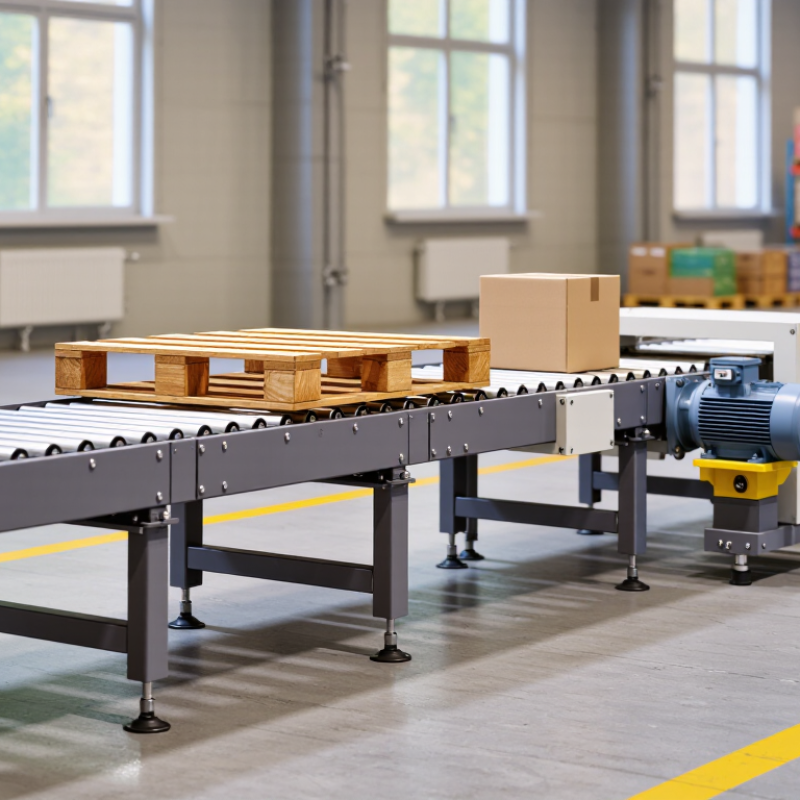
Start with the product, not the conveyor catalog. Record each item’s dimensions, weight, shape, and contact surface. A rigid carton may bridge several rollers, while a soft package can sag between them. Check the smallest item, largest item, and heaviest load. Then confirm the load per roller and frame capacity with the supplier.
One overlooked detail: unevenly loaded pallets can stress a section more than their average weight suggests.
Estimate peak throughput, not just the daily average. Count units per minute during busy periods, and note spacing, stops, and accumulation needs.
MHI’s 2024 Annual Industry Report found that 55% of surveyed companies planned to increase supply-chain technology investment.
That points to growing interest in automation, but it does not mean every line needs a powered conveyor. Match roller speed and drive type to the actual flow; a small trial can reveal jams that a spreadsheet misses.
A roller table conveyor should match the way products move through your workspace. Gravity roller conveyors use a slight slope or a manual push to move items. They suit cartons with flat, firm bases and predictable flow. No motor is needed. Simple. But not always.
Powered roller conveyors use driven rollers to move loads at a controlled speed, including across level sections. They can help when cartons are heavy, the route is long, or workers need items delivered steadily to packing stations. Power also supports controlled accumulation, but the rollers, controls, and drive components add cost and maintenance needs. Check each carton’s weight and base condition before choosing; small gaps between rollers can catch soft packaging.
Think about the whole route, not just the conveyor’s purchase price. Measure available floor space, note any slopes, and observe how often loads arrive. A short gravity section may work well between two powered zones, though mixed systems need careful transfer-point design. In practice, teams sometimes underestimate how much manual pushing a busy gravity line requires. That rule is useful, but not perfect. Test with representative loads, and confirm that speed, noise, and stopping behavior suit the people working nearby.
For roller size, measure the heaviest load and its smallest, least-rigid base—not just the carton dimensions. A practical starting point is a roller diameter and wall thickness rated for that load, with bearings suited to the operating speed. CEMA’s ANSI/CEMA Standard No. 401-2019 covers unit-handling roller conveyors and provides a technical reference for conveyor selection. Check its guidance alongside the supplier’s load ratings; a nominal roller diameter alone does not establish capacity.
Pitch matters just as much. Aim to keep at least three rollers beneath the shortest load at all times, so the roller spacing should generally be no greater than one-third of that load’s contact length. Test awkward items too. A soft-bottomed tote can sag between rollers, even when a rigid box travels smoothly.
Set conveyor width from the widest load, then allow practical side clearance without letting items drift or turn. MHI’s 2024 Annual Industry Report reports that 55% of surveyed organizations planned to increase supply-chain technology investment; better sizing helps make that investment useful, but the report does not prescribe conveyor dimensions.
Measure real loads and trial the layout. It’s easy to miss one. A skewed package may need closer spacing or guides, so revisit the design after testing.
How to Choose a Roller Table Conveyor?
Select the Frame, Drive, and Controls for Your Application
A roller table conveyor works best when its frame, drive, and controls match the load and work area. Start with the heaviest item, not the average one. A steel frame handles demanding loads, while aluminum may suit lighter products and frequent line changes. Check width, roller spacing, support points, and floor conditions. A frame that looks sturdy can still flex if supports are too far apart. Measure the actual loads.
Drive choice depends on how products need to move. Gravity rollers can work for cartons on a slight, controlled incline, but speed and stopping space need attention. Powered rollers help when products must travel level or move at a steady pace. Match motor capacity to load, throughput, and start-stop frequency. Too much speed can shift an unstable package. Too little can create a queue. It happens.
Controls should fit how operators use the line. A simple start-stop station may suit a short, attended section. Longer lines often benefit from zone sensors, emergency stops, and clear status indicators. Place controls where workers can reach them without leaning across rollers. Consider jams, cleaning, and restart behavior before installation. This part is often rushed. A layout may seem obvious on paper, then feel awkward beside a real workbench. Check the plan with operators and maintenance staff, and leave room for adjustment.
When choosing a roller table conveyor, check how people will interact with it, not only what it must carry. Confirm the rated load covers the heaviest item and its weight distribution. Guard exposed pinch points, especially where rollers meet drive components. Emergency stops should be reachable from normal operating positions. Keep hands and loose clothing away from moving rollers. Small details matter.
Map the conveyor against the actual floor plan. Measure aisle widths, workstations, doorways, and turning space before settling on a layout. A straight run may suit uniform cartons, while mixed loads may need transfer sections or adjustable guides. Check that operators can reach controls without stepping across the line. A neat drawing can still mislead. Test the proposed route with the largest pallet or container, and leave room for safe loading and unloading.
Plan maintenance access before installation. Can a technician remove a roller without dismantling nearby equipment? Check bearing access, drive components, cleaning needs, and the recommended inspection schedule. Dust, moisture, or frequent washdowns can change material and bearing requirements. Keep common replacement parts available, but avoid stocking parts that do not fit the chosen configuration. Maintenance plans are often imperfect; review them after the conveyor has run under real production conditions.
| Selection factor | What to check | Practical guidance | How to verify |
|---|---|---|---|
| Load and capacity | Maximum and typical load weight, dimensions, shape, and load distribution. | Size the conveyor for the heaviest expected load and the way its weight is distributed. Confirm that the load can contact enough rollers to remain stable; small-base or irregular loads may need closer roller spacing or a carrier. | Compare the load data with the conveyor’s rated capacity and roller-spacing specifications. Include dynamic or impact loading where applicable. |
| Roller type and spacing | Whether the application needs gravity rollers or powered rollers, and whether the product base can roll smoothly. | Gravity conveyors require a suitable incline and load characteristics. Powered conveyors may be more appropriate where controlled movement, accumulation, or level travel is required. Roller spacing should support the smallest load base throughout travel. | Test representative products on the proposed roller arrangement, including the smallest, heaviest, and least rigid items. |
| Conveyor width and height | Product width, orientation, transfer points, working height, and operator access. | Allow the load to travel without rubbing the frame or falling between side guides. Coordinate conveyor height with upstream and downstream equipment and the intended loading method. | Check drawings against actual product dimensions and measure the installation area, transfer interfaces, and operator work positions. |
| Route and layout | Available floor space, turns, elevation changes, crossings, access routes, and future expansion. | Plan a clear path for products and people. Avoid obstructing exits, walkways, or access to controls and services. Confirm that curves, transfers, and transitions suit the product and conveyor type. | Review a scaled layout on site, including maintenance access, material-handling equipment routes, and applicable site requirements. |
| Speed and accumulation | Required throughput, spacing between loads, stopping behavior, and whether products may queue. | Match speed to the process and downstream equipment. Accumulation can increase contact forces or cause product damage, so it should be designed for the load and operating conditions rather than assumed to be safe. | Confirm operating speed and accumulation method in the system design, then test normal operation and foreseeable stoppages. |
| Safety and guarding | Pinch points, in-running nips, moving parts, accessible edges, and interaction with operators. | Use appropriate guarding and protective measures based on a risk assessment. Keep access to emergency stops clear, and ensure controls are suitable for the intended work and foreseeable misuse. | Complete a documented risk assessment and verify the design against applicable local machinery and workplace-safety requirements before operation. |
| Environment and construction | Dust, moisture, washdown, temperature, corrosion, and exposure to chemicals or outdoor conditions. | Select frame, rollers, bearings, and finishes suited to the actual environment. Requirements for washdown or corrosive conditions can differ substantially from those for a clean, dry indoor area. | Compare the site conditions with the component specifications and confirm cleaning and environmental limits with the equipment supplier. |
| Maintenance access | Access to rollers, bearings, drives, sensors, guards, and adjustment points. | Provide safe access for inspection, cleaning, adjustment, and replacement. Maintenance tasks should follow the equipment instructions and site procedures, including isolation of hazardous energy when required. | Review the maintenance plan and confirm that components can be reached without unsafe access or unnecessary dismantling. |
| Inspection and spare parts | Wear items, expected inspection frequency, component availability, and recordkeeping. | Set inspection intervals according to operating hours, environment, and risk. Check for damaged or seized rollers, loose fasteners, abnormal noise, and changes in tracking or product movement. | Request maintenance documentation and identify critical spares before commissioning; keep inspection and repair records. |
| Commissioning and acceptance | Installation alignment, load performance, controls, safety devices, and operator training. | Commission the conveyor under representative operating conditions. Confirm that loads transfer reliably, controls work as intended, and operators understand safe operating procedures. | Use a documented acceptance checklist and resolve installation or safety issues before routine production begins. |