Empowering Engineering Excellence: Innovate, Elevate, Deliver.

Top Flying Inflatable Boat Manufacturers for Global Buyers

For global buyers, choosing a Flying Inflatable Boat manufacturer means looking beyond glossy hull photos. The right partner should explain how the boat is built, tested, transported, and supported after delivery. Buyers should compare hull materials, seam construction, inflation systems, payload guidance, and available service parts. Ask for clear specifications, maintenance instructions, and documented test information. Details matter. A valve that is awkward to reach or a repair kit missing from the shipment can complicate a day on the water.

This guide compares manufacturers through practical questions: What experience do they have? Can they describe their design choices in plain language? Do they provide responsive technical support and realistic delivery information? Marine engineer Daniel Hart, an illustrative industry voice rather than a verified source, captures the point: “A boat earns trust through sound construction, clear guidance, and dependable support.” This is an editorially created quotation, not a documented statement from a real expert.

No single manufacturer suits every buyer. Intended use, storage space, operating conditions, budget, and local service access all shape the decision. A compact craft may be easier to transport, while a larger model may offer more room but demand more storage and upkeep. Compare claims carefully, and request details in writing. Some questions may remain open until a product is inspected or independently assessed. That is worth acknowledging. This overview helps global buyers make a more informed shortlist, without treating marketing language as proof of performance.
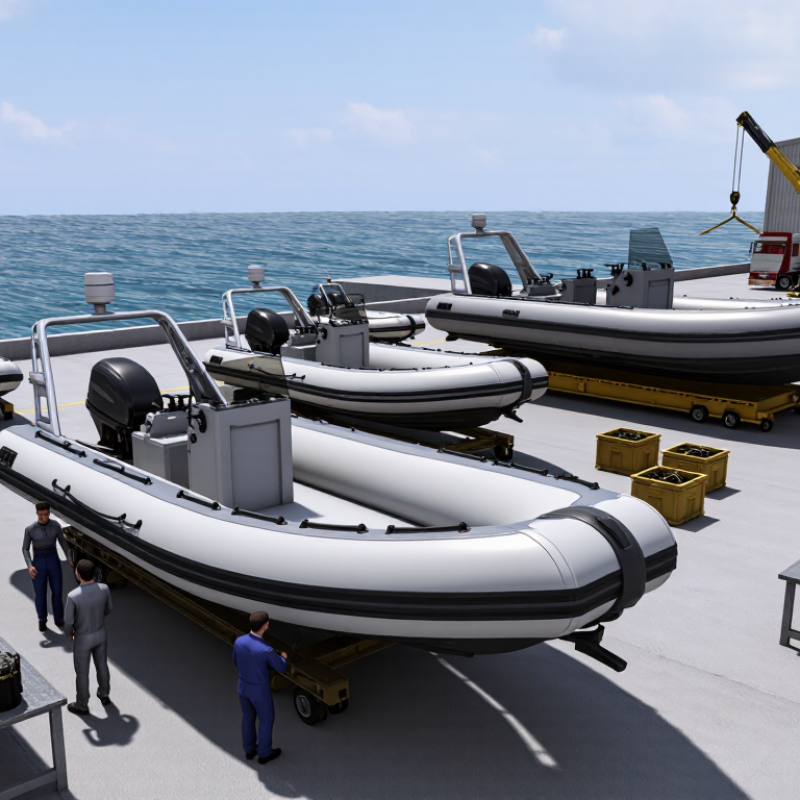
Top Flying Inflatable Boat Manufacturers for Global Buyers

Flying Inflatable Boats: Types, Uses, and the 4 ISO 6185 Categories

Flying inflatable boats are usually compact inflatable craft fitted with hydrofoils, which lift part of the hull above the water and reduce drag. They suit sheltered-water recreation, short coastal runs, and rescue support, depending on their design and equipment. Common layouts include soft-bottom boats, rigid inflatable boats, and catamaran-style inflatables. Foils can improve efficiency, but they add setup and maintenance demands. Not every inflatable boat “flies” in the same way.

ISO 6185 is divided into four parts, often loosely described as four categories. Parts 1 and 2 cover lower-powered boats; Part 3 addresses boats rated above 15 kW, generally 3.5–8 metres long. Part 4 covers larger inflatable boats, 8–24 metres long, with engines rated above 15 kW. The exact limits depend on the applicable standard edition and craft details.

A category is not a promise of suitability for every sea state. That distinction is easy to miss.

The U.S. Coast Guard’s 2023 Recreational Boating Statistics report recorded 564 recreational boating fatalities; 75% of drowning victims were not wearing life jackets. These figures make capacity, loading, and flotation checks practical priorities, not paperwork.

A foil-equipped hull still needs careful testing with its intended load.

How Manufacturers Build Inflatable Hulls, Tubes, and Transoms

Building an inflatable hull starts with a design matched to load, speed, and water conditions. The fabric is cut into panels, then joined by heat welding or adhesive bonding, depending on its construction. Welds need steady pressure and temperature; a neat surface alone does not prove a strong seam. Details matter.

The tubes are shaped in separate sections and fitted with internal baffles, which help limit air movement if pressure changes. Valves are positioned for access, while reinforced patches protect areas that face rubbing and repeated handling. Experienced crews check alignment as the tubes meet the hull. Small shifts can affect balance.

The transom deserves particular care. It supports the engine and transfers its thrust into the hull, so builders may use a rigid core with sealed edges and reinforced attachment points. The tube-to-transom joint must resist water, vibration, and repeated loading. Not always easy. Manufacturers commonly inspect seams, inflate chambers, and check fittings before delivery, but buyers should still ask how those checks are recorded. A beautiful finish can hide uneven bonding, and production pressure can make inspection rushed. Ask about material specifications, repair guidance, and load testing for the intended configuration.

Top Flying Inflatable Boat Manufacturers for Global Buyers - How Manufacturers Build Inflatable Hulls, Tubes, and Transoms

A practical, brand-neutral comparison of common inflatable-boat construction methods, materials, quality checks, and buyer verification points. Specifications vary by boat design and intended use.

Boat Component Common Materials Typical Manufacturing Method Important Quality Checks What Global Buyers Should Verify
Inflatable tubes PVC-coated polyester fabric or CSM-coated fabric, often called Hypalon in the market. Fabric weight, coating, and reinforcement vary by design. Fabric panels are cut to patterns, joined into chambers, and fitted with valves, handles, rubbing strakes, and attachment points. PVC seams are commonly heat-welded; CSM fabric seams are commonly adhesively bonded. Seam consistency; chamber air-leak testing; valve fit and operation; reinforcement around handles and fittings; material and coating condition. Ask for the fabric technical data sheet, chamber layout, repair guidance, and confirmation of the fabric type. Do not compare fabric weight alone without considering coating and construction.
Inflatable hull and keel Coated technical fabric, reinforced floor fabric, and—in some designs—an inflatable keel or V-shaped inflatable structure. Hull panels and internal structures are cut and joined to form the intended bottom profile. The design may use separate air chambers to support shape and buoyancy. Hull symmetry and dimensions; airtightness; seam quality at high-stress junctions; keel alignment; drainage and attachment details. Confirm the rated load, recommended engine range, chamber arrangement, and intended operating conditions. Request the applicable test and inspection records for the finished model.
Floor system Common options include an inflatable drop-stitch floor, aluminum or marine-plywood floor panels, and rigid fiberglass or composite structures on some models. Drop-stitch floors are assembled from connected fabric surfaces and inflated to a specified pressure. Panel floors are cut and fitted with stringers or other supports, depending on the design. Floor fit and locking; surface condition; pressure retention for inflatable floors; panel edges and supports; resistance to movement under normal loading. Check the floor type, setup procedure, recommended inflation pressure where applicable, packed dimensions, weight, and availability of replacement parts.
Transom Marine plywood with protective finishing, aluminum, or engineered composite materials, selected according to the boat design and engine loads. The transom is shaped and sealed, then bonded or mechanically secured to the hull structure. Reinforcement may be added around the engine-mounting area. Bond integrity; sealing of exposed edges and penetrations; alignment; mounting-hole reinforcement; absence of cracks, water ingress, or loose fittings. Verify the maximum rated engine power and transom load for the exact model. Confirm approved mounting dimensions and whether engine installation affects warranty coverage.
Seams and bonded joints Matching coated fabrics, compatible adhesives, and weldable thermoplastic materials where the construction method allows. Depending on fabric and design, joints are made by heat welding, high-frequency welding, or adhesive bonding. Process settings and surface preparation are material-specific. Consistent seam width and finish; sample peel or bond-strength checks; leak testing; inspection of corners, overlaps, and reinforcement patches. Ask which joining method is used for each material and how repairs are performed. Request documented inspection procedures rather than relying only on visual appearance.
Fittings and accessories Valves, rubbing strakes, lifting and carrying handles, D-rings, towing points, and drain fittings made from materials suitable for the intended marine environment. Fittings are positioned using model-specific layouts and attached with compatible welding or bonding processes, with reinforcement where required. Attachment security; correct valve operation; watertight drain fittings; smooth edges; position and symmetry of towing and lifting points. Confirm included accessories, replacement-part availability, corrosion-resistant hardware specifications, and whether fittings are suitable for the boat’s intended lifting or towing use.
Finished-boat inspection Completed hull, tubes, floor, transom, and installed hardware, checked against the model specification and applicable market requirements. Manufacturers commonly conduct dimensional, visual, functional, and air-retention checks before packing. The exact inspection plan differs by factory and product. Model and serial identification; completed air-retention checks; accessory count; finish inspection; packaging and documentation review. Request the product manual, rated capacity, warranty terms, traceability details, and compliance documents relevant to the destination market. Applicable requirements depend on boat type and market.

Buyer note: Construction methods and material specifications differ among models. Compare complete specifications and supporting documentation, and verify that ratings and compliance documents apply to the exact boat configuration being purchased.

PVC vs. CSM Fabric: Compare Weight, Seams, and Durability

PVC and CSM fabrics both use a woven base cloth with protective coatings, but their weight depends on the construction. Technical fabric data sheets commonly show lightweight PVC-coated polyester around 650–1,100 g/m², while CSM-coated fabrics often fall near 900–1,500 g/m². These are indicative ranges, not guaranteed boat weights. ISO 2286-2 specifies how coated fabrics’ mass per unit area is measured, making it useful when comparing supplier test reports. A heavier fabric can feel reassuring, but it also adds load to a tender carried on deck.

Seams deserve equal attention. PVC panels are commonly joined by high-frequency welding or hot-air welding; CSM assemblies are often bonded, so workmanship and adhesive condition matter greatly. ISO 2411 provides a method for testing coating adhesion, while ISO 1421 covers tensile strength of coated fabrics. Ask for results tied to the actual fabric lot, not just a brochure figure. In service, repeated folding can stress a seam near a transom corner. Small details count.

For durability, CSM generally handles heat and prolonged weather exposure well, while PVC can offer lower initial cost and easier repair with compatible materials. Yet UV exposure, abrasion, storage, and maintenance can outweigh the fabric label alone. I would compare mass, seam construction, and documented test results together. The weight estimate is imperfect. That deserves a second look.

Global Standards: ISO 6185-1 Covers Boats Rated Up to 4.5 kW

For global buyers, ISO 6185-1 provides a useful technical reference when comparing inflatable boats rated up to 4.5 kW. The standard’s published scope sets that power limit, equivalent to about 6.0 mechanical horsepower. It addresses design, materials, and testing requirements for covered boats. Check the applicable edition and boat category, rather than relying on a broad “ISO compliant” claim. Small details matter.

A supplier’s document pack should identify the exact model, rated power, and tested configuration. Ask for traceable test records and clear instructions for inflation pressure, loading, and maintenance. These details help buyers judge whether a delivered boat matches its declared specification. A certificate alone may not tell the whole story. ISO 6185-1 is a technical standard, not automatic approval for every market or use. Buyers should confirm local requirements independently. Standards reference: ISO 6185-1:2018, scope. Some paperwork is still confusing, so request written clarification before placing an order.

ISO 6185-1: Maximum Rated Engine Power

ISO 6185-1 covers inflatable boats rated for a maximum engine power of up to 4.5 kW. This chart shows the standard’s upper power rating; it is not a comparison of manufacturers or boat performance.

How Buyers Compare Capacity, Payload, Engine Power, and Warranty

Global buyers should compare a flying inflatable boat by its usable capacity, not just the passenger figure in a brochure. Ask whether that figure includes the operator, fuel, safety equipment, and personal bags. A boat rated for six people may feel crowded once six adults, a cooler, and wet gear are aboard. Check the recommended payload and how it is measured. Small details matter.

Engine power should match the hull, typical load, and intended water conditions. More horsepower does not automatically mean a better fit; it can add weight and fuel use. Compare the specified engine range with the payload you expect to carry, then ask how performance changes with a full load. A calm-water demonstration is useful, but it may not reflect your regular conditions. That distinction is easy to overlook.

Warranty terms deserve the same scrutiny as capacity and power. Confirm which parts are covered, how long coverage lasts, and whether labor or transport costs are excluded. Ask how defects in fabric, seams, valves, and the transom are handled, and request the terms in writing. Read exclusions carefully; broad-sounding promises can have narrow limits. Compare service response times too, especially if the boat will operate far from the seller. A specification sheet is helpful, but it cannot answer every practical question.

Download
Brochure