Empowering Engineering Excellence: Innovate, Elevate, Deliver.
Global sourcing has changed the role of Flexible Pcba from a component purchase into a supply-chain decision. Buyers now balance miniaturization, bending performance, compliance, lead time, and production stability. A low unit price alone cannot protect a product launch.
Grand View Research estimates that the global flexible printed circuit board market will expand strongly through 2030, supported by smartphones, vehicles, medical devices, and wearable electronics. Its market report also identifies growing demand for lightweight, high-density interconnect solutions. IPC’s Electronics Industry Sentiment reports show continued pressure on electronics manufacturers from material costs, capacity planning, and delivery uncertainty. These signals make supplier evaluation more important than ever.
In practice, a reliable sourcing process begins with clear drawings, stack-up details, copper thickness, bend radius, surface finish, and acceptance criteria. Ask whether the supplier controls coverlay alignment, impedance testing, cleanliness, and first-article inspection. Request traceability for copper foil, laminates, and assembly lots. A factory tour, audit record, and realistic production sample can reveal more than a polished presentation.
Small details matter.
A quotation may exclude tooling, engineering changes, or repeat inspection costs. That mistake is common. It can also distort total cost. Buyers should compare yield assumptions, payment terms, freight routes, warranty limits, and corrective-action procedures. Flexible Pcba sourcing is not perfectly predictable, especially across unfamiliar regions. Supplier diversity helps, but it can increase qualification work. This guide presents ten practical buying tips for global sourcing, combining industry evidence with hands-on checks that support quality, resilience, and accountable purchasing decisions.
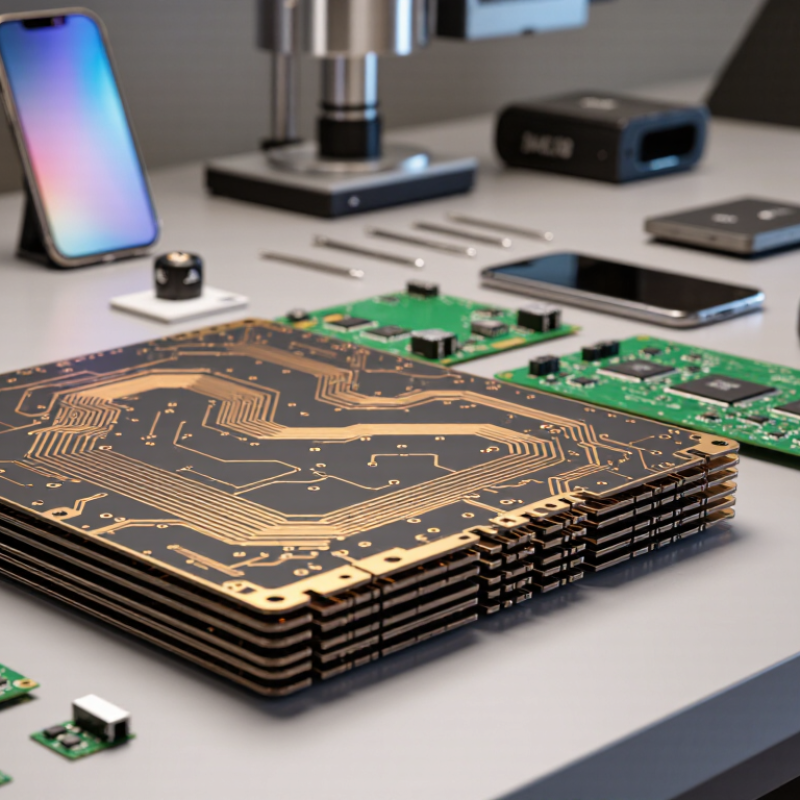
10 Flexible PCBA Buying Tips for Global Sourcing
Define Flexible PCBA Requirements and Application Conditions
A flexible PCBA specification should begin with its real operating environment, not only the circuit diagram. State the bend radius, bending direction, flexing cycles, installation space, and minimum trace-to-edge distance. A product that bends once during assembly needs different construction from one flexing thousands of times in service. IPC-2223 identifies dynamic and static flexing as separate design conditions, which many early sourcing requests overlook.
Temperature also changes the purchasing decision. Record continuous temperature, short-term peaks, humidity, vibration, shock, and contact with oils or cleaning agents. For example, a wearable module may face skin moisture and repeated movement, while an industrial sensor may experience heat and vibration. Specify copper thickness, layer count, stiffener areas, connector type, controlled impedance, and allowable current. Keep it practical. “Flexible” is too vague.
Market data supports careful definition. A 2024 report from Fortune Business Insights valued the global flexible electronics market at over USD 30 billion and projected continued growth through 2032. More suppliers will not automatically mean better technical matching. Request material certifications, test methods, bend-cycle results, and traceability records. IPC-6013 provides qualification guidance for flexible and rigid-flex printed boards. Use it as a reference, not a substitute for application testing. One weakness remains: buyers often describe the product beautifully but omit the installation sequence. That omission can create unexpected strain near connectors. Ask for photos, assembly drawings, and a sample installation review before volume quotation.
| No. | Buying Tip | Requirement to Define | Application Condition | Typical Specification Range | Why It Matters |
|---|---|---|---|---|---|
| 1 | Confirm the circuit structure | Specify single-sided, double-sided, or multilayer construction, including the number of copper layers and required impedance features. | Use multilayer designs when routing density, signal integrity, or component count exceeds the capability of a single- or double-sided flex circuit. | 1–6 copper layers are commonly used; higher layer counts require additional process and cost evaluation. | The layer stack-up affects routing space, flexibility, thickness, yield, and unit cost. |
| 2 | Select the appropriate base material | Define the dielectric material, copper type, adhesive system, coverlay, and stiffener requirements. | Choose materials according to bend frequency, operating temperature, chemical exposure, and dimensional stability requirements. | Polyimide is widely used for flexible circuits; rolled-annealed copper is preferred for repeated dynamic bending. | Material selection determines bend life, heat resistance, electrical performance, and reliability. |
| 3 | Define the bend profile | Provide the minimum bend radius, bend direction, bend angle, bend zone, and whether the bend is static or dynamic. | Static folds are used during assembly; dynamic applications require repeated movement throughout the product life. | A common design guideline is about 6–10 times the finished thickness for static bending and approximately 10–20 times for dynamic bending. | An insufficient bend radius can cause copper cracking, delamination, and early electrical failure. |
| 4 | Set dimensional and tolerance data | Define overall length, width, thickness, hole locations, registration features, and critical dimensional tolerances. | Consider the mating housing, connector position, folding sequence, and available installation clearance. | Typical dimensional tolerances depend on the feature and process; tighter tolerances may require tooling or process review. | Accurate dimensional data prevents assembly interference and connector misalignment. |
| 5 | Identify electrical performance needs | List voltage, current, frequency, controlled impedance, insulation resistance, dielectric withstand, and shielding requirements. | High-speed data, radio-frequency, LED, power, and sensor circuits each require different trace geometry and material controls. | Trace width and spacing must be calculated from current capacity, copper thickness, voltage, and design rules. | Electrical requirements influence trace size, layer stack-up, thermal design, and testing methods. |
| 6 | Account for temperature and environment | State operating and storage temperatures, humidity, vibration, flexing, chemical exposure, and expected service life. | Automotive, industrial, medical, aerospace, and consumer applications may require different environmental controls and validation levels. | Many polyimide-based constructions support broad operating ranges, but the complete assembly must be evaluated as a system. | Environmental stress can accelerate oxidation, cracking, corrosion, and loss of adhesion. |
| 7 | Plan component and assembly needs | Provide the bill of materials, component package types, assembly side, placement data, soldering process, and special handling requirements. | Define whether the PCBA will be folded before assembly, after assembly, or during final product installation. | Surface-mount assembly is common; heavy components may need local stiffeners, anchors, or mechanical support. | Component mass and solder-joint stress can reduce flex reliability if unsupported. |
| 8 | Specify surface finish and protection | Choose the contact finish, solderable finish, coverlay, exposed-pad protection, and corrosion-control requirements. | Select the finish based on soldering method, connector mating cycles, storage conditions, and contact reliability. | Common options include immersion gold, electroless nickel/gold, and other finish systems qualified for the intended use. | The finish affects solderability, contact wear, shelf life, and resistance to oxidation. |
| 9 | Define quality and testing criteria | Specify visual inspection, electrical test, automated optical inspection, solder-joint inspection, microsection, and reliability-test requirements. | Use test coverage appropriate to risk, production volume, circuit complexity, and the consequences of field failure. | Typical controls include continuity, isolation, dimensional inspection, solderability, bend testing, and thermal or humidity testing when required. | Clear acceptance criteria reduce disputes and make supplier comparisons more objective. |
| 10 | Evaluate sourcing and logistics conditions | Define annual volume, pilot quantity, forecast accuracy, packaging, moisture protection, delivery terms, documentation, and change-control expectations. | Separate prototype, low-volume, and mass-production requirements to ensure the quotation reflects tooling, testing, and lead-time needs. | Flex PCBA lead time varies with layer count, tooling, component availability, assembly complexity, and inspection scope. | Well-defined commercial and logistics conditions help control total landed cost and supply continuity. |