Empowering Engineering Excellence: Innovate, Elevate, Deliver.

How to Choose the Right Floor Crane in 2026?

Choosing the right Floor Crane in 2026 requires more than comparing lifting capacity and price. The correct decision begins with the real worksite. Measure aisle widths, doorway clearances, floor strength, lifting height, and available turning space. A crane that looks compact online may feel enormous beside a packed production line.

“Capacity is only one part of the selection process; the application must drive the choice,” says Mike Parnell, a respected crane-safety educator and lifting-industry specialist. His point deserves attention. A 1,000-kilogram rating does not guarantee safe or efficient performance. Load distance, center of gravity, travel frequency, and uneven surfaces can change the practical result.

Consider the complete operating picture. Will the Floor Crane move steel molds, motors, dies, or maintenance components? Will operators use it occasionally or throughout every shift? Manual models may suit short, light-duty tasks. Powered units can reduce physical strain and improve control during repeated movements. Battery life matters, too.

Small details become expensive later.

Check wheel design, brake performance, mast visibility, hook reach, and emergency controls. Review the manufacturer’s load chart carefully. Confirm service access and spare-parts availability before purchase. Compliance with applicable workplace and machinery requirements should remain non-negotiable.

There is room for honest doubt. A cheaper crane may perform well, but only under narrow conditions. A larger model may provide confidence, yet waste floor space and battery power. The best choice balances safety, mobility, durability, operator experience, and total ownership cost. In 2026, smart buyers will test that balance on the actual floor, not only on a spreadsheet.
How to Choose the Right Floor Crane in 2026?

What Is a Floor Crane and How Does It Work?

How to Choose the Right Floor Crane in 2026?

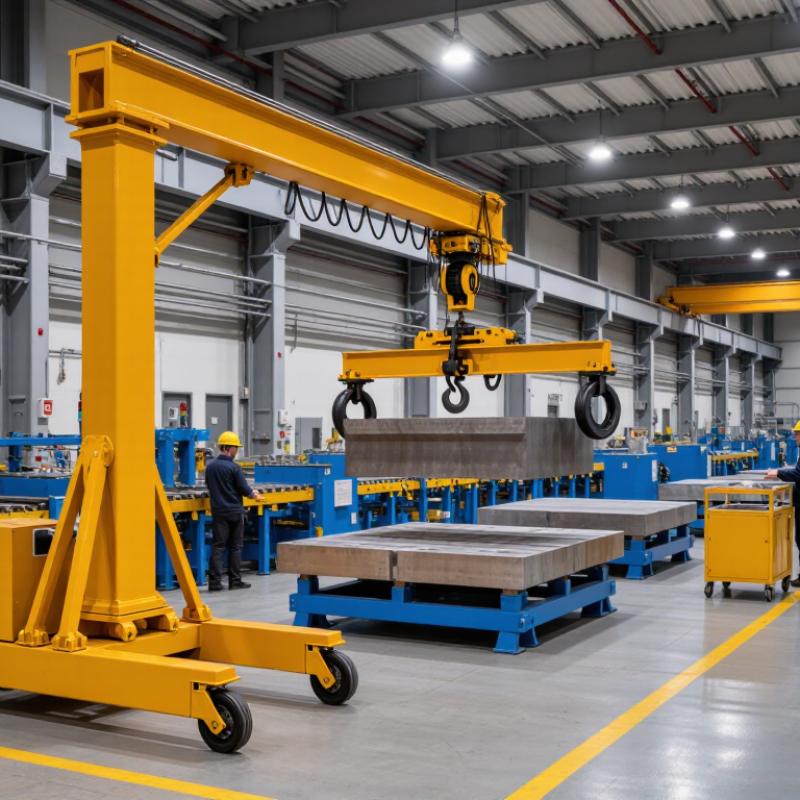
A floor crane is a compact lifting machine that moves loads without permanent overhead rails. It usually combines a steel base, vertical mast, pivoting boom, hoist, and locking casters. Some models use hydraulic pumps. Others use electric drives or manual winches. The hoist raises the load, while the boom controls its reach. The base resists tipping. That simple relationship matters more than impressive capacity figures.

A practical selection starts with the real load, not the heaviest item in the catalogue. Check rated capacity, lift height, boom position, aisle width, floor strength, and brake performance. A 1,000-kilogram rating may fall sharply at maximum outreach. The U.S. Occupational Safety and Health Administration requires employers to follow suitable inspection and safe-operation practices for material-handling equipment. Operators should also review the manufacturer’s load chart before every unusual lift. Small details matter. A narrow wheel can sink into a damaged floor.

Market context is useful, but it cannot replace site experience. Grand View Research estimated the global crane market at about USD 42.7 billion in 2023, with projected growth through 2030. That growth reflects wider industrial demand, not guaranteed performance from every floor crane. Battery systems, emergency stops, overload protection, and digital maintenance records are becoming more common in 2026.

However, electronic features do not correct poor balance or rushed decisions. I would test turning clearance with a pallet mock-up before purchasing. Paper specifications often look better than the workshop reality.

Which Load Capacity and Reach Match Your Lifting Needs?

How to Choose the Right Floor Crane in 2026?

The right floor crane starts with the real load, not the largest number on a specification sheet. Record the heaviest item, lifting attachments, and any sudden movement during handling. A 500-kilogram load may require a higher capacity when its center sits far from the boom. Reach changes everything. As the boom extends, available capacity usually falls. Check the rated-load chart at the exact reach and boom angle you will use.

Measure the distance from the crane base to the load’s center. Then add clearance for pallets, machinery frames, and nearby obstacles. A short reach can improve stability, while excessive reach may create unwanted wheel loading.

Floor condition matters too. Uneven concrete, ramps, and narrow aisles can affect steering and safe positioning. I have seen plans fail because operators measured the load, but not the turning space.

Do not rely on a single calculation. Ask a qualified lifting professional to review capacity, stability, and attachment compatibility. Confirm inspection records and follow the operating instructions supplied with the equipment. Leave a practical margin below the maximum rating, especially for frequent lifts or uncertain load weights. A neat spreadsheet can still mislead. Recheck the choice after observing the actual workflow, because operators often need more reach than planners expect. Test the crane with a controlled trial load before regular use. Monitor deflection, wheel movement, and brake response carefully.

How Do Workspace, Mobility, and Safety Requirements Affect Selection?

How to Choose the Right Floor Crane in 2026?

Workspace conditions should guide the crane before lifting capacity does. Measure aisle width, turning space, doorway height, and floor strength. A crane may fit beside a machine but fail to rotate safely. Check the load’s center of gravity, lifting height, and required reach. Shorter booms usually improve stability. That trade-off is easy to overlook.

Mobility also changes productivity. Large casters roll better across uneven floors, while smaller wheels suit smooth, tight work areas. Brakes should hold the crane during loading, not only during storage. Battery-powered movement can reduce manual pushing, but charging access and maintenance need planning.

The HSE’s Work-related ill health and injury statistics, 2023/24, recorded 543,000 cases of work-related musculoskeletal disorders in Great Britain. This supports reducing forceful handling wherever possible.

Safety selection must include rated capacity, overload protection, visible load charts, and controlled lowering. The U.S. Bureau of Labor Statistics reported 844 fatal injuries from contact with objects and equipment in 2023. That figure is not specific to floor cranes, but it shows why suspended loads deserve disciplined controls.

Avoid choosing by maximum capacity alone. I would test the crane with a representative load, on the actual floor, before approval. Paper specifications can be misleading. A narrow aisle, a sloped surface, or one obstructed emergency route may change the decision completely.

What Power Sources and Control Features Should You Compare?

How to Choose the Right Floor Crane in 2026?

Power source decisions should begin with the workload, not the purchase price. Battery-electric cranes suit indoor spaces, frequent repositioning, and quiet assembly areas. Check rated capacity, lifting frequency, charging time, and battery replacement access. A crane that lifts 500 kilograms occasionally may need less power than one moving 200 kilograms every three minutes.

The International Energy Agency reported a 14% global decline in lithium-ion battery pack prices during 2023, according to Global EV Outlook 2024. That trend supports battery options, but it does not guarantee lower ownership costs. Charging infrastructure, downtime, and cold storage conditions still matter. Pneumatic systems can work well in sensitive environments, yet compressors add noise and maintenance. Corded electric models offer continuous operation, though cables can obstruct narrow aisles.

Control features deserve equal attention. Compare variable-speed lifting, smooth acceleration, emergency stops, overload protection, travel brakes, and clear status displays. Wireless controls may improve visibility around large loads, but signal reliability requires practical testing.

Deloitte’s 2023 Smart Manufacturing and Operations Survey found that 86% of executives viewed smart manufacturing as a major competitiveness driver within five years.

That supports diagnostic controls and usage records, not unnecessary screens. I would test the crane with real loads, uneven floors, gloves, and poor lighting. A clean demonstration can hide awkward controls. The operator’s feedback may expose the better choice.

How Can You Evaluate Maintenance, Compliance, and Total Cost in 2026?

Choosing a floor crane in 2026 requires more than checking lifting capacity. In a warehouse, I would watch the crane move around columns, doors, and uneven thresholds. Measure turning clearance before requesting quotations. Measure twice. A compact frame can still create unsafe blind spots. Ask for rated-load charts, duty classification, inspection instructions, and service intervals. Keep them together. If the supplier cannot explain these documents plainly, pause the purchase.

Maintenance should be judged by access, not promises. Can technicians reach wheels, brakes, hooks, batteries, and control parts without awkward lifting? Look for visible wear indicators and a clear inspection log. Schedule pre-use checks, periodic examinations, and load testing according to applicable local requirements and manufacturer instructions. Requirements vary by jurisdiction. Never assume one certificate covers every site condition. Operators need documented training, while supervisors need authority to stop questionable lifts. I have seen teams overlook small wheel damage because production was busy. That shortcut becomes expensive quickly.

Calculate total cost across the planned service life. Include purchase, delivery, installation, energy, batteries, spare parts, inspections, training, downtime, and eventual disposal. Compare realistic workloads, not ideal brochure figures. Ask how long critical parts remain available. A lower purchase price may hide frequent charging or specialized servicing. Conversely, paying more may be wasteful if the crane exceeds your actual duty cycle. Build three-year and seven-year estimates, then challenge every assumption. My own estimates are never perfect; floor conditions and usage change. Leave a repair contingency. A transparent worksheet is more trustworthy than a confident sales pitch.

Download
Brochure