Empowering Engineering Excellence: Innovate, Elevate, Deliver.
A crowded train platform, a narrow café aisle, and a sleeping child can expose the strengths and flaws of an Umbrella Folding Pram. In 2026, choosing one is not just about finding the lightest frame. You need a pram that folds predictably, steers steadily, and fits your everyday routine. Small details matter. A slippery release catch or awkward carry strap can turn a quick stop into a struggle.
This guide uses an original editorial reminder from Maya Chen, a fictional composite stroller-design specialist, not a real-world expert or published source: “A compact fold is useful only when the brakes, harness, and handling feel dependable.” Use that as a prompt to check the whole pram, not as a substitute for independent safety guidance. Test the fold with one hand if the manufacturer allows it. Check whether the folded pram stays closed. Look at the wheel locks, harness adjustment, canopy coverage, and storage access. Then consider your usual routes: smooth pavements differ from cracked sidewalks and station steps.
There is no perfect choice for every family. A lighter model may feel easier to carry but offer less storage. A larger canopy may help on sunny walks yet make the folded bundle bulkier. Those trade-offs deserve a close look. We will compare weight, folded size, comfort, maneuverability, durability, and value, while noting what product specifications can—and cannot—tell you. Check the manufacturer’s instructions and limits before buying or using any pram. Try the fold in person when possible. That brief test can reveal more than a polished product photo.
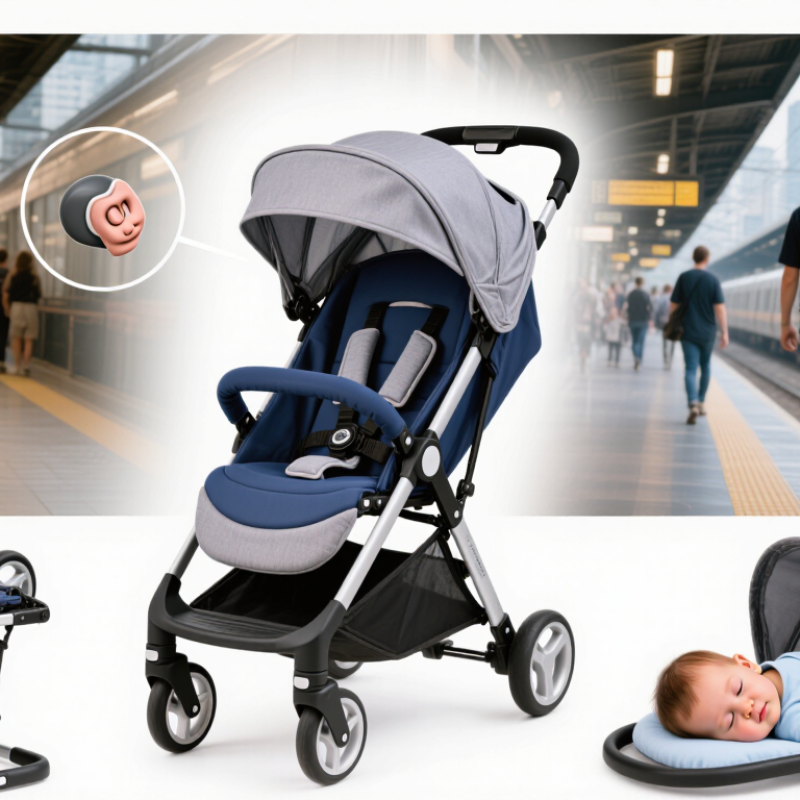
An umbrella folding pram is defined by more than its slim, lengthwise fold. It is usually a lightweight stroller with a narrow frame, compact storage profile, and simple folding mechanism. Picture lifting it onto a bus while holding a child’s bag: weight, folded width, and a secure latch suddenly matter. Small details, really. Check whether the pram stands when folded, locks open reliably, and fits your usual storage space. Also inspect the harness, brakes, wheel stability, and seat support. ASTM International’s F833 standard covers safety and performance requirements for strollers and carriages; it is a useful benchmark, not a guarantee that every model suits every child.
Safety deserves equal attention to convenience. A peer-reviewed Pediatrics study estimated 360,937 stroller- and carriage-related injuries among US children under five from 1990 through 2010, or roughly 17,000 cases per year. Falls were a leading mechanism in the study. That figure does not mean a folding design is inherently unsafe, but it does make restraint use and stable handling hard to dismiss. Test the pram on a slight slope, operate the brake, and confirm the harness adjusts snugly over ordinary clothing. A tiny basket may also frustrate daily errands. I would not judge comfort from a showroom push alone; rough pavement can expose weak suspension and rattling wheels.
Weight is a practical starting point when comparing stroller types: umbrella-fold models are generally lighter and easier to carry than full-size prams. The ranges below are approximate market benchmarks, not standardized limits; check each model’s specifications and child-weight limit before buying.
Start with your child, not the folded frame. Check the pram’s stated minimum age, weight limit, seat length, harness, and recline. A newborn may need a flatter position and stronger head support than an older child who sits steadily. The American Academy of Pediatrics advises caregivers to use strollers according to the child’s developmental stage and the manufacturer’s instructions. Needs change quickly. A fit that works today may feel cramped in a few months. Measure your child, and check how the harness adjusts with winter clothing.
Then picture an ordinary Tuesday: a narrow shop aisle, a bus step, or a long walk from the parking area. The U.S. Department of Transportation’s 2009 National Household Travel Survey found that 52% of trips were three miles or less. This older figure is not stroller-specific, but it highlights how often everyday journeys are short and local. For those trips, consider one-handed folding, manageable weight, basket access, and wheel handling on your usual sidewalks. A common mistake is choosing only by folded size. That detail matters. So does whether you can lift the pram while carrying a toddler’s bag. Check your real route, not an ideal one. A rough curb or crowded doorway can change what “easy to use” means.
How to Choose the Best Umbrella Folding Pram in 2026?
Compare Safety Standards, Comfort, and Foldability
An umbrella folding pram should feel secure before it feels convenient. Check its label and manual for the safety standard applicable in your market, plus the child’s age and weight limits. Inspect the harness, brakes, frame, and locking mechanism. A secure harness should fit snugly without pinching. That matters.
Comfort shows up in small details. Look for a supportive seat, adjustable footrest, and canopy that shades the child without blocking airflow. If possible, try the pram with your child seated; an empty showroom model can feel different on a pavement. Then fold and reopen it several times. Can you manage the latch while holding a bag? Does it stay locked when folded? These details are easy to overlook. I sometimes find the lightest models less steady over rough ground, so consider where you’ll use it most.
Tips: Check that the pram fits your car boot or storage space before buying. Test the brakes on a slight incline, with the pram empty and your hands close by. Confirm that folding parts move freely, and stop if anything jams. A quick test helps, but it cannot replace the manual or a safety check.
| Comparison Dimension | What to Check | Useful Buying Benchmark | Why It Matters |
|---|---|---|---|
| Safety standard | Check the product documentation for the stroller safety standard applicable in your market. In the United States, look for compliance with the applicable ASTM F833 requirements; in Europe, check for the applicable EN 1888 requirements. | Confirm the standard and applicable product details in the manual, product label, or conformity documentation. Requirements and editions can vary by region and may change over time. | A standard reference helps you assess whether the stroller was designed and tested against relevant safety requirements. It does not replace correct assembly, use, or maintenance. |
| Harness and restraint | Inspect the harness, buckle, adjustment points, and stitching. Check that the harness can be adjusted as the child grows and that it is used according to the manual. | A five-point harness is common on many strollers. Confirm the specific model’s restraint instructions and do not rely on the harness type alone as proof of overall safety. | A properly adjusted restraint helps keep a child positioned in the seat during everyday use. |
| Brakes and stability | Check how the brake engages and releases, whether it acts on the intended wheels, and whether the stroller remains stable on suitable level ground when parked. | Test the brake before use and follow the manufacturer’s instructions, including any guidance about parking on slopes. Avoid hanging heavy bags from the handle unless expressly permitted. | Brakes and balanced loading help reduce unintended movement and tipping risks. |
| Child size and age limits | Read the stated minimum age, maximum child weight, and any restrictions on recline or newborn use. | Use the limits published for the exact model. Do not assume every umbrella-folding stroller is suitable from birth or has the same weight capacity. | Suitability depends on the stroller’s design and the child’s size and development, not just its category. |
| Seat comfort | Assess seat width and depth, back support, footrest adjustment, padding, and whether the seat reclines to positions suitable for your child. | Compare the seat dimensions and recline instructions with your child’s needs. If possible, try the stroller with the child before buying. | Seat fit and support affect comfort on both short errands and longer outings. |
| Canopy and weather coverage | Look at canopy coverage, adjustability, ventilation panels, and whether the fabric-care instructions suit your routine. | Check the canopy in its fully extended position and review any stated sun-protection rating rather than assuming all fabrics provide the same protection. | Coverage and ventilation can improve comfort in changing weather, but a canopy does not replace appropriate sun protection or supervision. |
| Ride and maneuverability | Consider wheel size and material, suspension if fitted, turning behavior, and how the stroller handles the surfaces you use most. | Try steering and turning on a safe, level surface. Small, lightweight wheels may suit smooth urban routes better than rough paths; performance varies by design. | The stroller’s handling affects how easily it can be pushed, turned, and controlled on your usual routes. |
| Foldability and folded size | Test the folding sequence, folded dimensions, whether it locks shut, and whether it can be carried comfortably. | Measure the folded stroller and compare it with your car boot, storage space, or travel requirements. Airline cabin-baggage limits vary, so check with the airline before relying on cabin storage. | A compact fold is useful only if the stroller fits the places you need it to go and can be folded safely by its user. |
| Weight and everyday handling | Check the stroller’s listed weight and consider lifting it into a car, carrying it on stairs, and handling it while folded. | Compare the manufacturer’s stated weight for the complete stroller, including any parts you expect to use regularly. | A lighter stroller can be easier to carry, but weight should be balanced against stability, comfort, and the features you need. |
| Maintenance and durability | Review cleaning instructions, wheel care, spare-part availability, warranty terms, and any product safety notices or recalls. | Before purchase and during ownership, check the relevant government product-safety or recall database for your region. | Regular checks and timely repairs help keep brakes, harnesses, wheels, and folding mechanisms working as intended. |
Selection tip: Prioritize documented safety information, a suitable fit for your child, and a fold that works for your daily routine. Always follow the exact stroller manual and local product-safety guidance.
How to Choose the Best Umbrella Folding Pram in 2026?
Evaluate Weight, Storage, Durability, and Price
A light pram is useful only if you can carry it comfortably with one hand. Check its listed weight, then fold it and lift it from floor to shoulder height. Try the movement while holding a full tote; a quick lift in a shop can feel different on stairs. Grand View Research’s 2024 baby stroller market report estimated a global market value of US$2.8 billion in 2023 and forecast 5.5% annual growth through 2030. That market figure shows demand, not product quality. Don’t let it choose for you.
Storage needs a real-world test. Place your usual diaper bag in the basket, then check whether it blocks the folding latch or drags near the wheels. Small details matter. For durability, open and close the frame several times, test the brakes on a slight slope, and inspect stitching around the harness. ASTM International’s F833 standard covers stroller safety and performance; use it as a baseline, not proof that every model suits your routine. Price should include replacement parts, warranty coverage, and any required accessories. A cheaper pram may cost more later. One weakness in this checklist: it cannot predict how a frame will feel after months of crowded buses and wet pavements.
Start with your actual routes, not a feature checklist. A compact umbrella pram can suit bus rides, narrow shop aisles, and quick errands, but tiny wheels may rattle over cracked pavements. Check the folded dimensions against your car boot or hallway, then try lifting it with one hand. A pram that feels light in a showroom can feel awkward with a child and shopping bag.
Small details matter. Look for a secure harness, a dependable brake, and a canopy that shades your child during ordinary walks.
Budget for the features you will use weekly. A reclining seat may help on longer outings, while a large basket can save repeated trips indoors. If you mostly travel short distances, paying extra for elaborate suspension may not make sense.
The ASTM F833-21 stroller safety specification covers performance tests including stability, brakes, restraints, and structural integrity; use it as a safety reference, not a substitute for checking the individual model’s instructions and condition.
Compare the pram’s weight, folded size, and warranty alongside its price. I have found that folding mechanisms can be fiddly when rushed, so practise opening and closing one before buying. A slightly heavier option may still be the better fit if it handles your daily route more comfortably.