Empowering Engineering Excellence: Innovate, Elevate, Deliver.
Choosing the right Competition Tires can change how confidently a car turns, brakes, and accelerates. Yet the fastest-looking option is not always the best fit. A tire that performs well on a smooth, dry circuit may struggle on a rough surface or during a cool morning session. The details matter.
Start with the competition format, vehicle, and conditions you expect to face. Tire width, compound, construction, and operating temperature all influence grip and response. So do wheel fitment, alignment, suspension setup, and driver experience. Check the tire maker’s specifications and your event’s technical requirements before buying. A few minutes with a setup sheet can prevent an expensive mismatch.
Pay attention to the evidence, not just lap-time claims. Look for guidance from manufacturers, experienced teams, and reputable tire specialists, then compare it with your own testing. Track tire pressures and temperatures after each session; the numbers can reveal whether a change helped. Small adjustments count. Still, one test day rarely tells the whole story, and driver feedback can be imperfect. I would rethink any recommendation that ignores weather, wear, or how consistently the car is driven. This guide explains the main choices and trade-offs, so you can select tires that suit your goals, budget, and real conditions—not simply the most aggressive label.
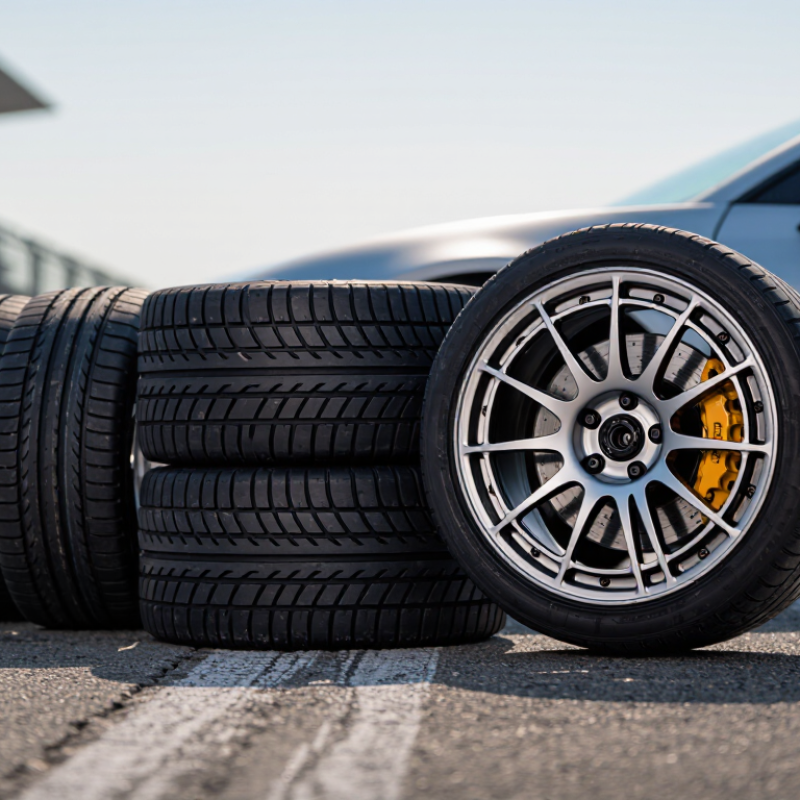
The best competition tire depends on where and how you race. An autocross course may reward quick steering response and consistent grip through tight turns. A circuit race places greater demands on heat management over repeated laps. Rally events may require tread suited to changing surfaces, while drag racing prioritizes traction during a short launch.
Check the current event rulebook before comparing tire specifications. Rules may limit tire width, diameter, construction, tread depth, or eligible categories. Some events require specific markings or restrict tire changes between sessions. Read the class rules and technical inspection notes, not just the event summary. Details matter. A tire that looks suitable in the paddock may still fall outside your class requirements.
Ask the organizer or technical inspector about unclear wording, and confirm that the answer applies to your exact class. Keep a copy of the relevant rules with your setup notes. Track temperature, surface, and session length can also affect tire choice, but compliance comes first. It is easy to focus on grip and overlook a small specification. Rulebooks can be less clear than expected, so verify details rather than relying on another driver’s setup.
Start with the track surface. Smooth, warm asphalt may suit a tire that reaches working temperature quickly, while rough pavement can wear it down over a few sessions. Very short. Check surface temperature, not just the weather app: shaded corners may stay cool while sunlit sections heat rapidly. If the circuit mixes smooth and coarse patches, predictable grip across the lap can matter more than maximum grip in one spot.
Weather changes the choice. In steady rain, a tire designed to move water can help maintain contact, but standing water and worn drainage lines still demand lower speeds. On a drying track, damp patches may remain near curbs long after the racing line looks dry. Cold conditions can leave a tire below its effective range; hot pavement can push it beyond that range and soften the tread. Follow the tire maker’s operating guidance, and recheck pressure after warm-up.
Match the tire to how you drive, too. Hard braking, sharp steering, and repeated slides build heat and wear faster than smooth inputs. After each run, inspect the tread for uneven wear, grainy patches, or small tears, then record pressure and lap conditions. I would not trust one fast lap as proof of a good match. A pressure reading taken too soon can also mislead; timing matters. Compare notes over several sessions, and change one setup factor at a time when possible.
Choosing competition tires starts with the event and the surface, not the most aggressive-looking tread. A dry circuit usually favors a smooth, slick tire because more rubber contacts the pavement. On a damp course, shallow grooves can help move water away. Deep tread may be necessary in heavier rain, but it can feel less stable as the surface dries. Check event rules before buying; permitted tire types can vary.
Compound matters just as much. Softer rubber often reaches working temperature quickly and offers strong grip, but it may wear faster during long sessions. Harder compounds can last longer, though they may need more heat before responding well. Track temperature, session length, and vehicle weight all affect the choice. Keep notes after each run. Record pressures, ambient conditions, and how the tire felt through corners. Small details matter.
Tread patterns need a realistic match to conditions. A tire with limited grooves may work well on a dry surface, but standing water changes the risk quickly. Watch for water pooling near braking zones and shaded corners. It is easy to overvalue a tire’s first lap. Warm-up time, consistency, and wear across the tread tell a fuller story. One imperfect test is still useful, if you note what changed.
| How to Choose the Best Competition Tires? — Choose the Tire Type, Compound, and Tread Pattern | |||||
|---|---|---|---|---|---|
| Decision Factor | Option | Best-Suited Conditions | Grip Characteristics | Durability and Trade-Offs | Selection Guidance |
| Tire type | Slick | Dry pavement and events where slick tires are permitted | A continuous contact surface can provide strong dry grip when the tire is at its intended operating temperature. | Offers no tread channels to evacuate standing water, so wet-road use can cause a severe loss of grip. | Choose for dry conditions only; check event rules and avoid standing water. |
| Tire type | Grooved or semi-slick | Dry conditions with occasional damp patches, where permitted | Combines substantial rubber contact with grooves that can help move some water away from the contact area. | Grooves reduce the amount of continuous rubber contacting the road; performance depends on groove layout and conditions. | Consider when a fully slick tire is unsuitable, but do not assume it is safe for heavy rain. |
| Tire type | Full wet | Wet pavement and conditions with significant surface water | Deep, purpose-designed channels help disperse water and reduce the risk of hydroplaning compared with a slick. | May wear quickly and can overheat or feel less responsive on a dry track. | Use when the surface is genuinely wet; follow the tire maker’s and event organizer’s guidance. |
| Rubber compound | Soft | Short races, qualifying, or cooler conditions when the tire can reach its operating range | Often warms quickly and can offer high grip over a short stint. | Typically wears faster and may overheat or lose performance during a long, hot run. | Prioritize for short-duration grip; monitor temperature, wear, and pressure. |
| Rubber compound | Medium | Mixed conditions and a broad range of race lengths | Provides a practical balance between warm-up, grip, and consistency. | May not deliver the peak short-run grip of a softer option or the longest life of a harder one. | A useful starting point when track temperature, stint length, or setup is uncertain. |
| Rubber compound | Hard | Long stints, high track temperatures, or situations where wear is a concern | Can maintain performance more consistently over a longer run when operating conditions suit it. | May take longer to warm up and may provide less peak grip than a softer compound. | Consider for durability and hot conditions; confirm it can reach its intended operating range. |
| Tread pattern | Smooth, uninterrupted surface | Dry track surface | Maximizes the continuous contact area on dry pavement. | Cannot channel water away; wet grip can drop sharply. | Match with dry conditions and ensure slicks are allowed by the rules. |
| Tread pattern | Shallow or limited grooves | Dry-to-damp conditions with limited water, depending on tire design | Retains much of a slick-like contact surface while adding some water pathways. | Limited grooves do not provide the water evacuation capacity of a dedicated wet tread. | Use only within the tire’s intended conditions; switch to a wet design when water levels rise. |
| Tread pattern | Deep, directional channels | Wet surfaces and greater amounts of standing water | Channels help move water from beneath the tire, supporting wet-road contact. | Can compromise dry performance and may wear rapidly if used on a dry surface. | Choose a pattern designed for wet competition and observe any direction-of-rotation markings. |
Practical check: Confirm that the tire type and size meet the competition regulations. Select for the expected surface and temperature, then follow the tire manufacturer’s recommendations for pressure, warm-up, and use. Conditions can change during an event, so reassess tire choice before each session.
Competition tires work best when their size fits the vehicle’s actual wheels, suspension, and rules. Start with the door placard and owner’s manual, then confirm wheel diameter, rim width, clearance, and load requirements. A tire that looks wider may rub the strut under cornering or steering lock. Small differences matter. Check clearance with the suspension loaded, not only with the car parked.
Construction changes how the tire responds. A stiff sidewall can sharpen steering, but may make a light car feel nervous on rough pavement. A softer setup may improve compliance, yet feel less precise during quick transitions. Match the tire’s intended use and construction to vehicle weight, power, and suspension tuning. Then verify the manufacturer’s approved rim-width range; do not assume the original wheel is suitable.
Load capacity deserves equal attention. The Tire and Rim Association’s Year Book lists standardized load and inflation data; its load-index scale assigns 615 kilograms to index 91 and 690 kilograms to index 95. Those figures are per tire, under specified conditions—not a promise of safe track performance. Check the complete tire specification and maintain appropriate pressure. I would still recheck the fit after installation; alignment and real-world clearance can surprise you.
How to Choose the Best Competition Tires?
Test Tire Performance and Plan Pressure and Maintenance
Choose tires by measuring how they behave on your car, not by relying on a single fast lap. Test on the same track, with comparable fuel load and weather, and record lap times, tire temperatures, and pressure before and after each session. Repeat the run; one clean lap can be misleading. Small changes matter. Follow the tire maker’s competition guidance for pressure targets, since there is no universal ideal setting. A National Highway Traffic Safety Administration field survey found that 27% of passenger cars had at least one tire underinflated by 8 psi or more. The survey covered road vehicles, not race tires, but it shows why pressure checks should never be assumed.
Tips: Start with a calibrated gauge and note cold pressure before driving. Check hot pressure soon after each session, then inspect tread wear across the inner, center, and outer sections. Uneven shoulders may suggest pressure or alignment issues, but confirm with repeat testing before changing settings. Recheck pressures when the weather shifts, and inspect for cuts or embedded debris between runs. Keep a simple log. It will not explain every result; track temperature and driving changes can muddy the picture. Still, consistent notes make the next adjustment less like guesswork.