Empowering Engineering Excellence: Innovate, Elevate, Deliver.
Choosing China’s top Bellows Valves manufacturers requires more than comparing catalog prices. These valves protect process purity, reduce fugitive emissions, and maintain isolation in demanding plants. Their value becomes clear around hydrogen lines, semiconductor gases, vacuum systems, and high-temperature chemical service.
Industry reports show why this market deserves careful screening. Grand View Research identifies the global industrial valves market as a multi-billion-dollar sector with steady growth through 2030. The International Energy Agency also reported that global energy investment exceeded USD 3 trillion in 2024, increasing demand for dependable flow-control equipment. These figures do not prove that every Chinese supplier is reliable. They do show a larger need for verified manufacturing capacity, especially in energy and process industries.
A practical evaluation should examine material certificates, weld procedures, helium leak-test records, pressure-test results, and long-term service references. Ask whether the manufacturer designs according to ASME B16.34, API 602, EN 12266, or the specification required by your project. Check the bellows cycle rating, stem sealing arrangement, surface finish, and spare-parts support. A polished factory floor is useful. Traceable records matter more.
Experience also changes the decision. A supplier serving oxygen service may not understand corrosive chloride duty. A low quotation can hide limited testing or inconsistent metallurgy. No shortlist is perfect. That is the uncomfortable part. Buyers should compare documented evidence, not confident claims, before selecting a China-based Bellows Valves manufacturer.
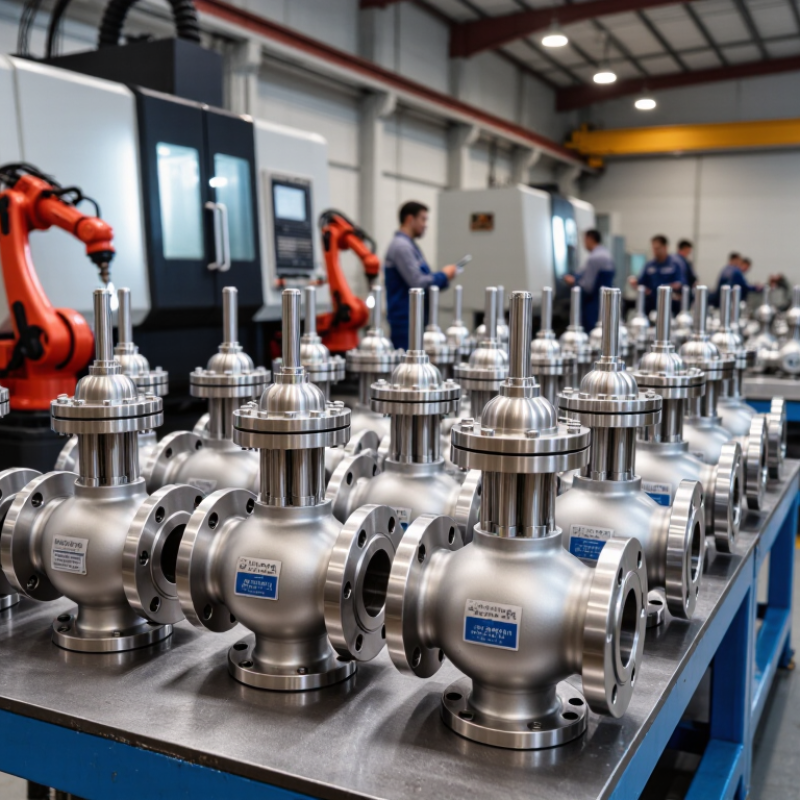
Bellows valves are shutoff valves designed to prevent process media from escaping through the stem area. A flexible metal bellows is welded between the valve body and stem. It expands and contracts as the valve opens or closes. This creates a secondary pressure barrier, unlike a conventional packing seal.
In field inspections, I have seen bellows valves used where even a small leak can create serious maintenance problems. They are common in chemical processing, semiconductor facilities, pharmaceutical production, vacuum systems, and thermal equipment. Some models also serve cryogenic or high-temperature pipelines. Clean service matters here. Dust, welding residue, or poor surface finishing can damage the bellows during operation. That detail is easy to overlook.
When comparing China-based manufacturers, review the bellows material, welding procedure, cycle-test records, and pressure rating. Ask whether each valve has been tested under realistic temperature conditions. A polished product page is not enough. Traceable inspection documents matter more. The correct valve also depends on the medium, pressure, temperature, pipe size, and required flow direction. A valve suitable for steam may perform poorly with corrosive chemicals. This mistake happens more often than expected. Also check whether the design allows easy inspection and replacement. Bellows can offer excellent sealing, but they are not indestructible. Repeated overtravel, vibration, and incorrect installation may shorten their service life. Experienced engineering support should explain these limits before purchase.
Bellows valves use a welded or formed metal bellows as a secondary pressure boundary around the stem. This design minimizes stem leakage and is commonly selected for hazardous, toxic, radioactive, ultra-clean, high-vacuum, or high-temperature services.
| Bellows Valve Type | Operating Principle | Typical Applications | Suitable Media | Common Construction Materials | Main Advantages | Important Limitations | Key Selection Checks |
|---|---|---|---|---|---|---|---|
| Bellows-Sealed Globe Valve | A linear plug moves toward or away from the seat while the bellows isolates the moving stem from the process fluid. |
| Steam, hot water, thermal fluids, hydrocarbons, corrosive or toxic process gases, and other compatible liquids or gases. | Carbon steel, stainless steel, alloy steel, and nickel-based alloys; seat materials are selected according to temperature and chemical compatibility. |
| Higher cost and greater face-to-face length than many conventional valves; the bellows has a finite fatigue life and should not be overstroked. | Pressure class, temperature, flow coefficient, shutoff class, bellows cycle rating, body material, seat design, and applicable fugitive-emission requirements. |
| Bellows-Sealed Gate Valve | A gate moves vertically to provide a full-bore or near-full-bore flow path. The bellows prevents process leakage along the stem. |
| Steam, water, gases, hydrocarbons, and corrosive media when the body, trim, packing, and bellows materials are compatible. | Carbon steel, stainless steel, alloy steel, and special alloys for corrosive or high-temperature service. |
| Not normally recommended for throttling; slow operation and potential seat damage can occur if used for regulation. | Required flow path, pressure and temperature rating, valve orientation, gate and seat configuration, cycle frequency, and bellows fatigue performance. |
| Bellows-Sealed Needle Valve | A tapered needle provides fine adjustment of flow while a small metal bellows isolates the stem from the medium. |
| Clean gases, liquids, analytical samples, hydraulic fluids, and other media compatible with the wetted materials. | Stainless steel is common; nickel alloys and other materials may be used for corrosive or specialized service. |
| Limited flow capacity compared with globe or ball valves; susceptible to damage from dirt and improper handling. | Port size, required flow range, pressure rating, fluid cleanliness, adjustment resolution, connection type, and material compatibility. |
| Bellows-Sealed Ball Valve | A quarter-turn ball provides rapid on/off operation, while the bellows or bellows-type stem sealing arrangement reduces stem leakage. |
| Clean gases, liquids, vacuum service, hydrocarbons, and other media suitable for the seat and body materials. | Stainless steel, carbon steel, alloy steel, PTFE or other engineered seat materials, and metal seats for demanding temperatures. |
| Not generally intended for throttling; seat material can limit operating temperature and resistance to abrasive or contaminated media. | Seat pressure-temperature limits, fire-safe requirements where applicable, cavity relief, actuation method, cycle life, leakage class, and media cleanliness. |
| Vacuum Bellows Valve | A metal bellows forms a sealed motion element so the actuator or stem can move without introducing atmospheric leakage into the vacuum chamber. |
| High-purity gases, process gases, vacuum environments, and selected liquids used in vacuum equipment. | Stainless steel is widely used; internal surfaces may be electropolished or specially treated for high-purity service. |
| Requires careful cleaning, assembly, and leak testing; elastomers may be unsuitable for high-vacuum or high-temperature conditions. | Vacuum level, helium leak rate, conductance, outgassing, particle control, bake-out temperature, flange standard, and bellows cycle life. |
| Ultra-High-Purity Bellows Valve | A diaphragm or bellows-sealed mechanism isolates the process stream from the actuator and minimizes contamination and external leakage. |
| High-purity, toxic, corrosive, flammable, or specialty gases and liquids, subject to full material compatibility review. | High-grade stainless steel and corrosion-resistant alloys; wetted surfaces are often polished and passivated. |
| Higher purchase and maintenance cost; installation practices, cleaning, packaging, and handling strongly affect performance. | Surface finish, internal volume, particle and moisture limits, cleaning validation, leak rate, connection standard, material certificates, and packaging controls. |
| Extended-Bellows Cryogenic Valve | An extended bonnet positions the stem seal or bellows away from the cold zone, helping protect the operating mechanism from cryogenic temperatures. |
| Liquid nitrogen, oxygen, argon, hydrogen, natural gas, and other cryogenic fluids, subject to oxygen-clean and material requirements. | Stainless steel and other low-temperature materials with suitable toughness; seat and gasket materials must remain functional at service temperature. |
| Large installation envelope; oxygen service requires strict cleaning and control of ignition hazards; thermal contraction must be considered. | Minimum design temperature, fluid phase, oxygen-clean requirements, bonnet length, pressure rating, seat leakage, thermal cycling, and insulation arrangement. |
| Steam-System Bellows Valve | A bellows-sealed globe or gate design prevents steam from escaping through the stem during isolation or control service. |
| Saturated steam, superheated steam, condensate, and hot water within the valve's pressure-temperature limits. | Carbon steel, stainless steel, and alloy steel; trim and gasket selections depend on steam temperature, pressure, and chemistry. |
| Water hammer, thermal shock, incorrect installation, and excessive cycling can shorten service life; throttling requires an appropriate globe design. | Steam pressure and temperature, saturated or superheated condition, start-up procedure, drainage, insulation, cycle frequency, and bellows rating. |
| Corrosion-Resistant Bellows Valve | A bellows-sealed design is combined with corrosion-resistant body, trim, bellows, and gasket materials selected for the process chemistry. |
| Corrosive liquids and gases, provided the selected alloys, seats, gaskets, and cleaning procedures are chemically compatible. | Stainless steels, duplex stainless steels, nickel-based alloys, titanium, fluoropolymer seats, and other engineered materials. |
| No single material is suitable for every chemical; concentration, temperature, impurities, and corrosion mechanism can change material performance. | Complete chemical composition, concentration, temperature, pressure, corrosion data, stress-corrosion risk, gasket compatibility, and required inspection certificates. |
Selection note: A bellows valve should be chosen from verified process conditions rather than price alone. Confirm pressure-temperature ratings, end connections, material compatibility, leakage requirements, applicable design and emissions standards, actuator needs, maintenance access, and the bellows' expected cycle life with the manufacturer.