How to Choose the Best Shuttle Cart for Your Warehouse?
Choosing the best Shuttle Cart for a warehouse starts with the work it must perform, not a product brochure. A Shuttle Cart moves loads within a storage system, but capacity, travel distance, and operating conditions vary by design. The right choice should match your pallet dimensions, load weights, rack layout, and expected throughput. Fit comes first.
Begin with the details on the floor. Measure aisle and lane dimensions, check clearances, and note how often operators load or retrieve pallets. A cart rated for the average load may not suit occasional heavier pallets. Confirm the maximum load with the manufacturer, and consider how the system handles uneven or damaged pallets. Small details matter.
Then compare battery runtime, charging arrangements, controls, and compatibility with existing racking or warehouse systems. Ask how the cart responds to obstacles and what safety features are included. Check maintenance needs, spare-parts availability, warranty terms, and service support. These affect daily reliability as much as speed.
A specification sheet rarely tells the whole story. Request a site assessment or a controlled demonstration using representative loads, where available. Watch how the cart performs in your actual lane conditions, and ask operators what feels awkward. That sounds simple. It is easy to overlook.
This guide explains the practical criteria for comparing Shuttle Cart options, assessing supplier claims, and avoiding mismatches between equipment and warehouse needs. No single model is best for every facility. A careful choice depends on measured requirements, clear questions, and a willingness to revisit assumptions when the details do not fit.
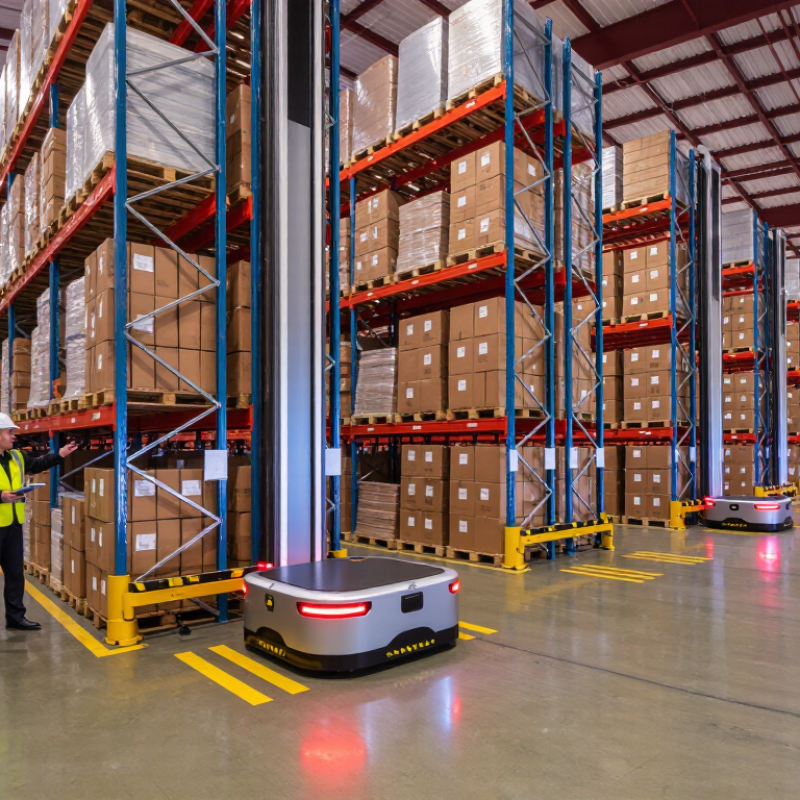
Define the Shuttle Cart’s Role in Your Warehouse
Before choosing a shuttle cart, define the task it must perform. Will it move pallets between storage lanes, carry totes to picking stations, or support replenishment? These jobs demand different payloads, travel paths, and control systems. A cart that handles heavy pallets may be poorly suited to frequent, small-load picking. Map the route, load size, shift pattern, and handoff points. Watch where queues form. That is often where the real need appears.
MHI’s 2024 Annual Industry Report found that 55% of surveyed organizations planned to invest more than $1 million in supply-chain innovation. That signals strong interest in automation, not proof that every site needs a shuttle cart. I would compare current travel time and order volume with expected demand, then check aisle width, floor condition, and peak-hour congestion. One overlooked detail: a faster cart can simply move the bottleneck to the packing area.
Tips: Record one busy shift before specifying equipment. Note load weights, trips per hour, and wait times at each handoff. Ask operators where carts stop, not just where managers expect them to stop. Use those observations to define the cart’s role and measurable targets.
Assess Storage Needs, Load Profiles, and Throughput Goals
Start with the inventory, not the shuttle brochure. Count active SKUs, units per SKU, carton dimensions, and days of cover. Then map seasonal peaks against usable storage locations. Separate fast movers from slow stock, and note whether replenishment blocks picking faces. Deep lanes can save aisle space, but they may hide urgent cartons behind slower inventory. MHI’s 2024 Annual Industry Report found that 55% of surveyed supply-chain leaders planned to increase technology investment. That signals interest, not proof that automation suits every warehouse.
Next, record load profiles: pallet or tote dimensions, weight ranges, and the share of irregular loads. Check these against the cart’s rated capacity and the shuttle’s operating clearances. Walk the floor during busy shifts. Watch where queues form, how often replenishment interrupts picking, and whether work arrives in sharp waves. WERC’s DC Measures benchmarking program tracks measures such as capacity utilization and order-picking productivity; compare your own figures with relevant benchmarks, not just vendor projections. Throughput is not an average-day number.
Set a target for peak-hour orders, then include charging, maintenance, and replenishment time in the calculation. Model your actual SKU mix and order history, including awkward exceptions. A clean simulation can still miss a blocked aisle or a worker waiting for a replenishment pallet. That matters. Test those assumptions before choosing lane depth, cart count, or control logic.
Match Cart Capacity and Technology to Your Racking System
How to Choose the Best Shuttle Cart for Your Warehouse?
Match Cart Capacity and Technology to Your Racking System
A shuttle cart should fit the loads, clearances, and operating rhythm of your racking system. Start by recording pallet dimensions, maximum load weight, and any uneven or overhanging loads. Include the pallet itself in the weight calculation. That detail matters. A cart rated for the product alone may be undersized once packaging is added.
Match the cart’s transfer method and controls to the rack layout. Single-deep lanes may need a different retrieval approach than multi-deep lanes, where the cart travels farther between entry and storage points. Check rail spacing, lane length, rack stops, and the handoff point with the conveyor or forklift. Small clearances matter. Also consider how operators will send commands and confirm cart position, especially where visibility into deep lanes is limited.
Compare rated capacity with real operating conditions, including travel distance, duty cycle, and floor or rail alignment. A tidy capacity spreadsheet can still mislead if it ignores repeated starts or mixed pallet quality. Run a loaded trial in a representative lane before committing; observe stopping accuracy, transfer speed, and any pallet movement. The trial may reveal a mismatch that drawings miss. Recheck assumptions when inventory profiles change, since a system that works smoothly with uniform pallets may struggle with varied loads.
Check Aisle Layout, Safety Features, and System Compatibility
Before selecting a shuttle cart, map the aisle dimensions, rack depth, and turning points. Measure the narrowest clearance, not just the average aisle. A cart that fits on paper may struggle near columns, floor joints, or staging areas. Mark the route with tape and test it using a loaded cart when possible. Small obstacles matter.
Safety features should match the actual work. Look for clear emergency stops, visible status indicators, and sensors that detect people or obstructions. Check how the cart behaves when communication drops or a load shifts. Operators also need an unobstructed view of entry and exit points. A warning light is useful, but it cannot replace sensible traffic rules. Keep pedestrian crossings easy to see, and avoid placing them at blind corners.
Compatibility is more than matching rack dimensions. Confirm that the cart works with the warehouse control system, chargers, load sizes, and existing operating procedures. Ask how software updates, fault alerts, and manual recovery are handled. These details can be overlooked during a quick equipment comparison. Review real order patterns, including peak periods and unusual pallet sizes. Then run a pilot in one aisle and record delays, near misses, and recovery time. The first layout may still need changes. That is useful evidence, not a failure.