Empowering Engineering Excellence: Innovate, Elevate, Deliver.

How to Choose the Best Brick Kiln Oven for Global Sourcing?

Choosing the right Brick Kiln Oven for global sourcing requires more than comparing prices and heating capacity. A suitable model must match your product, fuel availability, production volume, and local operating conditions. Brick type matters. So does moisture control.

In real sourcing projects, small details often affect long-term performance. Inspect the kiln chamber, insulation layers, burner system, and exhaust design. Look for uneven brick color, visible cracks, or weak door seals. Ask suppliers for temperature records, energy data, installation drawings, and maintenance instructions. Request references from factories with similar output levels. A kiln that performs well in one region may struggle where fuel quality, humidity, or technician skills differ.

No checklist is perfect. That matters. Supplier claims should be tested through factory audits, sample firing, and documented acceptance standards. Buyers should also confirm spare-part availability, training support, safety procedures, and after-sales response times. Compliance with applicable environmental, workplace, and import requirements must remain part of the evaluation.

The “best” Brick Kiln Oven is not always the newest or cheapest option. It is the system that delivers stable results with manageable operating costs. Careful comparison can prevent expensive delays, damaged products, and difficult repairs. Some assumptions may still prove wrong after installation. Build room for adjustment. A reliable sourcing decision combines technical evidence, practical experience, and honest risk assessment.
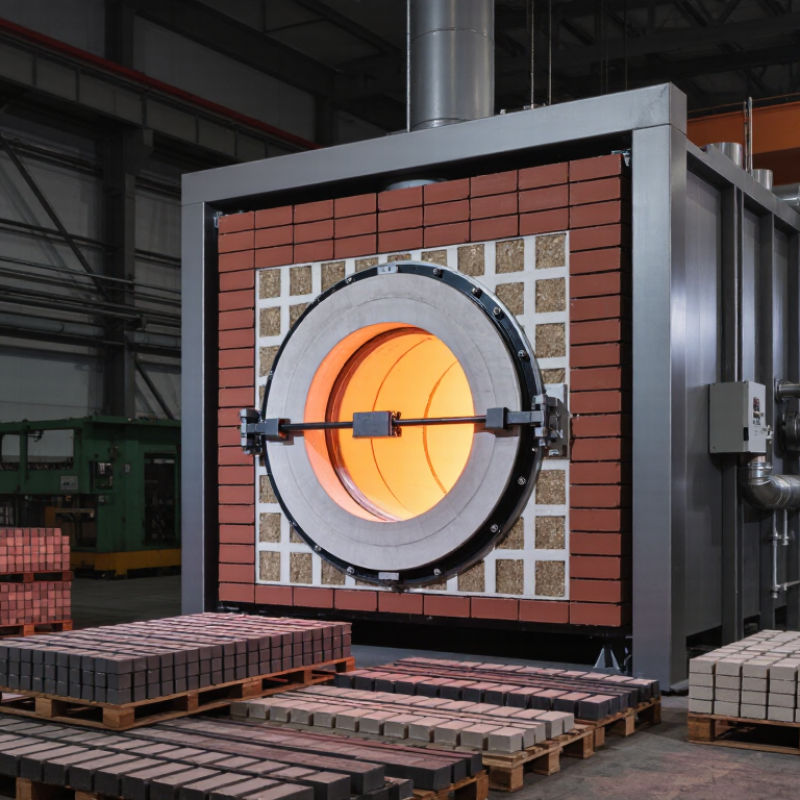
How to Choose the Best Brick Kiln Oven for Global Sourcing?

Define Production Needs and Brick Kiln Application Requirements

Define the output before comparing brick kiln ovens.

Record daily capacity, brick dimensions, clay moisture, firing temperature, and fuel availability. A kiln designed for 30,000 standard bricks per day may not suit irregular, dense products. Measure actual batch weight, too. Small assumptions here can become expensive delays.


Application requirements shape the kiln design. Continuous tunnel kilns support steady, high-volume production, while intermittent kilns may better fit varied batches or lower demand. Check the firing curve, temperature uniformity, loading method, and cooling time against your product’s strength and color targets.

The International Energy Agency’s 2023 report notes that buildings account for about 37% of global energy- and process-related CO₂ emissions. This broad sector figure is not a brick-kiln benchmark, but it reinforces why fuel use and heat recovery deserve close review.


Ask suppliers for operating data from comparable clay and product sizes, not just rated capacity. Request fuel consumption per thousand fired bricks, temperature records across the chamber, and evidence of performance during routine production. Visit a working site if possible.

Real conditions matter. One overlooked issue: local clay can vary between seasons, so a kiln that performs well during a short test may need process adjustments later. Make room for that uncertainty in the specification.

Compare Brick Kiln Types, Fuel Options, and Heating Technologies

Choosing a brick kiln starts with the firing pattern. Fixed-chamber kilns suit steady production, while moving-brick designs can support continuous output. Bull’s trench and zigzag kilns are common in regions with seasonal demand, but performance depends on airflow, insulation, and operator skill. A 2016 World Bank assessment of South Asian brick kilns describes zigzag firing as a practical route to improved combustion and lower emissions than traditional firing. The result is not automatic. Poorly arranged bricks can block hot gases and leave pale, underfired edges.

Fuel access changes the calculation. Coal, biomass, natural gas, and electricity differ in price stability, local availability, and combustion control. Ask suppliers for measured fuel use per thousand saleable bricks, not estimates based on ideal conditions. Small details matter: wet fuel, uneven feeding, and leaky doors can raise consumption. IEA’s Energy Technology Perspectives 2023 reports that industry uses about 37% of global final energy, making process efficiency a significant sourcing concern. For heating technology, compare direct firing with controlled-air systems and heat recovery. Instrumented temperature zones can reveal cold spots before a whole batch is lost. Request kiln temperature records, fuel-test results, and sample bricks from a full production cycle. Reports guide comparison; site trials expose the inconvenient details.

How to Choose the Best Brick Kiln Oven for Global Sourcing? — Compare Brick Kiln Types, Fuel Options, and Heating Technologies

Typical characteristics for evaluating brick-firing kiln systems. Actual performance depends on kiln design, brick properties, operating practice, and local fuel quality.
Kiln Type Operation and Production Pattern Common Fuel Options Heating Technology Key Advantages Main Considerations Typical Sourcing Fit
Intermittent (Batch) Kiln Bricks are loaded, fired, cooled, and unloaded in separate batches. Natural gas, LPG, coal, biomass, or other locally available fuels, subject to kiln design. Direct or indirect firing; burners or solid-fuel fireboxes heat the kiln during each cycle. Flexible for varied products and smaller production runs; relatively straightforward to operate at modest scale. Repeated heating and cooling can use more energy per unit than a well-operated continuous kiln. Production pauses between batches. Small or variable-output operations, trial production, and facilities without continuous demand.
Tunnel Kiln Cars carry bricks continuously through preheating, firing, and cooling zones. Commonly natural gas; other fuels, including liquid fuels or pulverized solid fuels, may be used with suitable equipment and controls. Zone-controlled burners provide a continuous temperature profile; heat recovery from cooling zones can preheat incoming combustion air. Consistent output and product quality are achievable with stable operation; suitable for large, steady production. High capital cost and technical complexity. Efficient operation generally requires dependable throughput, maintenance, and trained staff. High-volume manufacturing with predictable demand and reliable utilities or fuel supply.
Hoffmann-Type Continuous Kiln Firing progresses through connected chambers while other chambers are loaded, cooled, or unloaded. Coal, biomass, natural gas, or other fuels, depending on the configuration and local emissions requirements. Heat is transferred between chambers as the firing zone moves; combustion air and waste heat may be recovered within the kiln. Can support continuous production and heat reuse without the same car-and-track system used by a tunnel kiln. Requires careful control of airflow, firing progression, and emissions. Results vary considerably with design and operator skill. Medium-to-large operations seeking continuous firing and able to manage chamber-by-chamber production.
Vertical Shaft Brick Kiln (VSBK) Green bricks move downward through a vertical shaft as fired bricks are removed from the bottom. Typically coal or another prepared solid fuel; fuel suitability depends on size, quality, and feeding arrangement. Counter-current heat exchange between rising hot gases and descending bricks; firing occurs within the shaft. Compact footprint and potential for good heat utilization when consistently operated. Needs suitable brick strength and dimensions, controlled feeding, and skilled operation. It is not suitable for every product or site. Space-constrained sites with compatible products, available solid fuel, and trained operating personnel.
Traditional Clamp or Field Kiln Bricks and fuel are stacked together and fired in a temporary or semi-permanent arrangement. Often coal, wood, or agricultural residues, depending on local practice and regulation. Heat is generated within the stacked charge; airflow and temperature control are comparatively limited. Low equipment investment and simple construction can make it accessible for small-scale production. Temperature and product quality can be uneven; emissions, fuel use, and output may be difficult to control. Local rules may restrict use. Only where permitted and where low capital cost outweighs the need for uniformity and tighter environmental control.
Electric Kiln Usually operates in batches, though specialized continuous systems are possible. Electricity; the upstream energy source determines overall emissions and energy impact. Resistance elements heat the kiln without combustion inside the firing chamber; electronic controls regulate temperature. Precise temperature control and no on-site combustion exhaust from the kiln chamber. Electricity supply, operating cost, kiln size, and available power capacity can limit practicality for large brick volumes. Small-scale, specialty, or test production where precise control and dependable electrical supply are priorities.

Selection tip: Compare total cost of ownership, usable output, local fuel availability and price, product consistency, emissions permits, maintenance support, and the reliability of utilities. Fuel and heating options are kiln-specific; confirm compatibility with the equipment supplier and local regulations before purchase.

Evaluate Capacity, Energy Efficiency, and Temperature Control

How to Choose the Best Brick Kiln Oven for Global Sourcing?

Capacity should be measured as saleable fired bricks per cycle, not chamber volume. Ask suppliers for hourly output, loading density, firing losses, and actual fuel consumption. A kiln claiming 50,000 bricks per cycle may produce less after cracking and uneven firing. Use tonnes of acceptable bricks as the purchasing baseline. The U.S. Department of Energy reports that process heating can represent about 51% of industrial energy use, making output efficiency commercially important.

Energy data must be normalized. Compare gigajoules per tonne or kilowatt-hours per tonne, not fuel volume alone. The European Commission’s Ceramics BREF indicates that brick firing commonly occurs between 850°C and 1,200°C. Insulation quality, airflow, moisture, and fuel type can change consumption substantially. Request three days of operating records, including start-up energy and rejected products. One test may mislead.

Temperature control deserves close inspection. Independent thermocouples should monitor several kiln zones, while automatic controls should record ramp rates, peak temperature, and cooling speed. A stable 1,050°C profile is usually more valuable than a higher advertised maximum. The International Energy Agency identifies industry as a major global energy consumer, so small efficiency gains can become significant at scale. However, digital controls are not magic. Dust, sensor drift, and operator habits still require regular calibration and practical training.

Check Construction Quality, Safety Features, and Maintenance Needs

When sourcing a brick kiln oven, construction quality deserves more attention than the purchase price. Inspect the kiln shell, chamber lining, burner mounts, doors, and exhaust joints. Refractory bricks should fit tightly, without wide cracks or powdering surfaces. Uneven lining can create hot spots and waste fuel. The World Bank’s Bangladesh brick-sector assessment found that improved zigzag kiln designs could reduce coal consumption and emissions by roughly 20–30%. That performance depends on accurate construction, not the kiln shape alone.

Safety features must be practical and visible. Look for insulated external walls, guarded moving parts, emergency shut-off controls, stable platforms, and clear temperature monitoring. The IFC Environmental, Health, and Safety Guidelines for Brick Manufacturing identify heat, dust, noise, and carbon monoxide as important workplace hazards. A kiln without reliable ventilation is a serious sourcing risk. Maintenance access also matters. Technicians should reach fans, thermocouples, ducts, and burner components without standing on unstable surfaces. I have seen attractive specifications fail during routine cleaning. That is easy to overlook.

Tips: Request weld photographs, refractory specifications, inspection records, and a maintenance schedule before ordering. Ask how often seals, sensors, and insulation require replacement. Compare the supplier’s claimed fuel savings with measured test results. The figures may be optimistic. Plan for spare parts, local technician training, and quarterly safety inspections. Keep a written log of temperature variation, fuel use, cracks, and unexpected shutdowns. A small defect can become an expensive production problem.

Assess Suppliers, Certifications, Total Costs, and Export Logistics

Choosing a brick kiln oven for global sourcing requires more than comparing heating capacity and catalogue prices. Start by reviewing the supplier’s factory records, welding quality, refractory installation, and testing procedures. Ask for recent inspection reports, production photos, and references from buyers with similar climates and output. Certifications matter, but their scope matters more. Verify certificate numbers, issuing bodies, expiry dates, and whether they cover the exact oven model. For electrical or gas systems, request applicable safety reports and local compliance evidence before payment. Paperwork can look convincing. An independent pre-shipment inspection may reveal uneven brick joints, weak doors, or inaccurate temperature controls. I would also test heat recovery and temperature stability during a live demonstration, not only watch a video.

Build a landed-cost sheet in your purchasing currency. Include the oven price, customization, molds, packing, inland transport, ocean freight, duties, insurance, installation, and spare parts. Energy consumption deserves attention; a cheaper oven may burn more fuel every production day. Ask for tested consumption figures under a defined load, because vague averages are difficult to trust. Export logistics can decide the project’s success. Confirm Incoterms, HS classification, container dimensions, lifting points, moisture protection, and delivery access at the destination. Request a packing list with crate sizes and gross weights. Your installer may need drawings, wiring diagrams, foundation loads, and remote commissioning support. Leave time for customs questions and replacement parts. I once underestimated port storage, and the delay erased an attractive factory discount. That mistake still shapes my buying checklist.

Download
Brochure