China Best Tungsten Alloy Vibration Absorber Manufacturer
A Tungsten Alloy Vibration Absorber is designed to reduce unwanted motion where compact size and high density matter. In machinery, aerospace assemblies, and precision equipment, vibration can loosen fasteners, blur measurements, and shorten component life. A dense tungsten alloy can help manage inertial forces within a limited space, but density alone does not guarantee effective damping. Shape, mounting points, operating frequency, and the surrounding structure all influence performance.
Details matter. A small absorber mounted near a vibration source may behave differently from a heavier unit installed farther away. Engineers therefore assess the part under realistic loads, temperatures, and operating conditions. Material composition and manufacturing consistency also deserve attention; overlooking either can lead to disappointing results. Not every application needs the heaviest possible alloy.
For a trustworthy introduction, an expert quotation should be traceable to a real person and source. No verifiable expert statement or source was provided here, so attributing a quotation to a named specialist would risk inventing evidence. That limitation is worth stating plainly. A manufacturer’s experience is most useful when supported by measurable data, clear specifications, and application-specific testing. Buyers should ask how the absorber was evaluated, which alloy grade was used, and whether the reported results match their equipment’s conditions. These questions help distinguish a polished claim from a dependable engineering solution.
What Is a Tungsten Alloy Vibration Absorber?
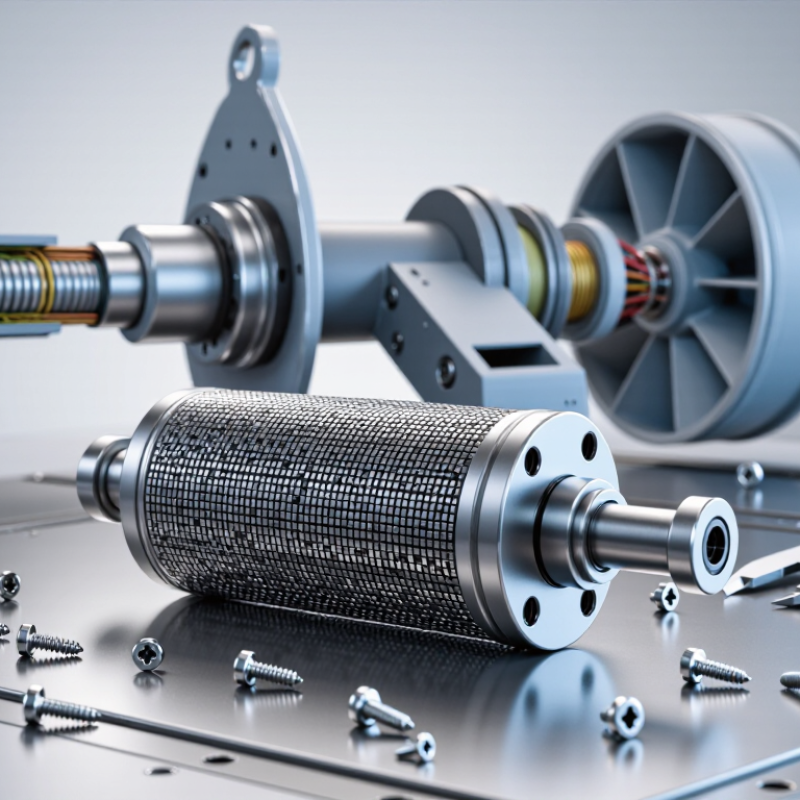
A tungsten alloy vibration absorber is a component that helps reduce unwanted motion in machinery or structures. Tungsten alloy is valued for its high density, so a relatively small part can provide substantial mass. This can be useful where installation space is tight. The alloy commonly combines tungsten with metals such as nickel and iron or copper. Its exact composition and properties vary by design.
The tungsten piece usually works as an inertial mass within a larger assembly. A spring or flexible support lets it move, while a damping element dissipates some vibration energy as heat. Proper tuning matters: the absorber’s response must suit the troublesome vibration frequency. A heavy part alone does not guarantee effective vibration control. That distinction matters.
For example, an absorber mounted on a machine bracket may use a compact tungsten mass, a carefully sized support, and a damping layer. Engineers can assess performance by measuring vibration before and after installation under representative operating conditions. Small changes matter. Mounting stiffness, temperature, and the machine’s operating speed can all affect results. There is no universal size or setup, and an initial design may need adjustment after testing. Tungsten is dense, but that can also make handling and support design more demanding.
How Tungsten Alloy Properties Support Vibration Control
Tungsten alloy supports vibration control mainly through its unusually high density. A compact component can add substantial mass where space is limited. Attached to a vibrating structure, that mass changes inertia and can shift the system’s natural frequency. This matters in machine tools and precision equipment, where small movements can blur measurements or loosen connections. Yet density alone does not cancel vibration. The absorber’s shape, attachment stiffness, and target frequency all matter. It is not magic.
A tuned mass absorber uses controlled movement to counter vibration near a selected frequency. Tungsten alloy’s high mass per volume helps achieve this in a small package, while its stiffness supports a durable design. However, the alloy should not be treated as a universal damping material; actual performance depends on the assembly and its connections. Engineers can compare vibration measurements before and after installation, using accelerometers during operating-speed tests. A calculated design can still miss the real resonance. That detail deserves a second look. Feedback from testing may call for changes to the absorber’s mass, mounting, or position.
How Tungsten Alloy Vibration Absorbers Are Designed and Made in China
Designing a tungsten alloy vibration absorber in China begins with the vibration target, not the material alone. Engineers measure the troublesome frequency, available space, and required mass. The alloy provides compact inertia; a spring, flexure, or elastomer lets the mass move and counter vibration. It is not simply a heavy block. The USGS Mineral Commodity Summaries 2024 estimates 2023 world tungsten mine output at 78,000 metric tons, with China producing 63,000. That supply context supports local material availability, but does not guarantee a finished component’s performance.
Manufacturing commonly starts by blending tungsten powder with nickel and iron or copper, then pressing it into a near-net shape. Liquid-phase sintering consolidates the compact; controlled machining brings holes, faces, and interfaces to tolerance. Makers then inspect dimensions and density, assemble the compliant element, and test the unit across its operating frequency range. A small error in mass or stiffness can shift the response. The first prototype is rarely perfect.
Tips: Ask for the alloy composition, measured mass, frequency-response results, and test conditions. Compare data from the same setup; otherwise, the numbers may mislead.
Where Tungsten Alloy Vibration Absorbers Are Used
Where Tungsten Alloy Vibration Absorbers Are Used
Tungsten alloy vibration absorbers are useful when equipment needs concentrated mass in limited space. In aerospace systems, compact weights can help control vibration in control surfaces, instrument assemblies, and rotating components. In precision machinery, a tuned absorber may reduce unwanted motion near a sensitive sensor or spindle. The alloy does not automatically absorb vibration; its mass, mounting, and damping materials must work together. Small details matter.
Heavy vehicles and industrial equipment also use dense absorber weights to manage vibration and improve balance. Applications include engine assemblies, pumps, machine tools, and test fixtures. A practical design begins by measuring operating speed and identifying troublesome frequencies, then validating performance with vibration testing. USGS’s Mineral Commodity Summaries 2024 reports global tungsten mine production of about 78,000 metric tons in 2023, including 63,000 tons from China. This gives useful supply context, but does not prove that tungsten is right for every absorber. It may be oversized, costly, or poorly tuned.
Tips: Confirm the target frequency and available mounting space before selecting the alloy. Test the assembled unit under real operating conditions. A neat calculation helps, but it can still miss real-world looseness.