Empowering Engineering Excellence: Innovate, Elevate, Deliver.

Top Fuse Terminal Block Manufacturers in China

China’s Fuse Terminal Block manufacturers serve a market where compact design must meet dependable electrical performance. Their products appear in control cabinets, power distribution panels, and machinery, often beside tightly routed wires and labeled circuits. Small details matter. A terminal that is difficult to wire or inspect can slow installation and complicate maintenance.

Buyers comparing Chinese suppliers should look beyond catalog photos. Examine rated voltage and current, conductor range, material specifications, temperature limits, and the fuse format supported. Ask how each manufacturer verifies contact stability, insulation performance, and consistency between production batches. Request current technical documents and sample units, then check fit, markings, and terminal access in the intended assembly. Not just price. A polished listing does not prove reliable field performance.

W. Edwards Deming, a manufacturing-quality expert, wrote, “Quality comes not from inspection, but from improvement of the production process.” That principle offers a useful lens for evaluating Fuse Terminal Block makers: ask about process controls, traceability, and corrective action, not only final testing. This article introduces notable manufacturers in China and the capabilities buyers can compare. Their strengths may differ by product range, customization, and production scale. No ranking can replace application-specific evaluation. Even a supplier with strong documentation deserves careful review; that extra step is easy to overlook, and sometimes it reveals the most important differences.
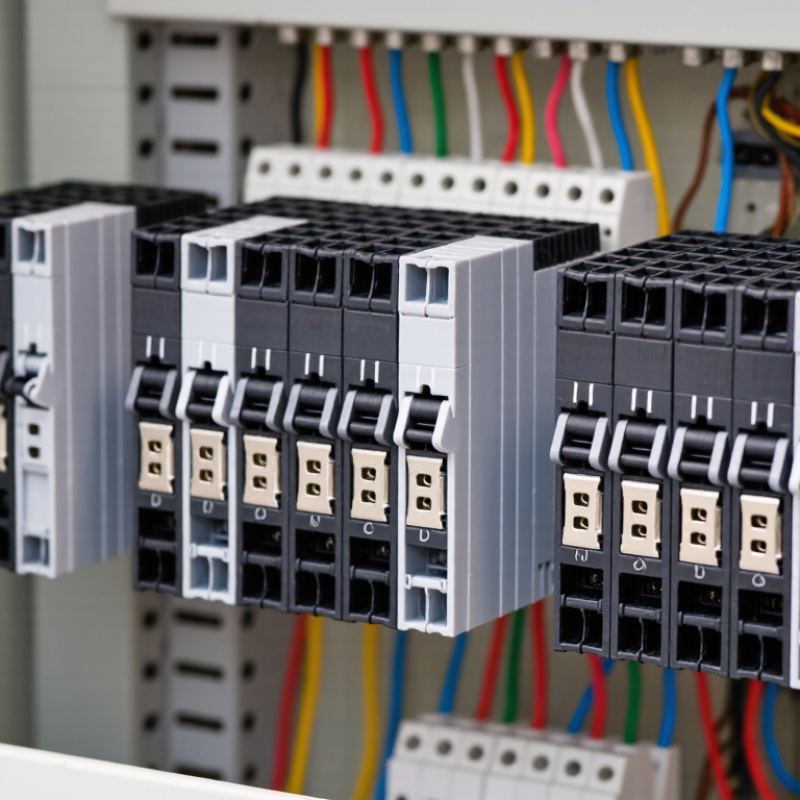
Top Fuse Terminal Block Manufacturers in China

What Fuse Terminal Blocks Are and How They Function

A fuse terminal block combines a wire connection point with a holder for a replaceable fuse. It mounts on a control panel rail, keeping the conductor, fuse, and circuit connection together. Inside, metal contacts grip the fuse ends and carry current through its element. That small link matters.

If current rises beyond the fuse’s rated limit for long enough, the element heats and melts, opening the circuit. This helps protect downstream wiring and equipment from excessive current. The fuse does not prevent every electrical fault, and it cannot replace sound wiring or proper circuit design. A blown fuse is a signal to investigate, not just swap parts.

Choose a block by checking its voltage and current ratings, compatible fuse size, wire range, and available fault-current rating. Leave room for heat to escape, especially when several blocks sit close together. In practice, selection is not always as tidy as a chart suggests: warm enclosures and bundled wires can reduce operating margins. Check the equipment documentation, isolate power before service, and use the specified fuse type. The small components deserve careful attention.

Key Features Used to Evaluate Fuse Terminal Block Manufacturers

When comparing fuse terminal block manufacturers in China, start with the electrical rating, not the catalogue image. Check rated voltage and current against the actual circuit, then confirm the supported fuse size and conductor range. Ask for test data on temperature rise and short-circuit performance. A compact block may look suitable, yet run hot when several circuits sit side by side.

Material and construction deserve close inspection. Look for secure metal contacts, flame-retardant insulating parts, clear polarity and rating marks, and terminals that hold wires without damaging strands. Small details matter. Request samples and test them with the wire types and tools used in your production line. A polished catalogue can still hide a weak spring, and one sample cannot prove consistent batch quality.

Reliable suppliers should provide traceable inspection records, technical drawings, and clear answers about production changes. Check how they control contact pressure and dimensional tolerances, and whether they can explain relevant test methods rather than simply claim compliance. Factory audits can reveal storage, assembly, and quality-control practices, but they take time and may not show every issue. It is worth asking about lead times, packaging, and replacement handling too; these practical details are easy to overlook until a shipment arrives.

Leading Fuse Terminal Block Manufacturers in China

Leading fuse terminal block manufacturers in China typically support control panels, machinery, and power distribution projects. Their product range may include compact DIN-rail blocks, fuse holders, and versions for different conductor sizes. A reliable supplier should provide clear drawings, rated voltage and current, compatible fuse dimensions, and installation guidance. These details help engineers check fit before ordering. Some catalogs look similar. Small differences matter.

When comparing manufacturers, ask how samples and production batches are inspected. Check terminal clamping, housing finish, marking legibility, and whether wires stay secure after tightening to the specified torque. Request relevant test reports and confirm that ratings match your application; do not rely on a headline specification alone. A brief sample evaluation can reveal awkward wiring access or labels that are hard to read inside a crowded cabinet. I would still verify the details directly, since public product pages can leave gaps.

Tips: Send a drawing, wire range, fuse size, and expected operating conditions with your inquiry. Ask for a sample and technical documents before placing a large order. Keep the questions specific.

How Chinese Manufacturers Ensure Product Quality and Compliance

Chinese fuse terminal block manufacturers protect product quality through controlled materials, repeatable assembly, and documented testing. A reliable supplier should identify conductor range, rated voltage, temperature limits, and tightening torque for each model. Details matter. These specifications help engineers select blocks that fit the panel and its operating conditions.

The IEC 60947-7-1 standard covers terminal blocks for copper conductors, including requirements relevant to safe electrical connections. Manufacturers can verify designs through temperature-rise, insulation, dielectric-strength, and connection-security tests. The ISO Survey 2022 reported 1,265,216 valid ISO 9001 certificates worldwide, reflecting the broad use of quality-management systems. However, a certificate alone does not prove that every production batch meets its specification. Batch records, calibrated test equipment, and retained samples provide more useful evidence.

Compliance checks should match the destination market and the exact product configuration. Buyers can request current test reports, material declarations, and traceability records, then confirm that model numbers match the supplied goods. Factory audits can also examine crimping or clamping processes, incoming copper parts, and final inspection logs. Paperwork can look cleaner than a production line. That gap deserves attention. A clear corrective-action process matters too: when a test fails, the manufacturer should document the cause, affected lots, and retest results rather than simply replace the sample.

Factors to Consider When Choosing a Chinese Manufacturer

Choosing a Chinese fuse terminal block manufacturer starts with the application, not a catalogue photo. Define the system voltage, current, fuse format, conductor size, and expected ambient temperature. Compare these values with documented ratings rather than relying on a broad product label. Ask how contact resistance, temperature rise, and clamping force are checked during production. Small details matter. A terminal that accepts a 2.5 mm² wire may still perform poorly if strands are damaged or screw torque varies.

Review specifications for the housing, metal parts, and plating, and request current test reports and lot traceability. Confirm that samples match the quoted design, including dimensions, markings, and fuse replacement access. Practical evaluation can include repeated wiring, vibration exposure where relevant, and temperature checks under the intended load. Do not skip this. Production capacity and lead time matter, but clear change-control procedures matter too. Ask who approves substitutions and how defects are contained. Communication can be uneven, even with a promising supplier; that deserves attention, not an assumption of failure. Compare total cost, tooling, packaging, and inspection support, then record open questions before approval.

Top Fuse Terminal Block Manufacturers in China - Factors to Consider When Choosing a Chinese Manufacturer
Evaluation Factor What to Check Relevant Standard or Evidence Practical Selection Guidance
Product ratings Rated voltage, rated current, fuse size, conductor range, and permissible operating temperature for the exact model. Product datasheet and markings; applicable requirements of IEC 60947-7-3 for fuse terminal blocks. Compare the exact configuration with the application. Do not assume ratings are the same across a product family or fuse sizes.
Standards and certification Whether the offered model has relevant test reports, approvals, or certifications, and whether the documentation identifies that model. IEC 60947-7-3; UL 1059 where applicable to the intended market. Verify certificates with the issuing organization. A certificate for a different product or factory does not establish compliance for the item being quoted.
Fuse compatibility Supported fuse type and dimensions, replacement access, and any required fuse indication or protection features. Fuse manufacturer’s specifications and the terminal block’s model-specific technical documentation. Confirm the fuse’s voltage and current ratings, dimensions, and intended application together with the terminal block.
Electrical safety Insulation properties, clearances, creepage distances, touch protection, and suitability for the installation environment. Applicable product standard and test documentation; IEC 60529 for an IP rating where the product or assembly claims one. An IP rating applies to the tested configuration. Check whether covers, accessories, or the enclosure are needed to achieve it.
Conductor connection Supported wire sizes, conductor types, stripping length, tightening torque, and compatibility with copper conductors where specified. Installation instructions and datasheet; verify conductor range in mm² and/or AWG for the exact model. Check the specified torque and conductor preparation requirements. Do not infer compatibility from terminal appearance alone.
Mounting compatibility Mounting method, rail profile, dimensions, end stops, and available marking or bridging accessories. Dimensional drawings and installation instructions; EN 60715 covers standardized mounting rails used in low-voltage switchgear and controlgear. Confirm the rail profile and required accessories against the actual panel layout before ordering.
Material and environmental compliance Housing and conductive-material specifications, temperature limits, and declarations relevant to the destination market. Material declarations and applicable requirements, including EU RoHS Directive 2011/65/EU (as amended) and REACH Regulation (EC) No 1907/2006 where relevant. Request current, product-specific declarations. Regulatory applicability depends on the product and market.
Quality management Documented production controls, incoming-material inspection, traceability, nonconformance handling, and change control. Quality-system documentation; ISO 9001 certification, if claimed, should be checked for scope, site, and validity. ISO 9001 is a quality-management-system standard; it is not a product safety approval or proof that a particular model passed testing.
Testing and traceability Routine inspection records, sample test reports, batch identification, and the ability to trace supplied products to production lots. Model-specific test reports, inspection records, lot codes, and documented inspection procedures. Ask how test results correspond to the quoted model and production site; clarify whether reports are from an internal or independent laboratory.
Supply and commercial terms Production location, order quantity, sample availability, stated lead time, packaging, shipping terms, and after-sales support. Written quotation, sample approval, purchase specification, and agreed delivery and inspection terms. Treat lead times and minimum order quantities as supplier-specific commercial terms, and confirm them in writing for each order.
Download
Brochure