China Top 316L Stainless Steel Flat Bar Manufacturers
China’s 316L stainless steel flat bar market includes producers with different equipment, quality systems, and export experience. This guide introduces manufacturers and explains what buyers should check before requesting quotations. A 316l Stainless Steel Flat Bar is commonly selected for corrosion resistance, weldability, and demanding fabrication needs. Yet grade alone does not guarantee a suitable product.
Compare manufacturers by more than quoted price. Review available widths, thicknesses, lengths, edge conditions, and surface finishes. Ask whether the company can provide traceable material test certificates and confirm the applicable specification in writing. For a practical assessment, request recent inspection records, sample photographs, and details about cutting, bundling, and moisture-resistant packaging. Small differences matter. Bars with inconsistent dimensions or unclear documentation can slow a workshop, even when their chemistry appears correct.
This overview focuses on practical signals: manufacturing capability, quality control, customization, communication, and delivery planning. Buyers should clarify minimum order quantities, lead times, payment terms, and how nonconforming material is handled. A factory’s website may look convincing, but it cannot replace independent checks or a clear purchase specification. Supplier information can change, and public claims are not always easy to verify. That deserves attention. The strongest choice is not necessarily the largest exporter; it is the supplier whose documented capabilities match the project and whose answers remain consistent from inquiry to shipment.
What Defines a 316L Stainless Steel Flat Bar?
A 316L stainless steel flat bar is a rectangular, flat-faced product made from a low-carbon, molybdenum-bearing austenitic alloy. The “L” means carbon is limited to 0.03% maximum, helping reduce carbide precipitation during welding. Under ASTM A276/A276M grade chemistry, 316L typically contains 16–18% chromium, 10–14% nickel, and 2–3% molybdenum. These elements support corrosion resistance, especially against many chloride-bearing environments. Not corrosion-proof. Surface finish, exposure time, temperature, and crevices still matter.
The World Stainless Association reported global stainless-steel crude production of 58.4 million tonnes in 2023. That figure reflects the wider material sector, not 316L flat-bar output specifically. In practice, buyers should check the grade, dimensions, finish, and material test certificate rather than rely on a product label alone. ASTM A276/A276M covers stainless bars and shapes, while mill certificates help verify chemistry and traceability. A flat bar may look simple on a rack, but small differences in thickness or edge condition can affect machining and fit-up. The overlooked detail is often the one that causes rework.
How 316L Flat Bars Are Manufactured and Tested
Producing a 316L stainless steel flat bar begins with a carefully controlled melt. Chromium, nickel, molybdenum, and carbon levels affect corrosion resistance and workability. The molten steel is cast into billets, then reheated and hot-rolled into flat sections. Rolling temperature and reduction must be monitored; uneven control can leave inconsistent dimensions or surface defects. After rolling, solution annealing helps restore the steel’s structure, while pickling removes heat scale. Straightening and cutting bring each bar to its specified size. Small details matter.
Testing starts with chemistry verification, often using a spectrometer or portable positive material identification equipment. These checks help confirm that the alloy matches the intended 316L grade. Inspectors also measure thickness, width, length, and straightness, then examine surfaces for cracks, pits, or rolling marks. Representative samples may undergo tensile and hardness tests. Corrosion testing can provide additional evidence, but results depend on the method and conditions; they cannot predict every service environment. Heat numbers and inspection records should remain traceable to each production lot. Still, no single test catches everything. A clean-looking bar may deserve closer inspection, especially when its intended use involves moisture, chemicals, or frequent cleaning.
China Top 316L Stainless Steel Flat Bar Manufacturers — How 316L Flat Bars Are Manufactured and Tested
Specified composition ranges for selected alloying elements in 316L stainless steel (weight %).
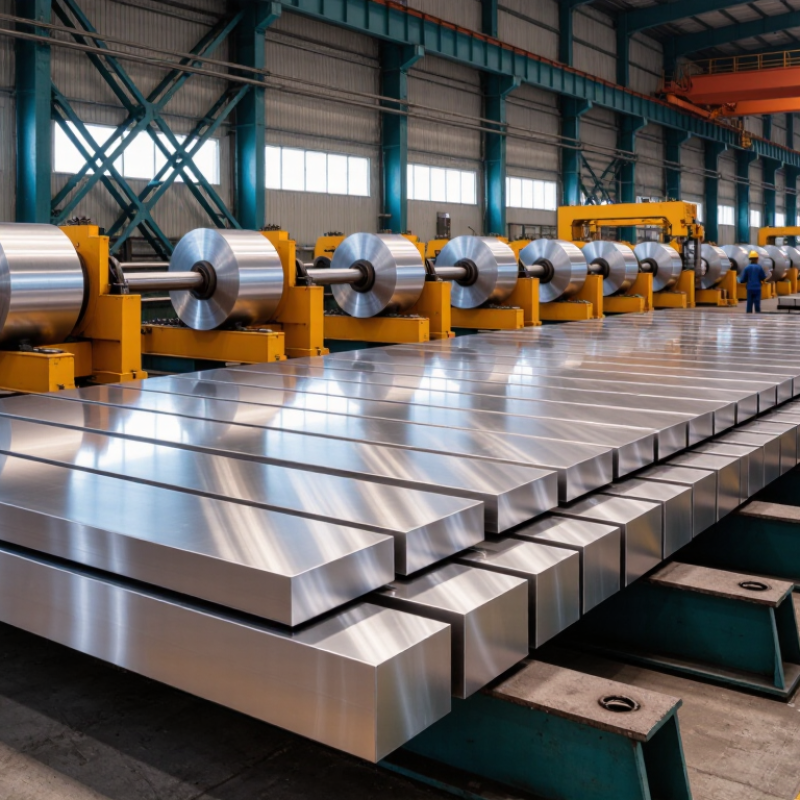
Manufacturing and testing: Flat bars are typically hot rolled or forged, solution annealed, descaled or pickled, and cut to size. Quality checks may include chemical analysis, dimensional inspection, tensile testing, and hardness testing. Applicable requirements depend on the product specification and order.
The chart shows specification ranges, not measured results from a particular production batch. Refer to the applicable ASTM A276/A276M specification and material test certificate for product requirements and verified chemistry.
Key Applications of 316L Stainless Steel Flat Bars
316L stainless steel flat bars are used where a compact, machinable section must withstand moisture, cleaning, or mild chemical exposure. Their molybdenum content improves resistance to chloride-related pitting compared with 304 stainless steel. It is not a guarantee. Salt deposits can still cause staining, especially in sheltered joints that remain wet.
In food-processing and pharmaceutical facilities, flat bars can form equipment frames, guards, brackets, and support rails. Their smooth, cleanable surfaces suit areas exposed to frequent washdowns, provided the finish and joints are specified carefully. Marine workshops also use them for handrail supports, deck fittings, and mounting plates. In chemical plants, they may serve as structural supports around tanks or pipework, though compatibility depends on the exact chemical, concentration, and temperature.
Fabricators value flat bar for cutting, drilling, and welding into custom parts. A practical detail matters: heat tint near a weld can reduce corrosion performance if it is left untreated. Crevices and trapped water deserve attention too. For coastal installations, designers should consider drainage, surface finish, and contact with dissimilar metals. 316L is useful, but not every damp or salty location needs it; selecting the grade without checking the service conditions can lead to avoidable maintenance.
How to Evaluate Chinese 316L Flat Bar Manufacturers
Evaluating Chinese 316L flat bar manufacturers takes more than comparing quotations. The International Stainless Steel Forum reported 58.4 million tonnes of global stainless-steel production in 2023. That figure shows a large, competitive industry, but production volume alone says little about one mill’s consistency. Ask for the applicable product standard, such as ASTM A276, and confirm that the inspection documents match the ordered dimensions and grade. Small details matter.
Review a recent mill test certificate for each heat, including chemical composition, mechanical properties, and heat number traceability. For 316L, carbon is limited to 0.03% by weight under common specifications. A handheld XRF analyzer can check elements such as molybdenum, but it cannot reliably verify low carbon content; request an appropriate laboratory method. This is easy to overlook.
Then test the process behind the paperwork. Request sample bars and measure thickness, width, straightness, and edge condition at several points. Check whether the supplier can explain surface finishing, packing, and how it prevents mixed heats during dispatch. A factory audit or third-party inspection can verify these practices, though one visit cannot prove long-term consistency. I would also ask how nonconforming batches are recorded and corrected; polished certificates do not answer that.
China’s Leading 316L Stainless Steel Flat Bar Manufacturers
China’s Leading 316L Stainless Steel Flat Bar Manufacturers
China’s scale in stainless steel production gives buyers a broad supplier base, but output alone does not prove quality. The International Stainless Steel Forum’s Stainless Steel in Figures 2024 reports global stainless steel melt-shop production of about 58.4 million tonnes in 2023, including roughly 36.7 million tonnes in China. These figures cover stainless steel overall, not 316L flat bar specifically. A useful distinction.
Experienced buyers compare documented grade compliance, dimensional control, and traceability. For 316L, verify the applicable specification, such as ASTM A276, and request a mill test certificate showing chemical composition and heat number. The low-carbon limit helps reduce sensitization risk after welding; molybdenum supports resistance to pitting in chloride-bearing environments. Ask how the supplier controls thickness, straightness, and surface finish. A clean sample can look convincing, yet tell little about consistency across a production lot. That is easy to overlook.
Tips: Match the bar’s dimensions and finish to the machining or fabrication process. Confirm inspection methods and certificate details before ordering. If corrosion exposure is severe, validate material selection with a qualified engineer; 316L is not immune to every environment.