China Top 10 Nickel Alloy Round Bar Manufacturers?
China is a major sourcing destination for Nickel Alloy Round Bar, serving buyers in demanding industrial sectors. Yet a supplier’s location alone does not prove product quality. Alloy grade, manufacturing controls, and documentation all deserve careful review.
This guide introduces ten Chinese manufacturers for buyers comparing product ranges and capabilities. It is a starting point, not a definitive ranking. Company information, production capacity, and export experience can change, and public claims may not tell the whole story. Verify details directly.
The right bar depends on its intended service. Temperature, corrosive media, machining needs, and required dimensions can all affect grade selection. Ask suppliers for applicable specifications, inspection records, and material test reports. Check that heat numbers remain traceable from the documents to the delivered bars. Small details matter.
Look closely at tolerances, surface condition, cutting services, minimum order quantities, and lead times. A polished sample is useful, but it cannot replace consistent batch records. Request recent documentation, and clarify who performs testing. Independent inspection may also help when orders carry tighter requirements.
Some comparisons will remain imperfect. Suppliers do not always publish comparable data, and a long product list does not guarantee reliable delivery. Use the profiles that follow to build a shortlist, then confirm technical fit, quality controls, and commercial terms before choosing a manufacturer.
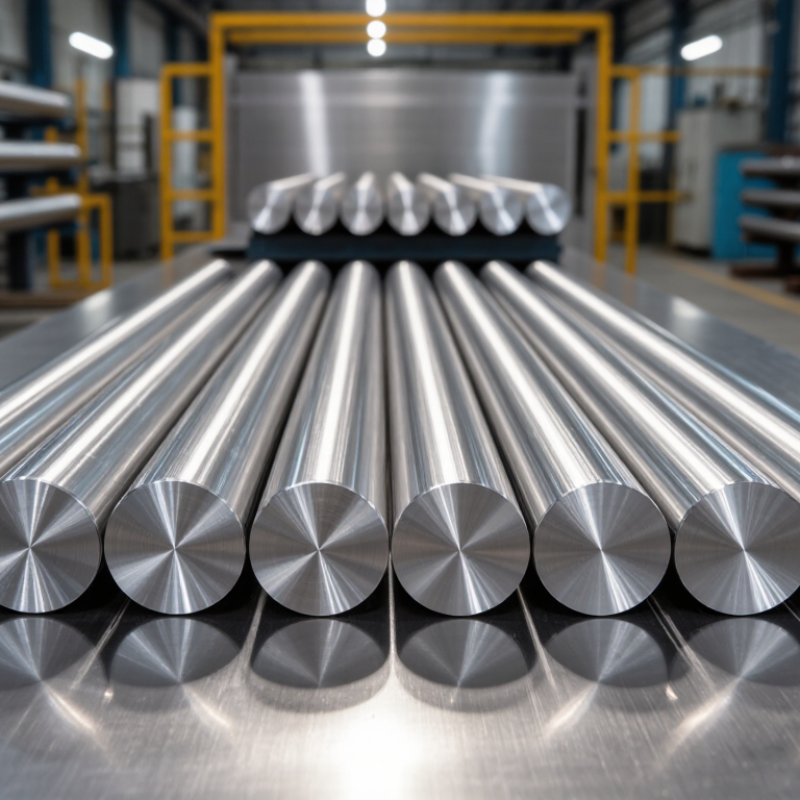
Nickel Alloy Round Bars: Composition, Properties, and Common Uses
Nickel alloy round bars use nickel as their main element, with chromium, molybdenum, iron, copper, or other additions. The exact recipe depends on the grade. Chromium can improve resistance to oxidation, while molybdenum helps some alloys withstand corrosive environments. These elements work together; composition alone does not tell the whole story.
Many grades retain strength at elevated temperatures and resist corrosion in demanding service. Their behavior still depends on temperature, exposure, processing, and heat treatment. Some bars machine cleanly; others can work-harden, making cutting speed and tool choice important. Small differences matter. For a practical check, compare the material certificate with the specified grade and verify composition when the application warrants it.
Round bars are commonly machined into shafts, valve parts, fasteners, and fittings. Chemical processing equipment may use them where hot fluids or corrosive media are present. Marine and energy systems also use selected grades, but not every nickel alloy suits every setting. A bar that performs well in one environment may pit or lose strength in another. Selection is rarely as tidy as a catalog suggests; operating conditions and inspection records deserve equal attention.
Key Standards and Specifications for Nickel Alloy Round Bars
Nickel alloy round bars are not interchangeable simply because their surfaces look alike. ASTM B446 specifies requirements for bars and rods made from alloy 625 (UNS N06625), while ASTM B637 covers precipitation-hardening nickel alloy products, including alloy 718 (UNS N07718). These standards set requirements such as chemical composition and mechanical testing. Confirm the exact grade and product form against the applicable specification; similar trade descriptions can conceal different properties. Small detail. Big risk.
The USGS Mineral Commodity Summaries 2025 estimated global nickel mine production at 3.7 million metric tons in 2024, up from 3.6 million in 2023. That figure describes upstream output, not round-bar availability, but it highlights why buyers should verify material traceability. Check each bar’s heat number, test results, heat-treatment condition, diameter tolerance, and ordered length. A 3.1 inspection certificate can support traceability, but it does not replace compliance with the required product standard. Surface marks and straightness also deserve inspection. I would not rely on a mill certificate alone; independent checks may be sensible for critical service.
How Chinese Manufacturers Produce and Test Round Bars
Chinese nickel alloy round bar production begins with careful control of the melt. Technicians check the charge materials and adjust alloy chemistry before casting. Each element affects strength, heat resistance, or corrosion performance.
Small details matter.
A slight composition shift can change how a bar behaves during machining or service. After casting, billets are heated and worked into round sections by forging or rolling. Temperature and reduction schedules help limit internal defects and uneven grain structure. The bars may then receive solution treatment and controlled cooling. Straightening follows when required. Operators inspect the surface for laps, cracks, and scale, though visual checks alone cannot reveal every internal flaw.
Quality testing combines measurements with laboratory checks. Calipers or automated gauges confirm diameter and straightness at several points along the bar. Samples may undergo tensile and hardness tests, while ultrasonic inspection helps detect subsurface discontinuities. Chemical analysis verifies the alloy grade against the purchase specification. Test reports should identify the heat number and link results to the supplied bars.
Buyers should also confirm sampling frequency and acceptance limits before production. That step is easy to overlook. Even a well-made bar can disappoint if its inspection records are incomplete or its dimensions do not fit the intended machining process.
Criteria for Ranking China’s Top 10 Nickel Alloy Round Bar Manufacturers
A fair ranking of China’s nickel alloy round bar manufacturers should begin with verifiable product quality, not polished catalogs. Review chemical composition reports, heat numbers, and inspection records for each batch. Compare these documents with the ordered alloy grade and bar dimensions. Small differences matter. A mill certificate is useful, but it should match the material actually shipped.
Manufacturing capability deserves close attention. Check whether suppliers can explain their melting, forming, heat-treatment, and finishing processes in practical terms. Ask how they control diameter, straightness, surface condition, and internal defects. Independent test reports and traceable sample inspections can strengthen confidence. Not every buyer needs the same testing plan. Still, vague answers deserve scrutiny. I would also compare typical lead times, minimum order quantities, packaging, and export documentation, while separating confirmed performance from sales promises.
A ranking should weigh delivery consistency and technical support alongside price. Reviewers can examine response quality, complaint handling, and evidence of repeat orders, where available. Factory visits may reveal useful details, such as calibration records or how bars are protected from moisture and handling damage. Yet a visit captures only one moment. Criteria also have limits: public information may be incomplete, and a low score does not always mean poor production. Clear scoring rules make comparisons more reliable, though judgment remains involved.
Comparing Suppliers by Quality, Capacity, Certifications, and Service
Comparing China’s top Nickel Alloy Round Bar Suppliers requires more than checking a catalog. Start with quality evidence: request material test certificates, heat numbers, and chemical composition results for the specific grade and batch. For critical applications, confirm that inspection records match the bar’s diameter, condition, and delivery lot. A polished sample is useful, but it cannot prove consistency across a full shipment.
Capacity matters when orders involve several diameters or tight delivery windows. Ask whether stock is available or production is required, and request a realistic lead time in writing. Suppliers should explain how they manage cutting, packing, and traceability. A simple test: ask how they would handle a delayed batch. The answer often reveals more than a production figure. No scorecard is perfect.
Check certifications carefully. Verify the issuing body, validity, and scope, rather than relying on a logo in a brochure. A certificate may cover a management system without confirming a particular product’s properties. Service deserves equal attention: clear technical replies, prompt document corrections, and careful packaging can prevent costly misunderstandings. Compare written quotations on the same grade, dimensions, tolerances, and inspection requirements. One detail is easy to miss: “available” can mean warehouse stock, or a future production slot. Ask which.
China Nickel Alloy Round Bar Suppliers: Comparing Quality, Capacity, Certifications, and Service
Supplier-specific, independently verified data was not provided, so this chart compares a material specification rather than ranking manufacturers.
The bars show the lower bound of the commonly specified nickel-content range, in weight percent, for selected alloy grades. Nickel content is only one material characteristic; verify each supplier’s applicable standards, test certificates, production capacity, certifications, and service directly.