Empowering Engineering Excellence: Innovate, Elevate, Deliver.

China Top 10 Forklift Crane Manufacturers

China’s forklift crane industry has grown alongside warehouses, factories, ports, and construction projects. This article examines China’s top 10 forklift crane manufacturers and the strengths they bring to demanding material-handling environments. The term “Forklift Crane” covers equipment that combines lifting mobility with crane-style handling functions.

A reliable manufacturer should offer more than an attractive machine. Product capacity, lifting height, stability, battery or engine performance, and operator visibility all influence daily results. After-sales support matters just as much. Spare parts, technician response, warranty clarity, and training can determine whether a machine remains productive after installation.

Real work reveals details that brochures often miss. A narrow warehouse aisle tests steering control. A dusty yard tests sealing and maintenance access. Uneven ground exposes weaknesses in stability and suspension. These practical conditions help separate experienced suppliers from companies with limited field knowledge.

This guide compares manufacturers through product range, engineering capability, certifications, customization options, export experience, and customer service. It also considers whether published specifications are clear and independently verifiable. Rankings can change as product lines, ownership, and market performance develop. That uncertainty deserves attention.

No single supplier fits every operation. A compact electric unit may suit indoor storage, while a diesel model may perform better outdoors. Buyers should confirm load charts, working conditions, local service coverage, and total ownership costs before choosing. Safety remains essential, even when delivery schedules are tight.

The following profiles aim to support practical research, not replace professional assessment. Some manufacturers may appear stronger in one category than another. That is normal. Careful comparison usually produces better decisions than relying on brand popularity alone.
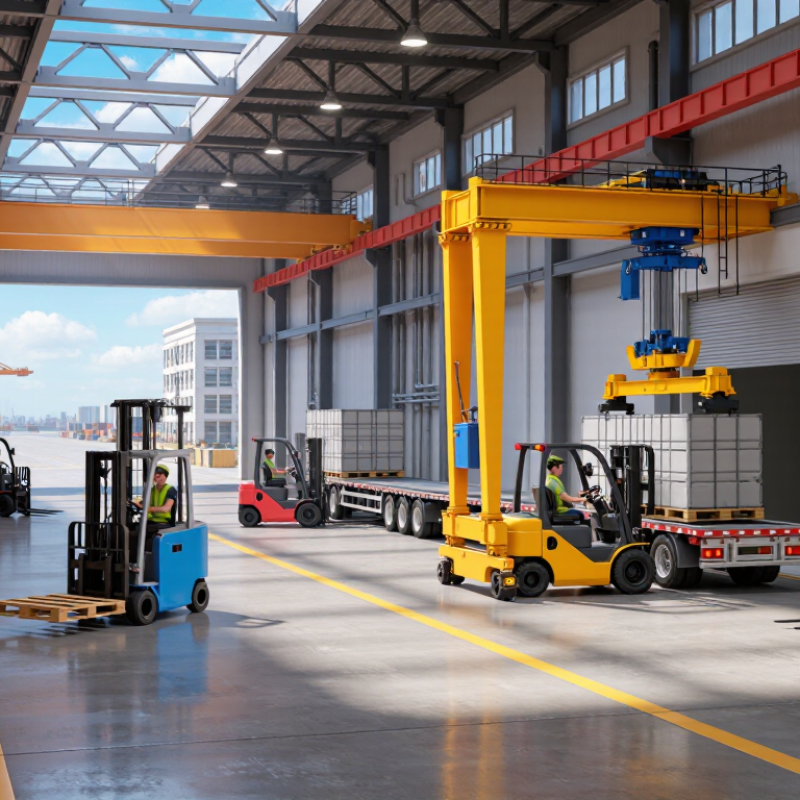
China Top 10 Forklift Crane Manufacturers

What Is a Forklift Crane and How Does It Work?

A forklift crane is a forklift fitted with a jib, hook, or lifting boom. It combines the forklift’s mast and hydraulic system with a crane-like attachment. The attachment reaches forward, while the counterweight keeps the truck balanced. The operator raises the boom, positions the hook, and controls movement through hydraulic levers.

Capacity changes quickly. A load placed farther from the front wheels creates greater overturning force. The rated capacity plate therefore matters more than the attachment’s advertised lifting number. OSHA safety guidance commonly cites about 85 annual forklift fatalities and 34,900 serious injuries in the United States. Those figures show why load distance, ground condition, and operator visibility deserve constant attention. Small errors become expensive.

Industry data also shows the scale of this equipment sector. World Industrial Truck Statistics reported roughly 2.38 million industrial trucks delivered globally in 2023. That figure does not represent forklift cranes alone, but it indicates strong demand for material-handling equipment. In Chinese manufacturing, buyers often compare hydraulic response, boom rigidity, mast stability, and spare-parts access. Experienced users inspect welds, pins, hoses, and locking devices before lifting. A crane attachment can look robust and still have poor balance. This is the part many product pages explain badly. Operators must follow the specific capacity chart and attachment instructions, not rely on habit. The safest working method is sometimes slower. That is not a flaw.

China’s Forklift Crane Manufacturing Industry

China’s forklift crane manufacturing industry has moved beyond basic lifting equipment. Factories now combine hydraulic systems, battery controls, sensors, and compact chassis designs. This shift supports warehouses, ports, construction sites, and agricultural facilities.

Manufacturers commonly build equipment for different load capacities and working conditions. Engineers examine mast strength, steering response, braking distance, and battery endurance. In a reliable factory, each unit receives repeated lifting tests before shipment. Operators also check weld quality, hydraulic leakage, visibility, and emergency controls. Small details matter.

During supplier evaluations, buyers should inspect production records and testing procedures. A clean workshop is useful, but it does not prove long-term performance. Ask for material certificates, maintenance guidance, spare-parts planning, and operator training. Factory experience shows that after-sales support often affects ownership costs more than the purchase price. That gap matters.

The industry still faces pressure to improve energy efficiency and reduce production delays. Electric models are growing, yet charging infrastructure remains uneven in some work environments. Automation can improve consistency, but skilled technicians remain necessary for calibration and repairs. Not every specification sheet explains real performance. A cautious buyer should compare field feedback, warranty terms, and actual test conditions before selecting a manufacturer.

Selection Criteria for China’s Top Manufacturers

China Top 10 Forklift Crane Manufacturers

Selecting China’s top forklift crane manufacturers requires more than comparing online rankings. A reliable supplier should show consistent production experience, clear technical specifications, and documented quality controls. Check lifting capacity, mast height, turning radius, battery performance, and operating temperature. These details affect daily productivity. Factory audits also matter. A clean assembly line, traceable components, and trained inspectors usually indicate stronger process control. However, a modern showroom proves little by itself.

Ask for test records, certifications, warranty terms, and spare-parts support before placing an order. Request videos of load testing, but do not rely on videos alone. Independent inspection can confirm structural welds, braking response, hydraulic stability, and safety features. Speak with previous users when possible. Their feedback may reveal delays, maintenance costs, or difficult communication. I have found that response speed often predicts after-sales reliability, although this is not a perfect rule. Some smaller manufacturers deserve closer attention.

Tips: Compare at least three quotations with identical specifications. Confirm whether the stated capacity applies to the full lifting height. Review the service network near your operating site. Clarify delivery schedules, operator training, software access, and replacement-part availability in writing. Keep every technical promise in the contract. A low price can hide weaker steel, limited testing, or expensive downtime. Do not ignore uncomfortable questions.

China’s Top 10 Forklift Crane Manufacturers

China’s Top 10 Forklift Crane Manufacturers are gaining attention as warehouses demand faster, safer material handling. The World Industrial Truck Statistics report recorded more than two million industrial truck shipments globally in 2023. China remains a major production base, supported by broad component supply and strong export capacity. The manufacturers in this market serve factories, ports, cold-storage facilities, and construction yards. Their product ranges often include counterbalance trucks, reach trucks, rough-terrain units, and lifting equipment for heavy loads.

A reliable comparison should examine rated capacity, lift height, battery performance, braking distance, and service coverage. Grand View Research forecasts steady growth in the global forklift market through 2030, with automation and electric power as key drivers. However, a sales ranking alone can mislead. Shipment volume may reflect low-cost models, not long-term reliability.

Field testing, maintenance records, operator feedback, and certification documents provide stronger evidence. I would also check performance at a real loading dock, where uneven floors and tight turning spaces expose weaknesses quickly.

Tips: Ask for a complete duty-cycle test. Record energy use, charging time, noise, and fault frequency. Confirm spare-parts availability near the operating site. One overlooked detail matters: a powerful crane forklift can still underperform when visibility, tire choice, or operator training is poor. Industry reports offer direction, not a final purchasing decision.

Comparing Products, Technologies, and Market Strengths

China’s top 10 forklift crane manufacturers differ in more than production volume. Their real strengths appear in lifting stability, hydraulic response, battery endurance, and service coverage. A warehouse operator should compare rated capacity, mast visibility, turning radius, and attachment compatibility. A strong machine feels predictable when carrying a pallet through a narrow aisle.

Electric models are gaining attention in indoor logistics. Lithium battery systems reduce charging pauses and support quieter operation. Some manufacturers add telematics, overload alarms, regenerative braking, and operator access controls.

Diesel and LPG models still serve construction yards and outdoor storage areas. Their advantages include longer operating cycles and better performance on uneven ground. Technology matters, but software quality can vary.

Market strength also depends on export experience, spare-parts availability, training, and response time. Manufacturers with regional service centers usually reduce downtime more effectively than low-price suppliers. However, a large factory does not guarantee consistent field support. Buyers should inspect load-test records, warranty terms, component origins, and customer feedback from similar working conditions. Product brochures often look perfect. Real floors are not. A forklift may perform well in a showroom but struggle on slopes, dust, or frequent stop-and-go routes. Comparing ten manufacturers with the same test load, shift length, and maintenance criteria gives a more reliable picture of value.

Download
Brochure