Empowering Engineering Excellence: Innovate, Elevate, Deliver.
Bluetooth Smart Glasses are moving from niche accessories toward practical tools for calls, audio, and hands-free work. Their value is easy to picture: a commuter taps the temple, answers a call, and keeps both hands free. Yet the category is not clearly separated in most market reports. That matters.
Grand View Research estimated the global smart glasses market at USD 1.93 billion in 2023. Its report projected a 10.3% compound annual growth rate from 2024 to 2030. These figures cover smart glasses broadly, not Bluetooth-only products. They offer useful context, but they should not be treated as a precise forecast for every Bluetooth segment.
At Meta Connect in 2024, Meta CEO Mark Zuckerberg described glasses as “the ideal form factor for AI.” That comment reflects a wider shift toward wearable, hands-free interfaces. It does not prove every product will meet users’ needs. Battery life, microphone clarity, comfort, and dependable Bluetooth connections still decide whether glasses work beyond a short demonstration.
This guide introduces ten Chinese manufacturers associated with Bluetooth Smart Glasses. It is an industry overview, not a certified ranking. Company claims and product ranges can change quickly. Buyers should verify current specifications, factory capabilities, and after-sales support directly. A polished product page is not enough. The details matter. One limitation remains: public market data rarely isolates Bluetooth smart glasses from the wider smart-glasses category. A careful comparison should acknowledge that gap rather than disguise it.
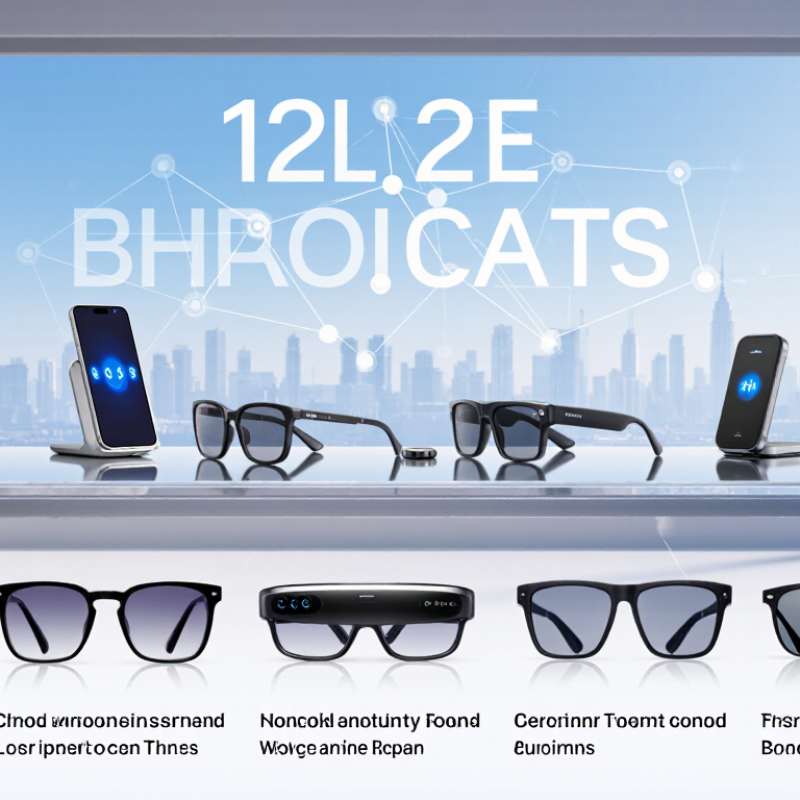
Bluetooth smart glasses combine familiar eyewear with small wireless speakers, microphones, and control buttons. They connect to a phone through Bluetooth, much like wireless earbuds. Once paired, they can play music, deliver navigation prompts, or handle calls without covering the ears. That is the idea. No screen is required.
Inside the frame, compact speakers sit near the temples and direct sound toward the wearer’s ears. Tiny microphones capture speech, while a built-in battery powers the electronics. Touch controls or physical buttons can adjust volume and answer calls. Some models also support voice assistants, depending on the connected phone and software. The glasses exchange audio data over a short-range wireless link; the phone usually provides the internet connection and most processing.
Daily use depends on fit, battery capacity, and the surrounding noise. A secure, comfortable frame matters during a long walk, and controls should be easy to find without looking. Wind can muddy calls, while busy streets may make quiet audio difficult to hear. That trade-off deserves more attention than sleek product photos often give it. Bluetooth glasses are not a complete replacement for headphones, and users should check how sound carries in public settings. A small learning curve remains. Pairing can occasionally fail, too, so clear setup instructions and reliable support are practical signs of a well-designed product.
| No. | Manufacturing Area | Typical Technology or Component | How It Works | What to Evaluate |
|---|---|---|---|---|
| 1 | Bluetooth connectivity | Bluetooth radio operating in the 2.4 GHz ISM band | The radio links the glasses wirelessly to a phone or another compatible device. Connection range and stability depend on the radio design, antenna, surroundings, and connected device. | Connection stability, pairing behavior, supported Bluetooth features, and performance in everyday use |
| 2 | Audio profiles and controls | Bluetooth audio profiles such as A2DP for media and HFP for calls, when supported | Profiles define how compatible devices exchange audio and call-control information. A product’s supported profiles depend on its hardware and software implementation. | Phone compatibility, call handling, media playback, and reconnection behavior |
| 3 | Speakers and acoustic design | Small temple-mounted speakers, often designed for open-ear listening | Speakers direct sound toward the wearer’s ears without sealing the ear canal. Acoustic output and sound leakage vary with speaker placement and frame geometry. | Speech clarity, comfort, volume control, sound leakage, and fit across different users |
| 4 | Microphones and call processing | One or more miniature microphones with digital audio processing | Microphones capture the wearer’s voice. Processing may reduce background noise, but results depend on microphone placement, algorithms, and the acoustic environment. | Voice pickup, wind handling, background-noise performance, and call quality |
| 5 | Battery and power management | Rechargeable cells, charging circuitry, and power-management components | The battery supplies the radio, audio components, and other electronics. Actual operating time varies with volume, call use, connection conditions, battery capacity, and product design. | Operating time under stated test conditions, charging method, charging safety, and battery service life |
| 6 | Frame and component integration | Electronics integrated into the frame, commonly including the temples | Designers must fit the radio, antennas, speakers, microphones, wiring, and battery into a wearable frame while maintaining balance and comfort. | Weight distribution, fit, durability, repairability, and consistency of assembly |
| 7 | Lenses and optical options | Clear, tinted, or prescription-compatible lenses, depending on the model | Lenses provide the eyewear’s optical function; Bluetooth audio does not itself determine lens type. Lens compatibility and fitting options are product-specific. | Lens options, optical fitting support, frame compatibility, and clear product specifications |
| 8 | Buttons and user controls | Physical buttons, touch controls, or a combination | Controls send commands to the glasses’ electronics for actions such as answering calls, changing volume, or starting playback. Available commands vary by model. | Ease of use, accidental activation, tactile feedback, and control customization |
| 9 | Firmware and companion software | Embedded firmware and, for some products, a mobile companion application | Firmware manages functions such as Bluetooth pairing and control input. An application may provide setup or settings, but app support is not universal. | Setup clarity, software compatibility, update process, and privacy information |
| 10 | Quality and safety testing | Functional checks, electrical safety assessment, and applicable regulatory testing | Testing can verify that a finished product performs as specified and meets requirements applicable to its destination market. Required tests depend on the product and jurisdiction. | Documented test procedures, traceability, applicable market approvals, and consistent production checks |