Empowering Engineering Excellence: Innovate, Elevate, Deliver.
Choosing the best Power Inverter For Home in 2026 is not simply a matter of picking the highest wattage. The right model depends on what you need to run, how long it must run, and whether it works with your battery or backup source. A refrigerator may need a brief surge well above its normal running power. A modem, lights, and phone chargers place very different demands on the same system. Small details matter.
Photovoltaic systems expert John Wiles has long emphasized matching system components to their intended use. A practical paraphrase of that guidance is: “Choose inverter capacity for real loads, not optimistic estimates.” Treat that as a starting point, not a substitute for checking manufacturer specifications. This guide compares key choices, including pure sine wave output, continuous and surge ratings, conversion efficiency, battery compatibility, transfer behavior, warranty, and installation needs. We’ll also distinguish grid-tied, off-grid, and hybrid designs, since they serve different purposes.
A strong choice should handle everyday appliances without running near its limit. Check the label on each device, and account for startup surges. Then consider runtime, safe ventilation, and whether a qualified installer should review the setup. Prices and product features can change during 2026, so verify current specifications before buying. A high rating alone proves little. Even careful planning has limits: household loads change, and estimates can miss the one appliance you forgot.
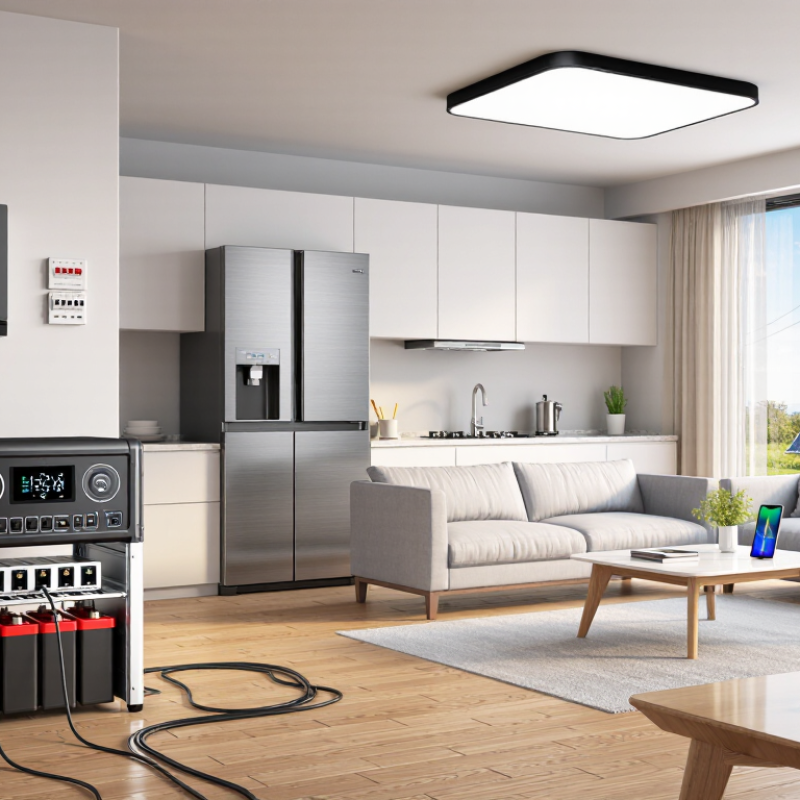
A home power inverter converts direct current from a battery into alternating current used by many household appliances. It does not generate electricity. It draws stored energy from a battery, then supplies power through compatible outlets or properly installed home wiring. That matters. During an outage, it may keep a router, phone chargers, or a few lights running. A larger system can support more, but runtime depends on battery capacity and the devices connected. A refrigerator’s startup surge can exceed its normal running demand, so check both figures before choosing equipment.
Tips: Add up the running watts of the devices you want to use, then check their surge requirements. Leave some capacity in reserve. Keep batteries and inverters dry, ventilated, and away from heat. For connection to household wiring, use suitable transfer equipment installed by a qualified electrician; never feed power into a wall outlet.
An inverter can be useful during planned outages, in areas with unreliable service, or when essential devices need backup power. For occasional charging, a compact unit may be enough. For longer outages, battery storage and realistic energy planning matter more than a headline wattage. It is easy to overestimate what one setup can run. Decide which appliances truly matter, and check their labels before buying.
The best home backup inverter depends on what you need to keep running. A pure sine wave inverter is usually the safer choice for computers, routers, refrigerators, and other sensitive equipment. It produces power similar to household utility electricity. Modified sine wave models may cost less, but some appliances can run noisily, inefficiently, or not at all. Small loads still matter.
A hybrid inverter can connect solar panels, batteries, and the electrical grid in one system. It suits households planning to use stored solar energy and backup power. A battery inverter, by contrast, may be enough when you only need to draw power from a battery during an outage. Check that the inverter and battery are designed to work together. Also confirm whether the system can switch safely when grid power fails.
Start by listing essential appliances, then check their running watts and brief startup surges. A refrigerator, for example, may need more power when its compressor starts. Add the loads you expect to use at the same time, and leave a reasonable capacity margin. A neat spreadsheet can still miss real habits, like charging phones while the kettle is on. That detail gets missed. For a fixed home system, have a qualified electrician verify wiring, grounding, and transfer equipment before installation.
LOAD PLANNING
Matching inverter capacity to essential appliances starts with a small, honest list. Write down the running watts for each device you expect to use at the same time. A refrigerator might use about 150 watts while running, while a router may need only 15. Check each appliance’s label or manual; actual figures vary. Keep it practical. A kettle or space heater can draw far more than several lights combined.
Add the running watts, then allow roughly 20 to 30 percent headroom for normal variation. The total is only part of the decision. Motors in refrigerators and pumps can briefly draw much more power when starting. Check the inverter’s surge rating and how long it can sustain that rating. A unit with adequate continuous output may still struggle with a compressor startup. I have found this easy to overlook when comparing numbers on paper.
Think about which appliances truly need to run together. For example, a fridge, a few LED lights, a router, and a laptop may fit a modest load, but their startup needs still matter.
Battery capacity is separate: inverter watts describe output, while battery watt-hours affect how long that output lasts. That distinction is often confusing. For fixed household wiring, have a qualified electrician assess the installation, grounding, and transfer equipment. Recheck your appliance list after a week of real use; people often forget one small device.
What Is the Best Power Inverter for Home in 2026?
A useful inverter choice starts with the loads you actually need to run. Add the running watts of essentials, then account for the higher startup demand of devices such as refrigerators or pumps. The largest number on a product label may describe peak output, not continuous capacity. Check both figures. Also compare efficiency at realistic loads; a high peak efficiency rating can hide greater losses when the inverter runs lightly.
Battery compatibility matters just as much. Match the inverter’s DC voltage to the battery system, and check which battery chemistries it supports. Usable capacity, charging limits, and temperature protections affect how reliably stored power is available. A battery’s advertised capacity is not always fully usable. That detail is easy to miss. Consider standby consumption, too, especially if the system will remain on overnight.
Safety features deserve close attention. Look for overload, over-temperature, short-circuit, and low-voltage protection, plus clear installation instructions. Pure sine-wave output is often a sensible fit for sensitive electronics and many household appliances, but verify device requirements. For a permanently wired system, use an appropriately rated transfer switch and have a qualified electrician check the setup. Never assume a portable connection can safely power household wiring. Product specifications can be confusing, and even careful comparisons leave some uncertainty; confirm the ratings against your actual appliances.
| Inverter setup | Typical continuous power | Typical peak conversion efficiency | Battery considerations | Safety features to check | Suitable home use |
|---|---|---|---|---|---|
| Small 12 V pure sine wave inverter | 300–1,000 W | About 85–92% | Works with a properly sized 12 V battery bank. High power draws require substantial current and short, correctly sized cables. | Low-voltage shutdown, overload and short-circuit protection, over-temperature protection, correctly rated fuse near the battery. | A few small appliances, communications equipment, or lights during an outage. |
| 24 V pure sine wave inverter | 1,000–3,000 W | About 88–94% | Requires a compatible 24 V battery bank. Confirm the battery’s continuous and surge discharge limits against the inverter load. | Battery-voltage protection, overload and short-circuit protection, thermal shutdown, and clear surge ratings. | Moderate backup loads, such as a refrigerator, router, lighting, or selected outlets, subject to starting surges and runtime. |
| 48 V inverter-charger or hybrid inverter | 3,000–8,000 W | About 90–96% | Designed for a compatible 48 V battery bank. Check supported battery chemistry, charging profile, BMS communications, and allowable charge/discharge current. | Overcurrent, over-temperature, over/undervoltage, and ground-fault protections where applicable; approved transfer equipment and installation by a qualified professional for fixed wiring. | Larger backup systems or solar-plus-battery setups. Whole-home backup depends on load, battery capacity, wiring, and local electrical requirements. |
| Portable power station with built-in inverter | Often 300–3,000 W, depending on the unit | Often about 85–93%; verify the manufacturer’s test conditions | Battery and inverter are integrated. Compare usable watt-hours, rated output, recharge time, and whether expansion batteries are supported. | Built-in battery management, overload and temperature protection, protected AC outlets, and suitable ventilation during use and charging. | Portable, plug-in backup for selected devices; not a substitute for a properly installed home transfer system. |
| Comparison notes: Figures are indicative ranges for common product categories, not guaranteed specifications. Efficiency varies with load, temperature, and system design; peak efficiency is not the same as efficiency at every operating level. Choose a pure sine wave output for broad compatibility with household electronics and motors. Match inverter output voltage and frequency to local mains, size for continuous load and startup surge, and calculate battery runtime from usable battery energy, load, and conversion losses. Follow electrical codes and the equipment manuals. | |||||
Start with the loads you actually need during an outage. A refrigerator may draw modest power once running, yet need a brief surge to start. Add lights, a router, or a medical device, then check both running watts and startup demand. Leave headroom. A unit sized only to the average load may shut down when several appliances start together.
Match the inverter to your battery system, not just its advertised output. Confirm the battery’s voltage, usable capacity, and discharge limits, and check that the inverter can communicate with its battery when required. A pure sine wave output is generally a sensible choice for sensitive electronics and many modern appliances. Also compare continuous power, surge duration, idle consumption, and charging options. Small details matter.
Installation deserves equal attention. Look for clear overload and temperature protection, readable status indicators, and practical cable connections. Keep the inverter dry, ventilated, and away from everyday clutter; heat needs somewhere to go. Have a qualified installer assess wiring, grounding, and transfer equipment for your home. A spreadsheet can help, but it can miss the kettle switched on beside the refrigerator. Test the setup under realistic loads, and remember that the quietest, most powerful model is not always the best fit.