Empowering Engineering Excellence: Innovate, Elevate, Deliver.
Choosing the best Powder Sieve Machine in 2026 is not about buying the largest unit or the one with the most screens. It is about matching the machine to the powder, the process, and the required output. A fine, free-flowing powder behaves differently from a damp, cohesive blend. The difference can show up quickly: uneven feed, blocked mesh, or a pile of material waiting beside the production line.
This guide compares key factors, including capacity, screen size, construction, cleaning access, and operating consistency. It also considers practical details that matter during a real shift. Can an operator remove the screen without wrestling with clamps? Does the machine fit beneath the existing hopper? How much material remains after a batch? Small details. They affect daily use.
As [verified expert’s name and role] puts it, “[Insert a directly verified quotation about powder sieving or equipment selection].” The quotation should come from a named, qualified professional and be checked against a reliable source. Without that verification, an invented attribution would weaken the guidance.
There is no universal winner. A compact vibratory sieve may suit a pilot line, while a higher-capacity machine may serve continuous production better. Yet capacity alone can mislead. Mesh choice, powder characteristics, and cleaning needs deserve equal attention. This article offers a practical way to compare options, while recognizing that supplier specifications do not replace testing with your own material. That step takes time. It can prevent an expensive mismatch.
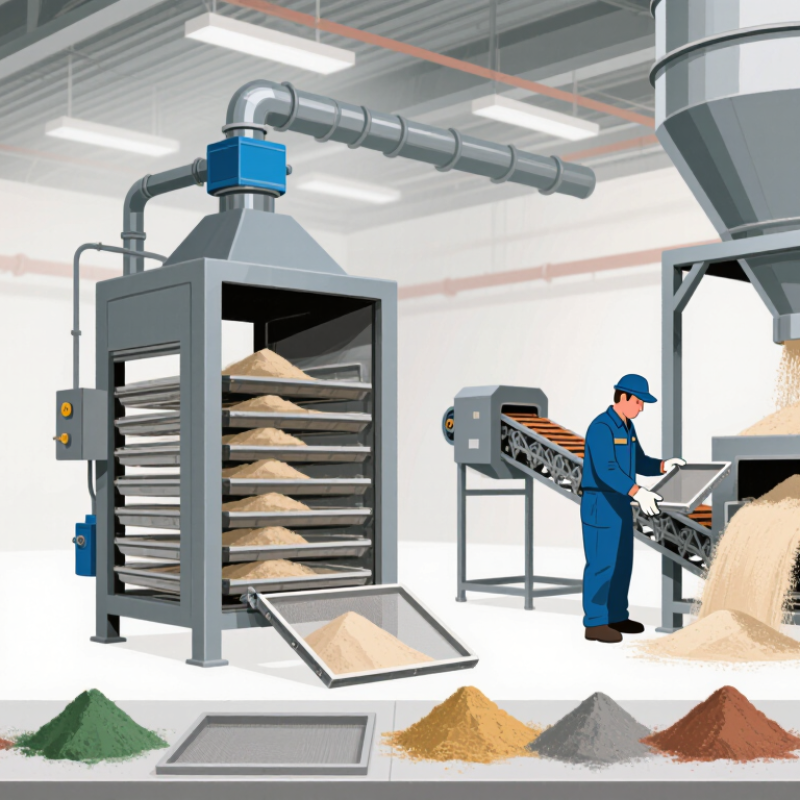
A powder sieve machine separates material by particle size. It does not grind particles; it directs them through screens with selected openings. In a typical unit, powder enters from above and spreads across a mesh screen. Vibration moves the material, letting smaller particles pass through while larger ones travel toward an outlet. Centrifugal models use a rotating impeller to push powder against a cylindrical screen. The right mechanism depends on the material’s flow, moisture, and tendency to clump.
Mesh selection sets the cut point. ASTM E11 standardizes test sieve openings from 20 micrometers to 125 millimeters, providing a common reference for checking particle-size separation. USP General Chapter <786> also describes analytical sieving methods for estimating particle-size distribution. These references help operators compare results, though a production machine may behave differently from a laboratory sieve. Feed rate, screen tension, and vibration settings all matter.
In practice, watch the discharge and inspect the mesh for blinding, where fine or damp powder blocks openings. A short test with the actual material can reveal uneven feeding or excessive residue. Small details matter. It is tempting to choose a machine by capacity alone, but that can be misleading. I would also check cleaning access and whether the screen can be changed quickly. That judgment is not perfectly tidy; real powders rarely behave like neat samples in a test report.
A useful powder sieve machine is not simply the fastest one. In 2026, compare its capacity with your actual batch size and the powder’s behavior. Fine, dry material may pass easily, while damp or irregular particles can blind the mesh and slow production. Ask for a trial using your own sample. Watch the feed rate, residue, and particle separation, not just the advertised throughput. Small differences matter.
Check the screen’s aperture, tension, and replacement method. A tool-free changeover can save time when operators handle several mesh sizes during a shift. Inspect surfaces that contact the powder; smooth, accessible parts are easier to clean and inspect. Fit matters. Also consider vibration settings, noise, and how securely the machine sits on the floor. Excessive movement can create problems beyond the sieve itself.
Dust control, guarding, and maintenance access deserve equal attention. Ask how seals, bearings, and screens are checked, and whether routine cleaning requires awkward disassembly. Request measurable test results, but treat them as starting points: room humidity, feed consistency, and operator technique can change performance. No specification sheet tells the whole story. A machine with impressive capacity may still be a poor fit if it leaves excess oversize material or takes too long to clean. Choose based on repeatable results in your working conditions, while allowing time for a second trial if the first is inconclusive.
Key Factors for Evaluating Powder Sieve Machines in 2026
Suggested procurement priorities, shown as illustrative weights totaling 100 points—not measured performance data. Compare sieve machines against your powder, target particle size, required throughput, cleaning needs, and process requirements.
Powder sieve machines separate particles by size, remove oversize pieces, or break up soft agglomerates. A vibratory sieve uses a vibrating screen and suits routine grading of dry powders, such as flour, mineral blends, and ceramic feed. It handles steady production well, but damp or oily material may clog the mesh. Fit matters.
A rotary sieve moves powder through a rotating cylindrical screen. Its enclosed design can help limit dust, and it is useful for continuous screening when a gentle, even feed is needed. Centrifugal sifters use rotating paddles to push powder through a screen, making them useful for fine, free-flowing materials and compact production lines. For very fine powders, an ultrasonic sieve adds high-frequency vibration to reduce mesh blinding. It can improve screening, though it adds setup and maintenance needs. More technology is not always better.
Tips: Match mesh opening to the target particle size, then check the material’s moisture and flow behavior. A small trial with the actual powder can reveal blinding or poor throughput before installation. Record feed rate and screen condition during testing. It is easy to focus on finer separation; that can lower output, so balance product quality with practical capacity.
| Machine Type | How It Works | Best Suited For | Main Advantages | Key Considerations | Typical Applications |
|---|---|---|---|---|---|
| Circular Vibratory Sieve | A motor-driven vibration system moves material across one or more circular mesh screens. | General-purpose screening, particle classification, and removal of oversized material. | Versatile; available with multiple screen decks; relatively straightforward to operate and clean. | Fine, cohesive powders may blind the mesh. Screen selection and vibration settings should match the material. | Food ingredients, chemicals, minerals, plastics, and pharmaceutical powders. |
| Ultrasonic Vibratory Sieve | Ultrasonic energy is transmitted to the screen mesh to help disperse particles and reduce screen blockage. | Fine, lightweight, or difficult-to-screen powders that tend to clog conventional meshes. | Can improve fine-powder passage and reduce mesh blinding when the material and screen are compatible. | Higher equipment complexity; performance depends on powder properties, mesh condition, and correct setup. | Fine chemicals, pharmaceutical ingredients, metal powders, and specialty food powders. |
| Centrifugal Rotary Sifter | A rotating impeller moves powder through a cylindrical screen, separating material by particle size. | Continuous processing of dry powders where a compact, enclosed screening arrangement is preferred. | Can integrate into conveying or production lines and offers continuous screening in a compact footprint. | Not suitable for every fragile or heat-sensitive material; screen and rotor selection should reflect product characteristics. | Flour, starch, sugar, powdered chemicals, and other bulk powders. |
| Gyratory Sieve | A controlled horizontal gyratory motion carries material across a large screen area. | High-volume grading where gentle, multi-stage separation is needed. | Large screening area and multiple-deck configurations can support several size fractions. | Typically requires more floor space than compact circular sifters; installation and screen changes need planning. | Minerals, grains, fertilizer, plastics, and other bulk materials. |
| Linear Vibrating Sieve | Two vibration sources or a directed vibration system move material along a straight screening path. | High-throughput separation and conveying of relatively free-flowing powders or granules. | Provides a clear, linear material path and can be integrated into continuous production systems. | Less suited to some very fine or cohesive powders unless the screen and operating conditions are optimized. | Industrial minerals, granules, fertilizer, and process-line powder screening. |
| Air-Jet Sieve | An air jet disperses a small sample across a test sieve while fine particles pass through the mesh under controlled airflow. | Laboratory analysis of fine powders, especially when conventional test sieving is difficult. | Useful for controlled particle-size testing of fine materials with limited sample quantities. | Primarily a laboratory method rather than a bulk-production machine; results depend on test settings and sample preparation. | Quality control and particle-size analysis of fine chemical, pharmaceutical, and mineral powders. |
A powder sieve machine should be selected for the material, not just the target mesh. Fine, dry powder may pass through a compact vibrating screen, while damp or cohesive material can cling to the mesh and form stubborn blinding. Fibrous particles may bridge over openings. Dense, abrasive granules can wear screens faster. Small details matter: a powder that flows freely from a sample jar may behave differently once fed continuously.
Start with particle-size distribution, moisture, bulk density, and the tendency to clump or carry static. ASTM E11-22 lists standard test-sieve openings from 20 μm to 125 mm, giving a useful reference for defining the cut point; it does not guarantee a production machine will achieve that separation. ISO 3310-1:2016 also specifies requirements for woven-wire test sieves, including aperture tolerances. Test the actual material at the intended feed rate. Watch for blinding, heat, dust escape, and changes in throughput. A clean laboratory sample can mislead. That is easy to overlook. If a test uses dry powder but the production material absorbs moisture, the chosen mesh and vibration settings may need revisiting.
What Is the Best Powder Sieve Machine in 2026?
Comparing Performance, Hygiene, Safety, and Operating Costs
The best powder sieve is not always the fastest. Compare verified throughput using your actual material, mesh size, and moisture conditions. Ask for test results showing both capacity and separation quality. A high rate means little if fine powder escapes or oversized particles pass through. Check whether screens can be removed without tools, and inspect seals for trapped residue. Small design details matter.
Hygiene and safety affect everyday performance. Smooth product-contact surfaces and accessible screen frames make cleaning easier, though cleaning time should be tested with your real powder. OSHA’s Combustible Dust National Emphasis Program reported 281 dust incidents, 119 fatalities, and 718 injuries in the United States between 1980 and 2005. This record highlights why dust containment, suitable extraction, and documented maintenance deserve close review. Also compare noise, spare-screen costs, energy use, and labor hours across the machine’s expected service life.
Tips: Run a timed trial with your own powder. Record output, cleaning minutes, and material loss. Check vibration and dust leakage during operation. A cheaper unit may cost more later; estimates can still miss awkward cleaning steps. Recheck them after the trial.