Empowering Engineering Excellence: Innovate, Elevate, Deliver.
Global parcel networks are growing faster, while packages face more handling points, vibration, compression, and accidental drops. The Pitney Bowes Parcel Shipping Index reported approximately 161.8 billion parcels worldwide in 2022. That volume makes packaging reliability a commercial priority, not a laboratory luxury. A damaged carton can mean returns, product loss, customer complaints, and weakened brand trust.
A Package Drop Tester helps buyers reproduce common impacts under controlled conditions. Experienced packaging teams often compare free-fall height, package weight, impact surface, and drop sequence. ASTM D5276 provides a recognized framework for free-fall testing of loaded containers. ISTA test procedures also guide distribution simulation and package performance evaluation. These references matter because a machine should support repeatable evidence, not produce impressive-looking impacts.
This guide examines 10 leading package drop testers for global buyers. It considers frame construction, release accuracy, platform size, safety protection, controls, calibration support, and service access. The selection also reflects practical purchasing concerns, including voltage compatibility, spare parts, operator training, and documentation.
Real testing is rarely perfect.
A tester may pass a laboratory drop but reveal weaknesses during humid storage or rough transport. That limitation deserves attention. Smithers’ industry research on e-commerce packaging highlights the continuing need for stronger, more efficient packaging systems as online distribution expands. Therefore, buyers should match machine capability with actual shipping risks, not simply choose the highest-priced model. No single tester fits every carton, product, or supply chain. Reliable decisions come from standards, measured results, and honest comparison.
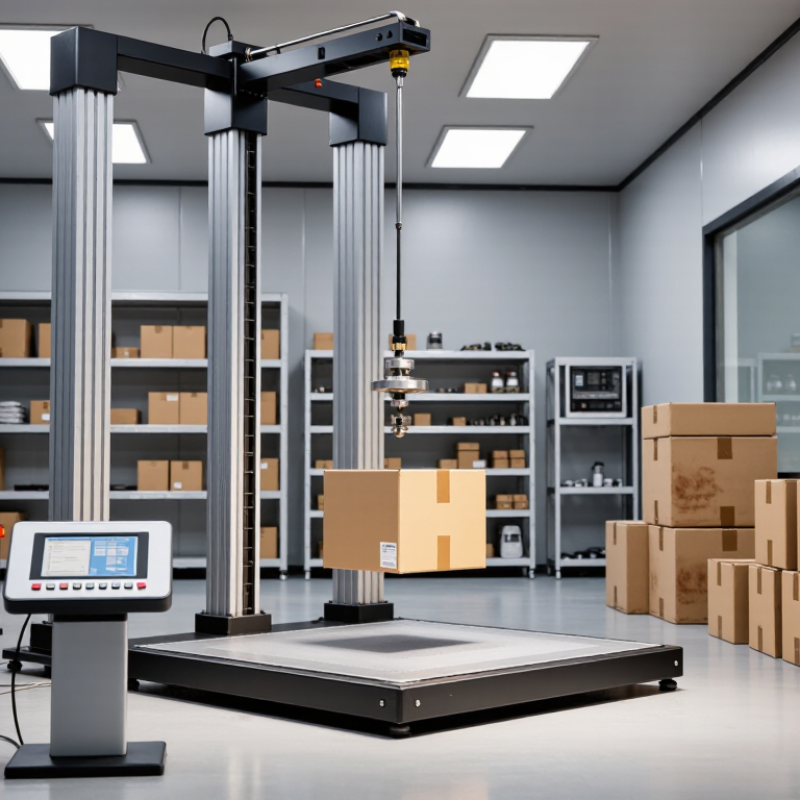
Package drop testers recreate the sudden impacts that parcels face during handling, loading, and delivery. A test unit lifts a packed box to a chosen height, then releases it onto a firm surface. Sensors or visual checks help reveal crushed corners, broken seals, internal movement, and product damage. Some systems also support repeated drops from different angles.
These testers matter globally because shipping conditions vary widely. A parcel may travel by truck, aircraft, warehouse conveyor, and hand cart before reaching its destination. Humidity, temperature changes, and rough handling can weaken packaging during that journey.
Reliable drop testing helps exporters, manufacturers, and online sellers compare packaging before products cross borders. Test methods can follow recognized procedures, such as ASTM or ISTA guidance, but local requirements and product risks still deserve review.
A practical evaluation should match the tester to the package size, weight, and material. Check drop height control, platform stability, impact accuracy, safety guarding, and calibration records. A heavy machine is not automatically a better machine. Neither is a low-cost unit automatically unreliable. In repeated trials, small setup differences can change results, especially when boxes are not positioned consistently. That is easy to overlook. Buyers should request clear specifications, maintenance support, and test documentation before choosing equipment. Drop testing cannot predict every shipping accident, but it can expose weak packaging decisions earlier, when improvements cost less.
Drop testing standards turn a simple fall into a controlled evidence trail. ASTM D5276 measures free-fall impact, while ISO 2248 defines vertical impact testing for packaged goods. ISTA procedures add practical sequences, including drops, vibration, and compression. The correct method depends on weight, package shape, product fragility, and shipping route.
A 2023 global parcel-shipping index recorded about 161.8 billion parcels worldwide. That scale makes small packaging weaknesses expensive.
A tester should record drop height, package orientation, surface type, and damage severity. For example, a 10-kilogram carton may need corner, edge, and face drops from different heights. Inspect the product, not only the outer box.
Field experience shows that standards are useful, but they are not perfect predictions. Real parcels can hit stairs, wet floors, or another carton. Laboratory surfaces are cleaner than loading docks. That matters. The UNCTAD Digital Economy Report 2021 also linked rising online commerce with growing delivery volumes, increasing pressure for reliable protective packaging. Testers should repeat failed trials, photograph impact points, and compare results with actual transport complaints. A pass is evidence, not certainty.
When comparing the 10 best package drop testers, start with the test conditions your products actually face. A tester should offer adjustable drop heights, stable positioning, and enough capacity for your heaviest package. Check the platform size carefully. A narrow platform can distort results for wide cartons. It happens more often than expected.
Impact surfaces also deserve close attention. Hardened steel provides consistent contact, while replaceable plates can reduce maintenance costs. Look for accurate height control, smooth lifting, and controlled release. Sudden movement may add unwanted force before impact. That weakens test reliability. Safety guards, emergency stops, and secure loading areas protect operators during repeated trials.
Reliable measurements matter more than impressive appearance. Choose equipment with repeatable height settings and clear records for drop count, package weight, and test angle. Digital data export can support quality investigations and supplier communication. However, software should remain simple enough for daily use. Complicated menus create avoidable mistakes. Ask about calibration procedures, spare parts, and technical support before purchase. A tester that stops for weeks can disrupt an entire inspection schedule. Consider floor space too. A compact machine may fit a small laboratory, but it could limit larger packaging tests. Real samples should guide the decision, not a sales brochure. You may also need to review your testing method after early trials. The first setup is rarely perfect.
For global buyers, the ten best package drop testers are not identical machines. The right choice depends on package size, product weight, test height, and reporting needs. A manual drop tester suits small cartons and limited testing budgets. A single-column electric model offers better repeatability. Double-column designs provide stronger support for larger packages. Programmable testers improve control over height and release timing. Inclined impact testers help examine sliding and collision damage. Edge, corner, and face fixtures create more realistic test conditions. Heavy-duty models handle dense industrial packaging. Compact bench units save valuable laboratory space. Temperature-controlled testers reveal weaknesses in cold environments. Data-logging systems make results easier to compare across locations.
Reliable testing needs more than a machine. Confirm the working platform, height range, load capacity, release accuracy, and safety enclosure. A package may survive a flat drop but fail on one corner. That detail matters. Use calibrated sensors and inspect the lifting mechanism regularly. Standards such as ISO 2248, ASTM D5276, and relevant ISTA procedures can guide test settings, but requirements vary by market and product category. Always check the current version before purchasing.
In practical evaluations, repeatability often matters more than impressive speed. No tester is perfect. Humidity, operator handling, and carton variation can still distort results. I would record every drop, including damaged samples and failed runs. That evidence supports better packaging decisions. A cheaper tester may become expensive when its data cannot be trusted. Think carefully.
| Rank | Tester Type | Typical Drop Height | Typical Load Capacity | Package Size Suitability | Main Test Modes | Relevant Standards | Best Use Case | Global-Buyer Considerations |
|---|---|---|---|---|---|---|---|---|
| 1 | Programmable Free-Fall Drop Tester | 300–1,500 mm | Up to approximately 100 kg | Small to medium cartons | Flat, edge, and corner drops | ASTM D5276, ISO 2248, ISTA procedures | General packaging qualification and laboratory testing | Choose adjustable height control, metric units, emergency stop, and internationally available replacement parts. |
| 2 | Servo-Controlled Drop Tester | 300–2,000 mm | Approximately 50–100 kg | Small to large shipping packages | Repeatable face, edge, and corner drops | ASTM D5276, ISO 2248, ISTA 3A | High-repeatability testing and quality-control laboratories | Confirm voltage, control-language options, calibration support, and safety guarding before purchase. |
| 3 | Heavy-Duty Floor Drop Tester | 300–1,500 mm | Approximately 100–200 kg | Large and dense cartons | Flat, edge, and corner impact | ASTM D5276, ISO 2248 | Industrial packaging, machinery, and bulk components | Verify floor anchoring, lifting access, platform size, and the safe working load of the release mechanism. |
| 4 | Small-Parcel Drop Tester | 300–1,200 mm | Up to approximately 30 kg | Envelopes, retail boxes, and parcel cartons | Face, edge, and corner drops | ASTM D5276, ISO 2248, ISTA 1A | E-commerce, consumer products, and parcel-delivery packaging | Prioritize compact dimensions, quick setup, clear height scales, and compatibility with local power supplies. |
| 5 | Rotary Arm Drop Tester | 300–1,500 mm | Approximately 50–100 kg | Medium cartons requiring orientation control | Controlled edge and corner drops | ASTM D5276, ISO 2248 | Testing where precise package orientation is important | Check arm clearance, package rotation range, guarding, and the availability of calibration services. |
| 6 | Pneumatic Drop Tester | 300–1,500 mm | Approximately 30–100 kg | Small to medium packages | Repeated flat, edge, and corner drops | ASTM D5276, ISO 2248, selected ISTA procedures | Fast production checks and routine packaging comparison | A stable compressed-air supply, pressure regulation, noise control, and local service coverage are important. |
| 7 | Electromagnetic Release Drop Tester | 300–1,500 mm | Approximately 30–100 kg | General shipping cartons | Free-fall face, edge, and corner drops | ASTM D5276, ISO 2248 | Reliable release timing without pneumatic equipment | Confirm the rated holding force, electrical safety certification, grounding requirements, and emergency-release design. |
| 8 | Environmental-Chamber Drop Tester | Typically 300–1,000 mm | Approximately 10–50 kg | Temperature- or humidity-conditioned packages | Drop testing after conditioning | ASTM D5276, ISO 2248, applicable ISTA protocols | Pharmaceutical, food, electronics, and climate-sensitive packaging | Confirm chamber dimensions, temperature range, humidity control, condensation protection, and data logging. |
| 9 | Instrumented Drop Test System | 300–1,500 mm | Approximately 10–100 kg | Packages requiring impact measurement | Free-fall drops with acceleration and shock recording | ASTM D5276, ISO 2248, IEC 60068-2-31 where applicable | Research, cushioning optimization, and failure analysis | Evaluate sensor sampling rate, calibration traceability, software compatibility, and exportable data formats. |
| 10 | Custom Large-Format Drop Tester | 300–2,000 mm | Approximately 100–200 kg | Oversized cartons and palletized units | Flat, edge, corner, and customized orientations | ASTM D5276, ISO 2248, applicable transport-test protocols | Industrial equipment, appliances, furniture, and export crates | Review site layout, foundation requirements, loading method, guarding, shipping access, and installation support. |
Note: Capacity and height figures are representative specification ranges commonly offered for these tester categories. The exact usable range depends on the final machine configuration, package dimensions, test method, and applicable standard. ASTM D5276 and ISO 2248 define drop-test methods; they do not prescribe one universal machine design.
Selecting a package drop tester starts with the distribution journey, not the machine’s appearance. A laboratory drop height should reflect real handling, including conveyor transfers, truck loading, and warehouse stacking. The 2023 Global Parcel Shipping Index recorded about 161.8 billion parcels worldwide in 2022. That volume increases exposure to repeated impacts and inconsistent handling.
Use ASTM D5276 or ISO 2248 when evaluating free-fall drops. For parcel systems, ISTA 3A can help reproduce common shipping conditions.
Choose a tester with adjustable drop height, a rigid impact surface, and repeatable release timing. A guided release is valuable because slight tilting can change corner damage. It is a small detail, but it can distort results.
Match the tester’s capacity to your packaging range. Heavy industrial crates need stronger frames and higher load ratings. Lightweight cartons need sensitive measurement and controlled impact energy. Add shock sensors when product fragility is uncertain. The World Bank’s What a Waste 2.0 report projects global waste could reach 3.4 billion tonnes annually by 2050, making material efficiency increasingly important.
Over-testing may encourage unnecessary packaging.
Under-testing creates returns and product loss.
Test the weakest carton first. Record crush marks, seam separation, internal movement, and product damage after each drop.
A practical setup should support fast repetition without sacrificing operator safety. No tester is perfect. Real shipments rarely follow a neat laboratory sequence, so field damage reports should challenge your test plan regularly.