What is an Angle Head Holder and How Does It Work?
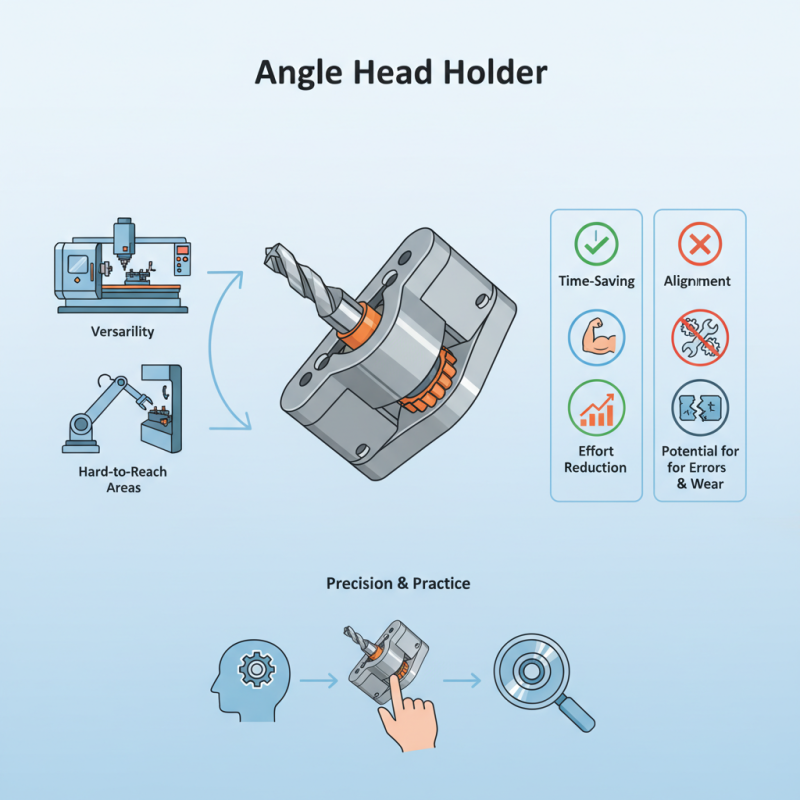
An Angle Head Holder is a specialized tool designed to enhance the versatility of machining operations. This device allows for angular cutting without the need for extensive setup changes. By holding the cutting tool at an angle, it provides unique access to hard-to-reach areas. This capability is crucial for complex projects.
In practical applications, an Angle Head Holder can fit various machines, from lathes to milling machines. It saves time and effort, improving overall efficiency. However, the precision needed to use this tool effectively cannot be overlooked. Operators may face challenges in aligning and securing the holder properly. Misalignment can lead to increased wear on tools and potential errors in workpieces.
Using an Angle Head Holder requires careful consideration and practice. The complexities arise from its installation and adjustment. Mistakes can happen, but they offer valuable learning experiences. Ultimately, the right approach with the Angle Head Holder can greatly enhance machining precision and productivity.
What is an Angle Head Holder?
An angle head holder is a versatile tool used in machining. It attaches to a milling machine, allowing for various cutting angles. This device enhances productivity by enabling multi-sided machining without repositioning the workpiece. Industry reports indicate that using an angle head can reduce cycle times by up to 40%, maximizing efficiency.
These holders come in different designs. Some can achieve angles up to 90 degrees, while others may rotate to several angles. Precision is key. An accurate angle head enhances the quality of the final product. Misalignment can lead to tool wear and subpar results. It's important to regularly check the alignment of your angle head holder.
Tips: Always ensure that the angle head is properly secured before operation. Regular maintenance checks can prevent costly breakdowns. Consider using a precision measuring tool to verify angles during setup. This can save you time and material. Remember, precision impacts overall production quality. Strive for accuracy.
Components of an Angle Head Holder
Angle head holders are specialized tools widely used in machining applications. They allow for more versatile tooling setups. Understanding their components is key for effective usage. The primary components include the angle head, drive system, and adapter.
The angle head itself consists of a housing that pivots. It typically has a tapered collet for holding cutting tools. The drive system can be hydraulic or mechanical. It transfers torque from the machine to the tool. This system can add extra complexity but increases precision. According to a recent industry report, the precision machining market is expected to grow by 6% annually, highlighting a need for efficient tools like angle head holders.
Connectors or adapters are crucial as well. They link the angle head to various equipment, providing flexibility. These components must be compatible with different machines to optimize performance. A study from a manufacturing association shows that nearly 30% of productivity loss occurs from inadequate tool adaptation. Hence, it’s vital to ensure quality in these components. A poorly designed adapter can hamper operations, making it essential to invest in reliable parts.
What is an Angle Head Holder and How Does It Work? - Components of an Angle Head Holder
| Component | Description | Function |
| Angle Head | A device that allows tool rotation at various angles | Enables machining at different orientations |
| Spindle | Connects the angle head to the machine | Transmits rotational motion |
| Drive Mechanism | Internal gears or belts that facilitate rotation | Controls the speed and direction of the tool |
| Cooling System | Circulates coolant to the tool | Prevents overheating during machining |
| Mounting Bracket | Holds the angle head securely on the machine | Ensures stability and alignment during use |
How an Angle Head Holder Functions
An angle head holder is an essential tool in machining. It allows the tool to operate at various angles, enhancing versatility. Typically, it features a mechanism that adjusts the cutting angle without repositioning the workpiece. This tool is invaluable for intricate designs and difficult-to-reach areas. Machining reports indicate that using an angle head holder can improve productivity by up to 30%.
When it functions, an angle head holder can accommodate different types of cutting tools. The adjustment can be controlled with precise angles, such as 45 or 90 degrees. This capability minimizes setups and reduces cycle times. Users appreciate the ergonomic design, but it can be challenging to master initially. Regular practice helps operators become more efficient. A study found that 25% of users felt unsure about optimal angles and settings.
Tip: Always check the alignment before starting. Misalignment can lead to poor finishes. It's crucial for achieving precise cuts. Another suggestion is to document your settings. This way, you can compare results over time and refine your technique. Ensure regular maintenance on your angle head holder. A well-maintained tool performs better and lasts longer.
Applications of Angle Head Holders in Machining
Angle head holders are versatile tools in the machining world. Their unique design allows for various applications. They enable machining at multiple angles without repositioning the workpiece. This can save time during production and reduce the chances of errors.
In manufacturing, angle head holders can perform complex cuts. They are particularly useful for drilling and milling tasks. The ability to reach tight spaces enhances efficiency. However, care must be taken when using these tools. Inadequate setup can lead to inaccuracies.
Operators often face challenges when adapting to new machining setups. Knowledge of proper angles and speeds is vital. Training is crucial for maximizing the benefits of angle head holders. Without sufficient experience, mistakes can happen easily. This creates a need for ongoing education in this area. The potential for mishaps reminds us that perfection in machining is a moving target.
Applications of Angle Head Holders in Machining
Benefits of Using an Angle Head Holder in Manufacturing
An angle head holder is a versatile tool in manufacturing. It allows machines to approach workpieces at various angles. This flexibility increases precision during machining tasks. Workers can achieve complex geometries without repositioning parts. As a result, production time is reduced.
Using an angle head holder has several benefits. It enhances productivity significantly. By optimizing space and time, workers can focus on quality. Additionally, it reduces the need for multiple setups. This can lead to lower operational costs. However, some operators might find it challenging. Adjustments can be tricky, requiring practice and training. Occasionally, mistakes happen, leading to rework.
The ability to adapt is crucial in today’s industry. An angle head holder can have a steep learning curve. But once mastered, it can yield impressive results. The investment in proper training pays off well. It fosters creativity in design and production. The effort to improve efficiency could lead to greater innovations in manufacturing.