Empowering Engineering Excellence: Innovate, Elevate, Deliver.
Global warehouse operations are entering 2026 with tighter space, higher labor costs, and stronger inventory expectations. Grand View Research estimates that the global warehouse racking market could reach approximately USD 16.8 billion by 2030, growing at about 6.5% annually. Different reports use different market boundaries, however. That limitation deserves attention.
This article examines the leading Boltless Rivet Rack types for global buyers, including low-profile shelving, heavy-duty pallet-style units, long-span racks, and mobile-compatible configurations. Each option changes the daily experience inside a warehouse. A three-level rack may create useful vertical capacity, while a poorly planned beam height can leave cartons awkwardly trapped above eye level. MHI’s 2024 industry research also shows continuing investment in warehouse technology and operational efficiency. Yet not every facility needs automation. Sometimes, a strong rack and a clear aisle deliver more value.
John Paxton, former President and CEO of MHI, summarized the purchasing principle clearly: “The right technology must solve a real supply-chain problem.” That idea applies directly to Boltless Rivet Rack selection. Buyers should compare load ratings, upright thickness, deck materials, corrosion protection, assembly time, and regional safety requirements. They should also verify whether published capacities assume evenly distributed loads. They often do.
A credible comparison cannot rely on price alone. Supplier testing, installation guidance, replacement-part availability, and documented engineering support matter just as much. Small details matter. This guide connects market data with practical warehouse observations, while recognizing an uncomfortable truth: the cheapest rack can become the most expensive decision when capacity, access, or future expansion is underestimated.
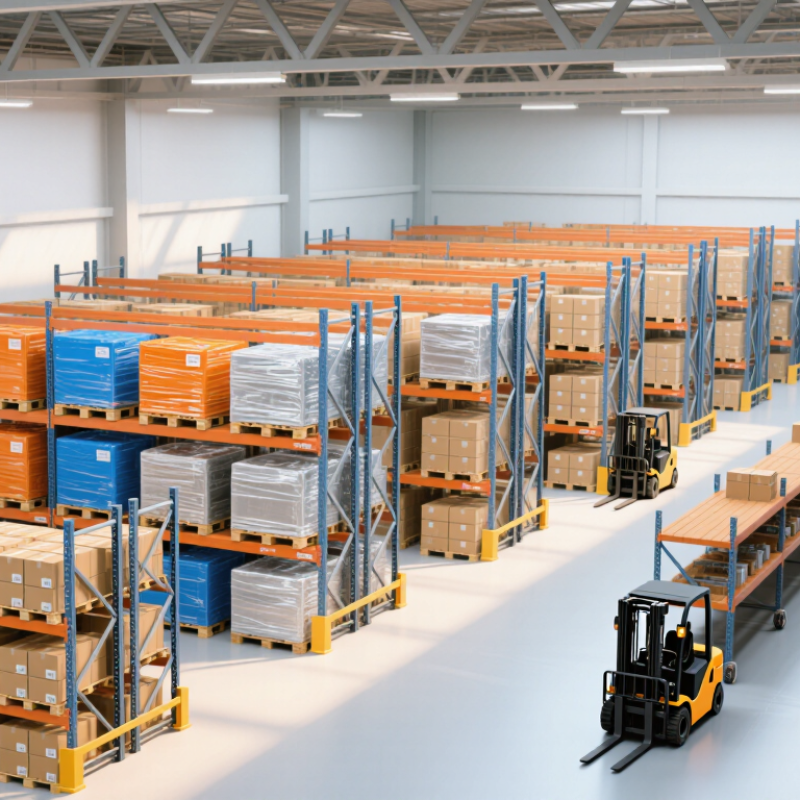
Boltless Rivet Rack Basics and Core Structural Features
Boltless rivet racks use upright frames, horizontal beams, and rivet-style connectors. Their key advantage is tool-free assembly. A rubber mallet is usually enough for fitting the joints. Uprights carry vertical loads through punched slots. Beams lock into these slots and create each storage level. Some designs add diagonal braces for greater stability.
The decking may use particle board, wire panels, or formed steel sheets. Each option changes capacity, durability, and cleaning performance. Always check the stated load per level, not only the total rack capacity. The floor must be firm, level, and free from standing moisture. Uneven floors can twist the frame and reduce stability. In practical warehouse installations, small alignment errors matter. I have seen a rack look secure while one connector remained only partly engaged. That mistake is easy to miss. It deserves a final inspection.
Tips: Confirm beam engagement on every corner. Use a level during installation. Keep heavier cartons on lower levels. Leave clearance around the rack for safe handling. Buyers should also compare metric and imperial measurements, coating thickness, packaging protection, and replacement-part availability. Specifications can seem complete, yet connection tolerances are sometimes unclear. Ask for load-test documents and assembly drawings before ordering. No rack is perfect. Good planning reduces surprises.
| Boltless Rivet Rack Type | Typical Load per Level | Common Rack Dimensions | Core Structural Features | Typical Shelf Deck | Best-Fit Applications | Main Advantages | Key Buyer Checks |
|---|---|---|---|---|---|---|---|
| Light-Duty Single-Rivet Rack | Approximately 100–250 kg | Height: 1,500–2,000 mm Depth: 300–600 mm Length: 600–1,200 mm | Slotted upright posts, single-rivet beams, simple cross-bracing, and hand-adjustable shelf levels. | Particle board, MDF, wire mesh, or thin steel panels. | Home storage, offices, retail back rooms, archives, and light inventory. | Low entry cost, quick assembly, compact footprint, and easy shelf repositioning. | Confirm the evenly distributed load rating, board thickness, upright gauge, and whether wall anchoring is required. |
| Medium-Duty Double-Rivet Rack | Approximately 250–600 kg | Height: 1,800–2,400 mm Depth: 450–750 mm Length: 900–1,800 mm | Double-rivet beam connections, reinforced uprights, horizontal braces, and multiple adjustable levels. | Steel panels, laminated particle board, plywood, or wire decking. | Warehouses, workshops, spare-parts storage, supermarkets, and distribution rooms. | Higher rigidity and capacity than light-duty models while retaining tool-free assembly. | Check whether the stated capacity applies per shelf or per bay and whether the load is evenly distributed. |
| Heavy-Duty Rivet Rack | Approximately 600–1,000 kg | Height: 1,800–3,000 mm Depth: 600–900 mm Length: 1,200–2,400 mm | Heavy-gauge uprights, reinforced double-rivet beams, braced frames, deeper shelf supports, and stronger beam seats. | Heavy steel panels, structural plywood, steel bar decking, or wire mesh. | Industrial warehouses, machine shops, automotive parts, tooling, and bulk cartons. | Strong load-bearing capability without nuts and bolts; suitable for dense manual storage. | Verify deflection limits, frame bracing, floor condition, anchoring requirements, and certified test methods. |
| Long-Span Rivet Rack | Approximately 300–800 kg | Height: 1,800–2,700 mm Depth: 450–900 mm Length: 1,500–2,700 mm | Long beams, reinforced beam connectors, wider shelf spans, and front-to-back bracing to limit sway. | Particle board, plywood, steel panels, or wire decking. | Long cartons, furniture components, textiles, tubes, packaging materials, and bulky goods. | Efficient storage of oversized items with fewer upright posts across the front. | Longer spans can increase beam deflection; confirm span rating, center support options, and deck stiffness. |
| Low-Profile Modular Rack | Approximately 100–400 kg | Height: 900–1,500 mm Depth: 300–600 mm Length: 600–1,500 mm | Short upright frames, rivet-connected beams, low center of gravity, and modular shelf positions. | Steel panels, wire mesh, MDF, or laminated board. | Point-of-use storage, counters, retail displays, utility rooms, and low-ceiling areas. | Easy access, good visibility, simple relocation, and suitability for restricted-height spaces. | Check usable clearance, load distribution, floor leveling, and the stability of unanchored configurations. |
| Mobile or Caster-Mounted Rivet Rack | Approximately 100–500 kg | Height: 900–2,000 mm Depth: 300–750 mm Length: 600–1,500 mm | Rivet rack frame mounted on lockable casters or a mobile base, with reinforced lower supports and anti-tip considerations. | Steel panels, wire mesh, or lightweight board decking. | Maintenance areas, picking stations, workshops, laboratories, and temporary storage zones. | Improves access and layout flexibility; can be moved without dismantling the rack. | Mobile capacity is lower than stationary capacity in many designs; check caster rating, brakes, load height, and floor flatness. |
| Wire-Deck Rivet Rack | Approximately 250–800 kg | Height: 1,800–3,000 mm Depth: 450–900 mm Length: 900–2,400 mm | Rivet-connected steel frame with wire panels supported by beams; open construction improves visibility and airflow. | Welded wire mesh or wire decking with safety supports. | Fire-sensitive storage areas, food and beverage support rooms, cold rooms, and general warehouses. | Good ventilation, visibility, drainage, and reduced dust accumulation compared with solid decks. | Confirm wire spacing, concentrated-load limits, corrosion protection, and compatibility with local fire-safety requirements. |
| Hybrid Rivet Rack with Drawers or Bins | Approximately 150–600 kg | Height: 1,500–2,400 mm Depth: 400–750 mm Length: 900–1,800 mm | Rivet rack frame combined with boltless bins, pull-out drawers, dividers, or labeled picking modules. | Steel panels, plywood, wire decks, or drawer-support shelves. | Small parts, fasteners, electrical components, hardware, and maintenance inventory. | Improves item organization, picking accuracy, visibility, and access to small products. | Check drawer or bin point loads, shelf deflection, aisle clearance, labeling compatibility, and total bay weight. |
Note: Capacity ranges are typical planning values for evenly distributed loads and are not universal specifications. Actual safe working loads depend on steel thickness, beam span, connector design, shelf decking, bracing, installation quality, floor conditions, and applicable local safety standards. Buyers should request a load chart and installation instructions for the exact configuration.