Empowering Engineering Excellence: Innovate, Elevate, Deliver.

2026 Best Sewer Cleaning Equipment for Global Buyers?

The 2026 global market for Sewer Cleaning Equipment is becoming more demanding. Municipal crews face blocked lines, invasive roots, heavy silt, and aging networks. Buyers need more than impressive pressure ratings. They need dependable machines for real streets, narrow access points, and changing climates.

Recent analysis from Grand View Research and MarketsandMarkets highlights steady investment in wastewater infrastructure and pipeline maintenance. The UN-Water World Water Development Report 2024 also links resilient water systems with economic stability and public health. These reports support a practical conclusion: equipment selection must consider lifecycle cost, service availability, operator training, and water efficiency. A powerful jetter may fail if local technicians cannot repair its pump. That detail is often underestimated.

Water-policy expert Peter Gleick wrote, “The water crisis is not about having too little water to satisfy our needs.” His statement applies directly to sewer maintenance. Poor management can turn usable infrastructure into an expensive liability. This guide compares leading 2026 Sewer Cleaning Equipment for global buyers, including high-pressure jetters, vacuum trucks, combination units, and robotic inspection systems. Performance claims will be considered alongside fuel use, hose durability, nozzle design, safety controls, and regional support. No machine wins everywhere. That assumption is risky. Field conditions differ sharply between Rotterdam, Nairobi, São Paulo, and smaller regional towns. Buyers should question generic rankings and verify test results under local soil, pipe diameter, and wastewater conditions. Some recommendations may remain imperfect, because reliable procurement depends on data that manufacturers do not always publish.
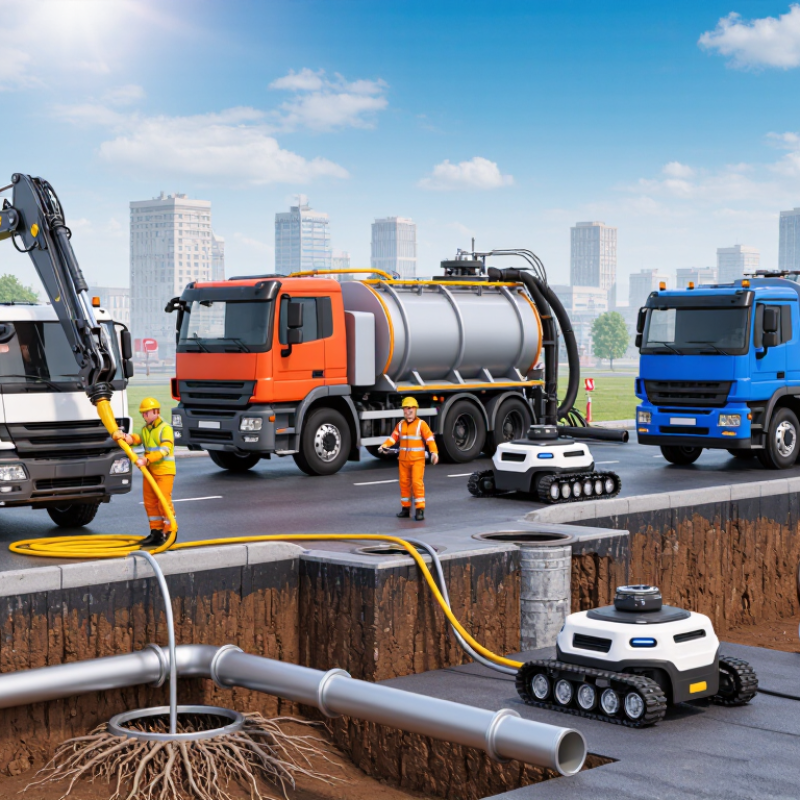
2026 Best Sewer Cleaning Equipment for Global Buyers?

What Sewer Cleaning Equipment Does and Why It Matters

Sewer cleaning equipment removes blockages, sediment, grease, and tree-root intrusion from underground pipelines. High-pressure water jetters cut through deposits and flush loosened material downstream. Vacuum units then collect sludge, stones, and contaminated water from access chambers. Inspection cameras reveal cracked joints, collapsed sections, and hidden obstructions before cleaning begins.

The right equipment protects public health and reduces emergency excavation. A clear camera image helps operators choose pressure, nozzle type, and cleaning speed. This prevents unnecessary damage to aging pipes.

It also creates useful inspection records for maintenance planning. Experienced crews check hose condition, pressure gauges, water supply, and recovery capacity before entering a work area. Small details matter.

No machine fits every sewer. Narrow lines may require compact jetting units, while deep networks need longer hoses and stronger vacuum systems. Wet weather can change access conditions quickly.

Our early assumption was simple: higher pressure always cleans better. It was wrong.

Excessive pressure may worsen weak joints or force debris into another branch. Buyers should compare pipe sizes, local sediment types, water availability, operator training, spare parts, and safety controls. Equipment that looks powerful in a brochure may perform poorly beside a crowded road or a limited water source. Reliability comes from matched specifications, documented servicing, and careful field judgment.

How to Match Equipment Types to Sewer Cleaning Tasks

Choosing the best sewer cleaning equipment in 2026 starts with the task, not the machine size. High-pressure water jetters suit grease, sludge, and routine blockages. Use a rotating nozzle for hardened deposits. Root-cutting nozzles require careful pressure control and trained operators. For narrow streets or indoor access, compact electric units can reduce noise and setup time. Small access matters.

Vacuum units work well for removing sand, grit, and standing wastewater. Combination machines add jetting power, making them useful for larger lines and frequent maintenance routes. However, their size can restrict access on older roads. A sectional machine may fit better in tight buildings, especially when the blockage is local and stubborn. Drum machines cover longer distances but need disciplined hose handling. Matching hose diameter and length to pipe size prevents wasted pressure.

The right choice also depends on water supply, pipe material, depth, and recovery needs. Variable pressure controls help protect fragile or aging pipes. Water recycling can reduce refill delays at remote sites. Operators should verify flow rates, emergency shutoffs, and confined-space procedures before purchase. One common mistake is judging equipment by maximum pressure alone. Real cleaning performance also depends on nozzle design, pumping volume, and operator judgment. Field conditions rarely match a sales sheet perfectly. Keep service records, inspect hoses regularly, and test the unit under realistic site conditions.

2026 Best Sewer Cleaning Equipment for Global Buyers

Match the equipment to the sewer task and pipe diameter. High-pressure water jetters are suitable for routine blockage removal and grease control, mechanical rodders work well in smaller lines, combination jet-vac units handle cleaning and debris recovery, while bucket machines are designed for large-diameter sewers with heavy sediment.

The diameter ranges shown are typical operating guidance and can vary with nozzle selection, access conditions, pipe material, blockage type, and local safety requirements.

Key Specifications for Comparing Global Equipment Options

2026 Best Sewer Cleaning Equipment for Global Buyers?

Key Specifications for Comparing Global Equipment Options

Global buyers should compare performance, serviceability, and working conditions together. A powerful machine may fail when local voltage, water quality, or transport access differs.

For water jetting units, check pressure, flow rate, hose length, and nozzle compatibility. Pressure removes hardened deposits, while flow carries debris through the pipe. A practical commercial range may include 150–300 bar and 40–100 liters per minute, depending on pipe size. Confirm whether the pump supports continuous operation. Short duty cycles can disrupt busy maintenance schedules. Measure the hose reel carefully. A long hose is useful, but excessive weight slows setup.

Drain machines need attention to cable diameter, working length, torque control, and drum protection. Smaller cables suit narrow household lines. Larger cables handle deeper commercial pipes. Adjustable speed reduces splashback and improves operator control. I once valued motor power too highly. The machine still struggled because its cable guide was poorly designed. That mistake changed my comparison method.

Inspection systems should offer clear video, strong lighting, recording, and a durable push rod. Check the camera head diameter and its water resistance rating. For international use, verify motor frequency, plug type, replacement parts, and technical documentation. Emergency stops, guards, stable wheels, and manageable lifting points matter every day. Ask for tested operating data, not only catalog figures. Real conditions are rarely perfect.

2026 Best Sewer Cleaning Equipment for Global Buyers? - Key Specifications for Comparing Global Equipment Options

Typical specification ranges for comparing equipment categories across municipal, commercial, industrial, and contractor applications.

Equipment Category Primary Cleaning Method Typical Pipe Diameter Working Pressure Water Flow Rate Hose or Tooling Range Typical Tank Capacity Best-Fit Applications Key Buying Considerations
Trailer-Mounted Water Jetter High-pressure water jetting with interchangeable nozzles 100–600 mm 100–280 bar 40–180 L/min 60–150 m high-pressure hose 1,000–3,000 L Routine drain maintenance, commercial properties, residential service work Check towing requirements, pump material, hose-reel capacity, water refill method, and local road regulations.
Truck-Mounted Water Jetter High-pressure jetting from a dedicated service vehicle 150–1,200 mm 120–350 bar 100–450 L/min 100–300 m hose; multiple nozzle configurations 4,000–12,000 L Municipal networks, long sewer runs, large commercial and industrial sites Compare chassis payload, water-tank volume, pump efficiency, operator controls, winterization, and service access.
Combination Sewer Cleaner High-pressure jetting combined with vacuum extraction 150–1,800 mm 120–350 bar 100–500 L/min 100–300 m jetting hose; suction hose commonly 100–150 mm diameter Water tank: 3,000–12,000 L; debris tank: 3,000–15,000 L Municipal sewer cleaning, catch basins, culverts, wet wells, and sludge removal Evaluate fan or positive-displacement vacuum system, debris discharge method, tank separation, payload, and safety interlocks.
Vacuum Excavator and Sewer Suction Unit Air or liquid vacuum removal of sludge, soil, and debris Access pits, manholes, wet wells, and large sewer structures Usually not rated by jetting pressure; vacuum commonly 0.4–0.9 bar below atmospheric pressure Airflow commonly 2,000–8,000 m³/h 6–20 m suction hose, depending on configuration 3,000–12,000 L spoil capacity Heavy debris removal, daylighting, manhole cleaning, and non-destructive excavation Confirm suction depth, filtration, spoil handling, noise limits, ground conditions, and permitted disposal method.
Portable Electric or Petrol Drain Jetter Compact high-pressure water cleaning 50–300 mm 80–200 bar 25–100 L/min 30–100 m hose External water supply or 100–500 L auxiliary tank Indoor facilities, narrow access areas, small commercial drains, and emergency response Compare electrical protection, engine emissions, portability, noise, hose storage, and compatibility with local power supply.
Hydro-Mechanical Root-Cutting System Water jetting combined with rotating root-cutting tooling 100–600 mm 140–280 bar 60–250 L/min 60–180 m hose; root-cutting and flushing nozzles 1,000–6,000 L Tree-root intrusion, recurring blockages, and difficult organic obstructions Prioritize nozzle control, cutter durability, pipe-condition assessment, operator protection, and post-cleaning inspection.
CCTV Sewer Inspection and Cleaning Support System Remote visual inspection before and after cleaning 75–2,000 mm, subject to camera and crawler configuration Not applicable; inspection equipment Not applicable Push camera: 30–60 m; crawler cable: commonly 100–300 m Not applicable Condition assessment, acceptance testing, blockage locating, and maintenance planning Check camera diameter, lighting, pan-and-tilt capability, locating accuracy, recording format, and inspection software compatibility.
Robotic Sewer Cleaning and Milling System Remote-controlled mechanical milling, cutting, or descaling 150–1,200 mm Tool-dependent; water-assisted systems commonly use 100–250 bar Tool-dependent; commonly 30–150 L/min 100–300 m control cable; modular cutting tools Usually supplied by an external water or slurry-management unit Concrete, mineral deposits, protruding connections, and localized structural obstructions Assess remote-control range, tool torque, camera visibility, pipe-wall protection, recovery procedure, and operator training.
Comparison note: Actual performance varies with nozzle design, hose length, pipe material, blockage type, elevation, water quality, chassis payload, and operating conditions. Buyers should verify applicable electrical, emissions, pressure-vessel, road-safety, wastewater-disposal, and occupational-safety requirements in the destination country before purchase.

Safety, Maintenance, and Operator Requirements

Choosing the best sewer cleaning equipment in 2026 starts with the worksite, not the sales brochure. Municipal crews should match jetting pressure, water flow, hose length, and vacuum capacity to pipe diameter and blockage type. Small drainage lines need controlled pressure; oversized settings can damage fragile joints or release debris unexpectedly. Use cameras before heavy cleaning when the pipe condition is uncertain. That small step often prevents expensive mistakes. Operators need guarded hose reels, emergency shutoffs, stable footing, and clear communication with the spotter. Never treat protective equipment as optional.

Daily inspections should cover hydraulic leaks, hose cuts, nozzle wear, cable condition, water tanks, and reversing alarms. Record pressure readings and unusual vibration in a shared service log. After each shift, flush contaminated lines, secure loose tools, and clean access points without entering confined spaces. Keep suction filters clear. Maintenance intervals must follow the equipment manual and local workplace rules. Still, manuals cannot predict every climate. In freezing regions, trapped water can damage pumps overnight; in hot climates, seals may age faster. Those details deserve planned checks.

Qualified operators should understand pressure hazards, traffic control, confined-space boundaries, spill prevention, and emergency rescue procedures. They should practice isolating energy before clearing a blocked nozzle or hose. Training must include hands-on drills, not only a signed attendance sheet. A realistic drill can expose weak radio signals, poor lighting, or an awkward control layout. These flaws are easy to overlook. Global buyers should verify spare-part access, technician support, localized instructions, and electrical compatibility before purchase. One honest concern remains: the most powerful machine is not always the safest or most productive choice. Operator judgment still matters.

How to Evaluate Suppliers, Costs, and International Shipping

Choosing the best sewer cleaning equipment in 2026 requires more than comparing catalog prices. Match the machine to pipe diameter, blockage type, water access, and daily workload. A high-pressure jetter may suit municipal lines, while a compact drum machine fits indoor maintenance. Inspection cameras can reduce guesswork before excavation. Ask suppliers for flow rates, pressure tests, motor data, and service records. Request a live demonstration if possible.

Supplier evaluation should include manufacturing experience, quality control, spare-part availability, and technician support. Check whether each unit receives documented testing before shipment. Speak with recent buyers, not only listed references. A polished website proves little. It is easy to overlook response time after payment. That mistake can become expensive. Ask for clear warranty terms, training materials, replacement schedules, and realistic production dates.

Calculate the landed cost, not just the equipment price. Include crating, inland transport, ocean or air freight, insurance, customs charges, and destination handling. Confirm the shipping term and who manages each transport stage. Heavy machinery needs moisture protection, strong pallets, and readable packing marks. Request shipment photos before dispatch. Compare transit time against project deadlines. Delays can affect crews and contracts. I would also keep a contingency budget, because freight rates and port charges change unexpectedly. A cheaper machine may cost more after downtime, missing parts, or difficult maintenance.

Download
Brochure